
Sexual Health Education Framework Explorer
Select a priority or a belief to discover which educational framework matches that perspective.
What is the primary goal?
Select an option on the left to analyze the framework...
Comprehensive Sexuality Education is an approach to sexual health that provides young people with accurate, age-appropriate information about sexuality and reproductive health, moving beyond just preventing pregnancy or disease. Often referred to as CSE, this framework recognizes that self-stimulation is a normal part of human development. Instead of treating it as a taboo or a medical problem, modern CSE attempts to normalize it to reduce shame and anxiety among adolescents.
The Tug-of-War Over Curriculum
Not everyone agrees that masturbation belongs in a classroom. In recent years, states like California have pushed the envelope. Their 2019 framework encouraged teachers to explicitly tell middle schoolers that masturbation isn't physically harmful. While this sounds straightforward, it opened a floodgate of controversy. Some parents and conservative groups, like the California Family Council, argue that this crosses a line into obscenity, especially when recommended reading lists include guides that discuss bondage or anal sex.This tension highlights the divide between those who see sexual health as a fundamental right and those who believe these conversations should happen exclusively at home. The debate often boils down to the concept of "sexual citizenship"-the idea that students need a certain level of knowledge to navigate their own bodily autonomy and consent in the real world.
Supporting Students with Disabilities
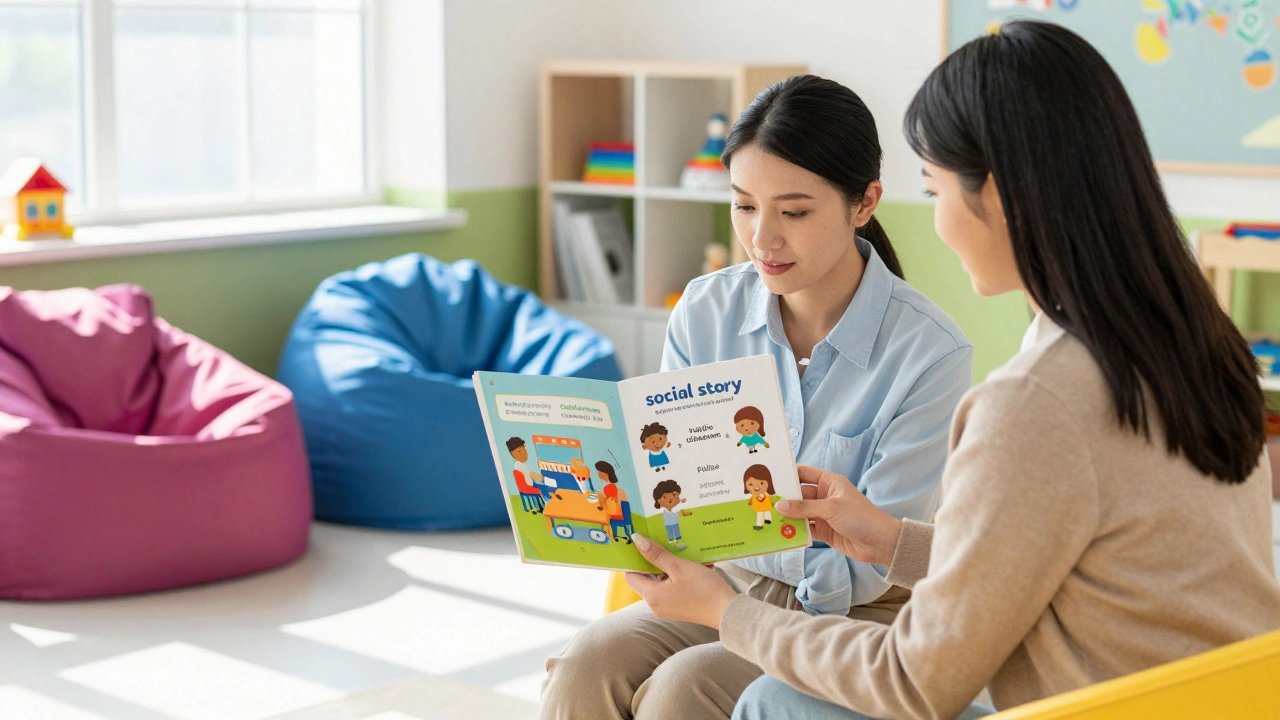
When we talk about sex education, students with disabilities are often left out of the conversation, which is a dangerous oversight. Data shows that children with disabilities face a significantly higher risk of sexual assault than their peers, yet they often receive far less guidance on healthy sexual boundaries. For these students, the approach to masturbation is less about a textbook and more about practical, situational awareness.Educators use "social stories"-short, personalized narratives-to help students understand the difference between public and private spaces. The goal isn't to stop the behavior, which would be shaming and ineffective, but to redirect it. If a student is self-stimulating in a classroom, the focus shifts to consent. It's about teaching them that other people haven't consented to see that behavior, and conversely, teaching peers how to advocate for their own boundaries without bullying the student.
| Approach | Core Philosophy | View on Masturbation | Primary Goal |
|---|---|---|---|
| Comprehensive (CSE) | Holistic health and autonomy | Normal developmental behavior | Informed decision-making |
| Abstinence-Only | Moral or risk-based avoidance | Often ignored or discouraged | Prevention of pregnancy/STIs |
| Behavioral/Specialized | Situational awareness | Privacy-focused redirection | Safety and social boundaries |

Managing the "Real-World" Classroom Moment
What happens when a teacher catches a student masturbating in the back of the room? The old-school response was shock, punishment, or immediate shaming. Modern behavioral science suggests a completely different route. Experts now recommend a non-reactive, non-judgmental approach. The teacher's job is to be direct but calm, avoiding any language that suggests the student is "gross" or "perverted."This isn't a one-person job. Effective management involves a team effort between school psychologists, behaviorists, and occupational therapists. They work together to figure out if the behavior is a sensory need, a lack of boundary understanding, or simply a hormonal impulse. The priority is redirecting the student to a private space, like a bathroom or a home environment, ensuring the student's dignity remains intact while maintaining the classroom's social order.
The Safeguarding Debate
While progressive frameworks emphasize autonomy, safeguarding advocates-particularly in the UK-raise a different set of red flags. Groups like the Safe Schools Alliance UK argue that bringing up masturbation in school can actually erode a child's protective boundaries. Their concern is that by normalizing discussions of sexual pleasure between students and authority figures, children might find it harder to say "no" or recognize grooming behaviors if an adult crosses a line.They argue that while teaching about puberty is necessary because it's a biological fact, teaching about the *pleasure* aspect of self-stimulation is an overreach. This creates a paradox: one side argues that silence creates vulnerability, while the other argues that explicit discussion removes the natural barriers that keep children safe.
Setting National Standards
To navigate this minefield, organizations like Advocates for Youth have developed the National Sex Education Standards. These guidelines attempt to provide a roadmap for what is age-appropriate from kindergarten through 12th grade. For example, a kindergartner might learn about the names of body parts and the concept of "good touch/bad touch," while a high schooler might discuss the psychological and physical aspects of sexual health.Despite these standards, the actual implementation varies wildly. Depending on where you live, you might be in a district that follows a strict "abstinence-plus" model-where abstinence is touted as the only sure way to prevent pregnancy, but other health info is provided-or a district that fully embraces the CSE model. This "postal code lottery" means two students in the same state could have completely different understandings of their own bodies based solely on which school board they fall under.
Is masturbation officially taught in US public schools?
It depends entirely on the state and school district. In progressive areas (like parts of California), it is included as a normal part of human development in middle and high school curricula. In more conservative districts or those using abstinence-only programs, it is typically avoided or discouraged.
How do schools handle students who masturbate in class?
Modern best practices favor a non-shaming, direct approach. Teachers are encouraged to remain neutral and redirect the student to a private area. In many cases, a multidisciplinary team of psychologists and behaviorists works to create a plan that respects the student's privacy while enforcing public boundaries.
Why is there a focus on "social stories" for students with disabilities?
Social stories are used to provide concrete examples of where certain behaviors are appropriate. Since some students with disabilities may struggle with abstract social cues, these stories explicitly teach that masturbation is a private activity meant for bedrooms or bathrooms, not public spaces.
What are the main risks cited by safeguarding groups?
Safeguarding advocates argue that discussing sexual pleasure in school can blur the boundaries between children and adults. They fear this normalization could make it easier for predators to manipulate children or make children less likely to report inappropriate behavior by authority figures.
What is the difference between abstinence-only and comprehensive education?
Abstinence-only education presents abstinence as the only safe option and often ignores the nuances of sexual development. Comprehensive Sexuality Education (CSE) provides a broader range of information, including contraception, consent, and the normality of self-stimulation, aiming to give students tools for all possible scenarios.
Next Steps for Educators and Parents
If you're a parent or teacher trying to navigate this, the first step is checking your local district's specific curriculum guide. Don't assume a national standard is being followed in your specific town. For educators, the focus should always remain on the distinction between the *act* (which is a normal biological function) and the *setting* (which is a matter of social consent).If you are dealing with a student who frequently engages in public self-stimulation, avoid the temptation to use shame as a deterrent. Instead, collaborate with a school psychologist to determine if there is an underlying sensory or developmental need. The goal is a safe environment where the student feels respected, but everyone understands that public displays are a breach of consent.