Ancient Egyptian Satire Calculator
Analyze the Scene
Based on the Turin Erotic Papyrus article, answer these questions to determine if the depicted scene is satire or pornography.
Analysis Result
Key Artifacts
Satirical Elements
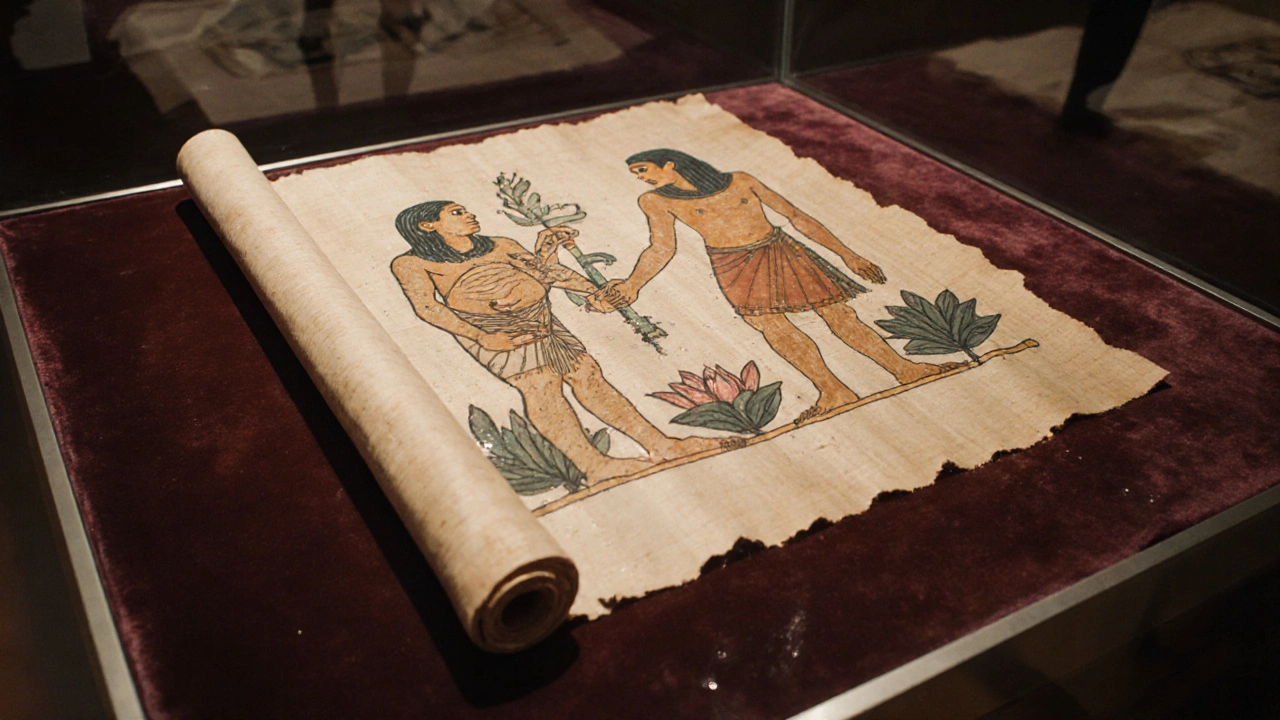
The papyrus shows:
- Balding men with comically oversized genitals
- Women with lotus flowers and sistra (Hathor symbols)
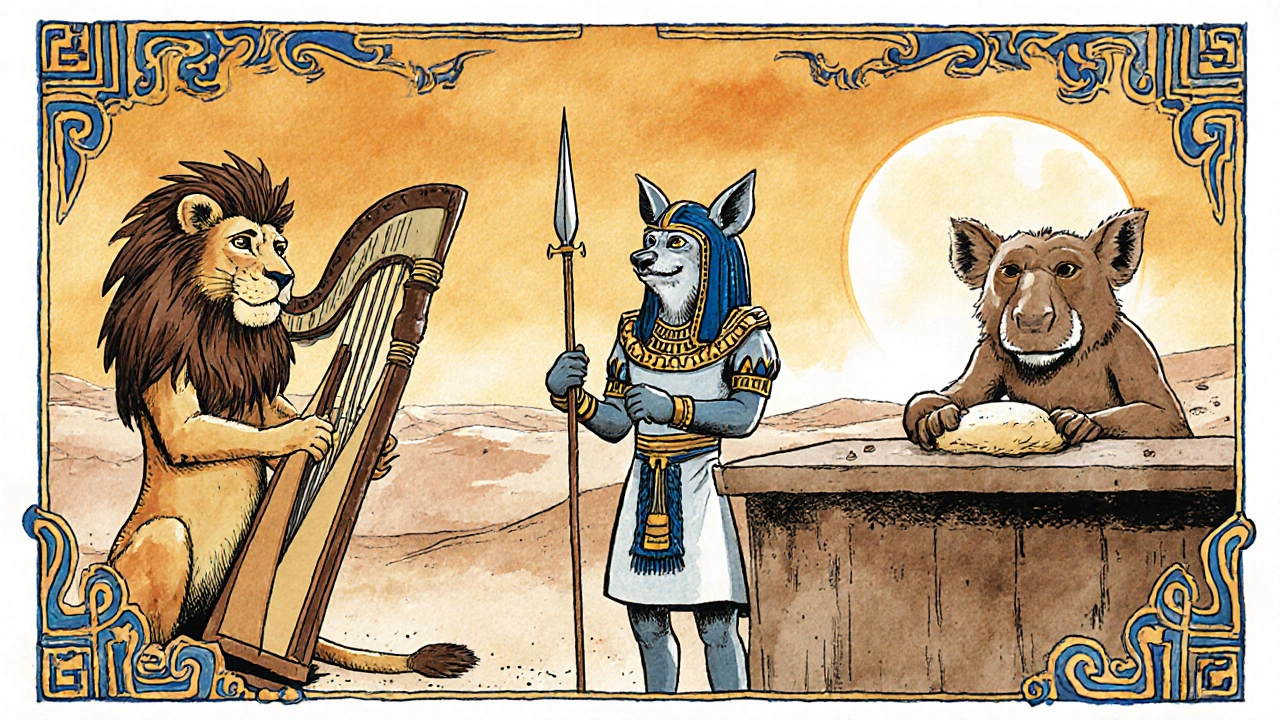
- Animals performing human jobs (jackals as soldiers)
The Turin Erotic Papyrus isn’t just an old scroll with naked people. It’s a 3,400-year-old joke book, a middle finger to social norms, and a window into a culture that laughed at sex instead of hiding it. Created around 1150 BCE during the reign of Ramesses III, this 8.5-inch papyrus scroll is the oldest known explicit depiction of human sexual activity in human history-older than the Kamasutra by a thousand years. And yet, for over 150 years after its discovery, museums and scholars kept it locked away, afraid of what it might say about ancient Egypt.
What’s Actually on the Papyrus?
The papyrus splits into two parts. On the left third, you see animals doing human jobs: a lion playing the harp, a jackal as a soldier, a monkey as a baker. It’s absurd. It’s funny. It’s satire. Then, on the right two-thirds, it flips into something wild: twelve sequential scenes of naked humans having sex. Not gods. Not mythological figures. Just people. Balding, pot-bellied men with comically oversized genitals, paired with perfectly sculpted women adorned with lotus flowers, monkeys, and sistra-the musical rattles tied to Hathor, goddess of love and joy. These aren’t random acts. Each scene flows into the next like a comic strip. One couple uses a chariot as a prop. Another man is bent over while his partner climbs on from behind. In one, a woman holds a monkey-likely a fertility symbol-while her partner leans in. The poses are detailed, anatomically accurate, and deliberately exaggerated. The men look like they’ve been drinking too much beer and skipping the gym. The women? Pure idealized beauty. It’s a caricature. A parody. A punchline.Was It Pornography?
Some call it pornography. The History Channel did. So did early 20th-century scholars who couldn’t believe Egyptians could be so “loose.” But that’s a modern lens. Ancient Egyptians didn’t have our words for “porn” or “obscene.” They didn’t see sex as sinful. They saw it as life-giving, sacred, and sometimes hilarious. The real clue is in the style. The men aren’t heroic. They’re ridiculous. The women aren’t passive. They’re in control. The animals in the first section are mocking social hierarchy. The sex scenes? They’re mocking male vanity. This wasn’t meant to arouse. It was meant to make you snort your wine. French Egyptologist Pascal Vernus put it plainly: “The papyrus is not intended to produce sexual excitement.” Museo Egizio in Turin, where the papyrus is kept, states outright: “This papyrus is not pornographic in nature, but rather comical and satirical.” In ancient Egypt, poking fun at the powerful-even through sex-was a form of social release. Think of it like a Roman fart joke, but drawn on papyrus.Why Was It Hidden for So Long?
When Jean-François Champollion, the man who cracked the Rosetta Stone, first saw the papyrus in the 1820s, he called it “an image of monstrous obscenity.” He was horrified. And he wasn’t alone. Victorian-era Europe believed ancient civilizations were either noble and pure-or savage and depraved. There was no middle ground. So, the papyrus was tucked into storage. Not destroyed. Not studied. Hidden. It stayed locked away until the 1970s, when scholars finally started asking: What if we stopped projecting our shame onto the past? What if ancient Egyptians didn’t see sex the way we did? That’s when the real research began. And the truth came out: Egyptians had no problem with nudity, homosexuality, or even transgender figures in their myths. Temple prostitutes were respected. People believed sex continued after death-so they attached fake genitalia to mummies. Sex wasn’t taboo. It was woven into everything.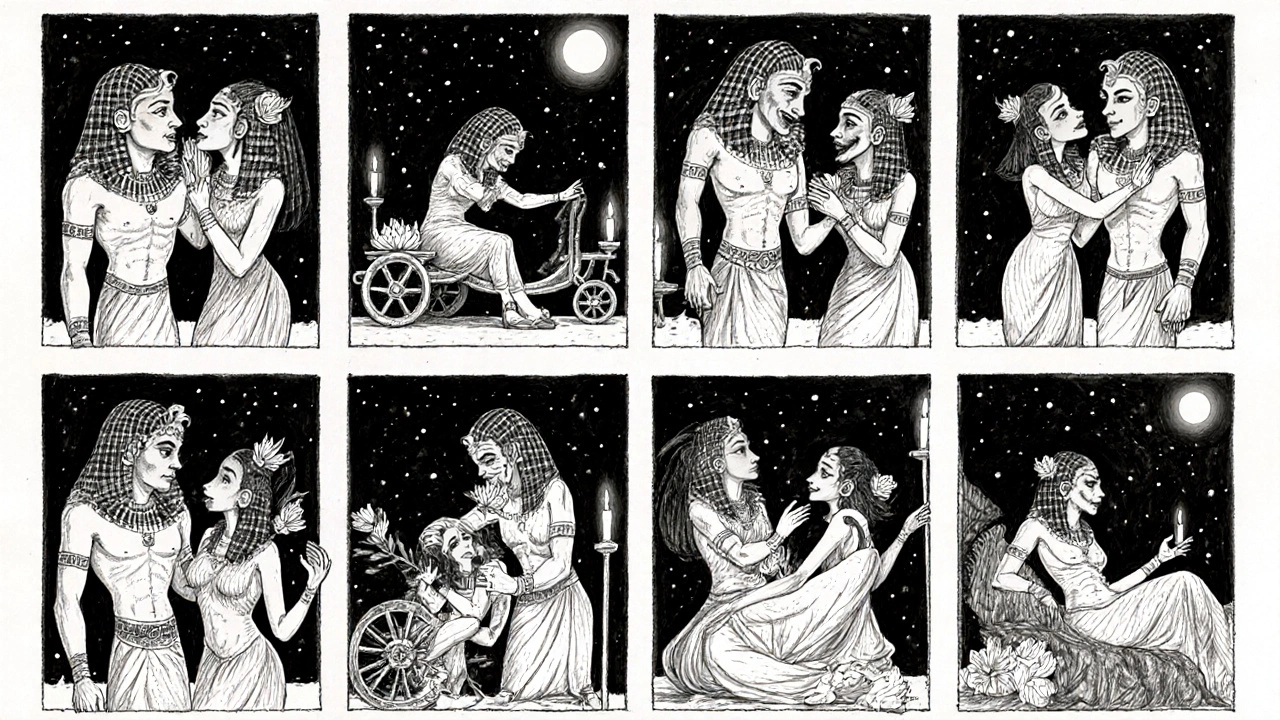
How Is This Different From Other Ancient Art?
Mesopotamian art showed fertility symbols-goddesses with exaggerated hips. Greek vases showed gods having sex with mortals. Indian carvings at Khajuraho were spiritual, tied to divine energy. But the Turin Papyrus? Nothing like it. It’s secular. No gods. No rituals. No prayers. Just people. Real, flawed, funny people. It’s the only surviving erotic scroll from ancient Egypt. No other culture left behind something so detailed, so narrative, so unapologetically human. And it wasn’t made for the masses. The brushwork is fine. The composition is balanced. The ink is high-quality. This was made for the elite-scribes, artists, maybe even royal courtiers. A private laugh among the powerful. A way to say, “Look how ridiculous we all are, even when we’re doing the most basic human thing.”What Does It Tell Us About Egyptian Society?
It shatters the myth that ancient Egypt was stiff, religious, and repressed. They had rules, sure. But they also had humor. They had satire. They had art that didn’t need to be sacred to matter. Sex wasn’t just about procreation. It was about power, play, and performance. The lotus flowers? Symbols of rebirth. The monkeys? Messengers of Hathor. The sistra? Instruments used in temple rituals. Even in a joke about sex, they tied it back to the divine. That’s the genius of it. It’s not either sacred or profane. It’s both. This papyrus proves that ancient Egyptians understood the absurdity of human desire. They didn’t worship it. They didn’t condemn it. They laughed at it.