Roman Frescoes: Context & Meaning Decoder
Select a site, room, and motif above to decode the meaning behind the fresco.
When you walk into the House of the Vettii in Pompeii, you might expect to see idealized gods or heroic battles. Instead, you often find a phallus painted on the wall or a couple engaged in explicit intimacy. This isn't accidental. These vivid, sexually explicit murals found in buried Roman cities were not hidden secrets; they were part of daily life. Understanding these erotic frescoes requires us to drop modern assumptions about privacy and shame. In the Roman world, sex was less about moral judgment and more about social function, fertility, and civic identity.
The Context of Daily Life
To understand why Romans painted such scenes, we have to look at how they lived. Homes in Herculaneum and Pompeii were multi-generational spaces. There was no strict separation between the public street and the private bedroom. A fresco wasn't just decoration; it was a signal. It told neighbors, guests, and family members what values this household held. If a house featured images of Priapus, the god of fertility, it signaled that the owners valued lineage and abundance. If it showed a *conubium* (marriage bed) scene, it reinforced the sanctity of marriage within the household structure.
These images served a protective purpose too. The phallus, known as the *fascinus*, was a common apotropaic symbol. You’d see it on doorframes, shop signs, and even children’s toys. It wasn’t meant to be titillating in the way we think of pornography today. It was a charm against the evil eye. When you see a large, painted phallus above a doorway in a Roman home, think of it less like a joke and more like a good luck horseshoe, albeit with much more biological detail.
Anatomy of the Frescoes
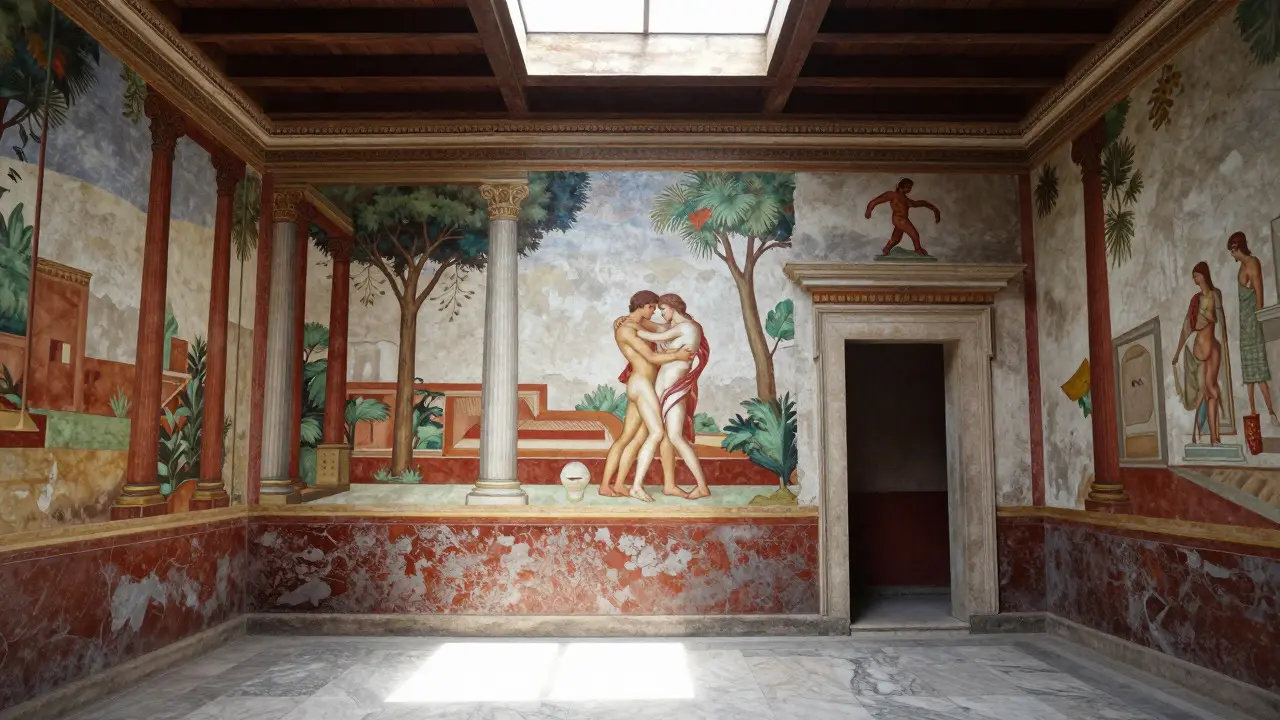
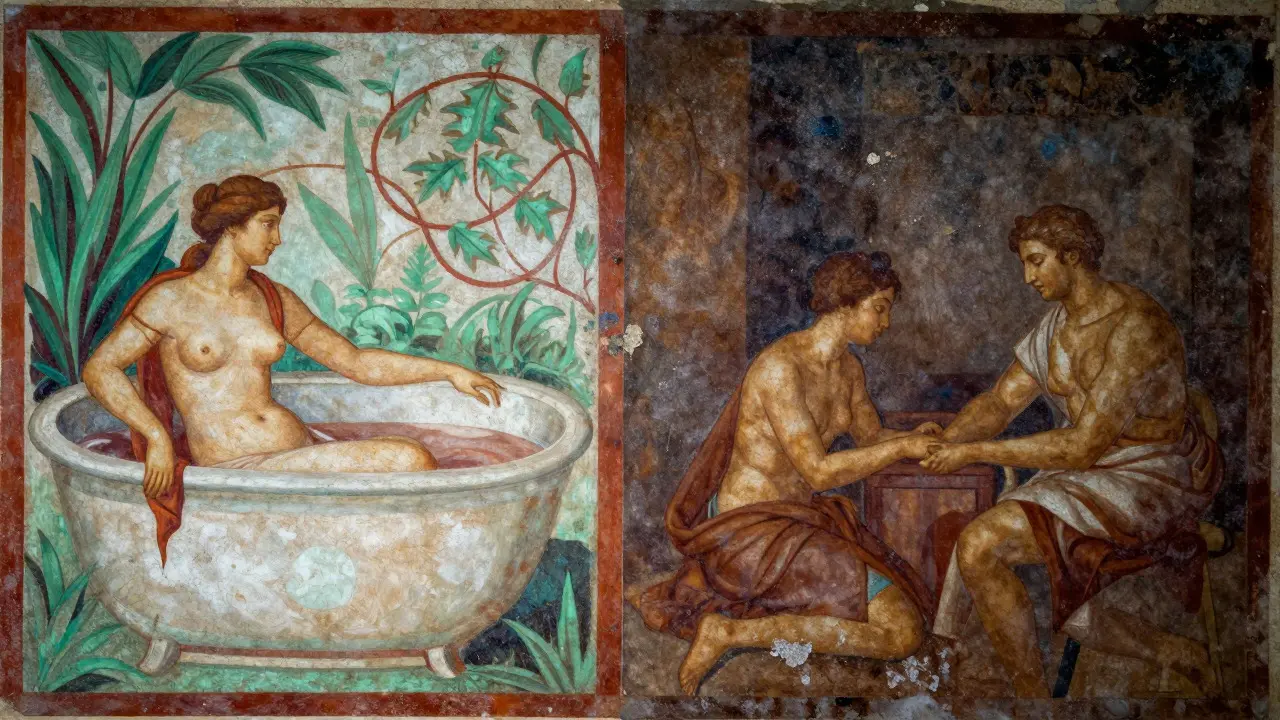
The artistic style of these works is distinct. They belong to the Second and Third Styles of Roman wall painting. The Second Style, popular during the late Republic and early Empire, created an illusion of depth, making walls appear open to gardens or colonnades. Erotic scenes were often integrated into these architectural fantasies. A woman might be depicted bathing in a painted garden, her body exposed but framed by lush vegetation. This blend of architecture and anatomy suggests that Romans saw the human body as an extension of their living space.
In Herculaneum, the preservation conditions were different due to the pyroclastic flow rather than ash fall. The walls here are often darker, and the pigments have reacted differently with the volcanic material. Yet, the themes remain consistent. We find depictions of sexual intercourse, masturbation, and various positions. What stands out is the diversity. We see men, women, slaves, and free citizens. We see heterosexual couples and same-sex partners. This visual record challenges the notion that Roman society was rigidly hierarchical in its private lives, suggesting a fluidity in how sexuality was expressed within the domestic sphere.
Public vs. Private Boundaries
A key question for historians is whether these images were truly "public." Since they were inside homes, one might argue they were private. However, Roman houses had a specific layout. The *atrium* was the central room where clients visited, business was conducted, and social interactions occurred. If erotic frescoes appeared in the atrium or the *tablinum* (the office), they were visible to outsiders. This implies that sexual display was acceptable, perhaps even expected, in certain contexts. It was a marker of status. Only wealthy families could afford high-quality frescoes, so displaying bold imagery was a flex of cultural confidence.
Contrast this with the *cubiculum*, the bedroom. Here, the art became more intimate. Scenes of *aphrodisia* (sexual pleasure) were common. But even here, the boundary was porous. Servants slept in nearby rooms, and family members moved freely. The lack of curtains or heavy doors in many reconstructions means that privacy, as we define it, didn't exist. Sexuality was woven into the fabric of the home, not locked away.
| Feature | Pompeii | Herculaneum |
|---|---|---|
| Preservation State | High detail due to ash insulation | Darker tones due to water saturation |
| Common Motifs | Phallic symbols, Priapus, Bathing scenes | Couple intimacy, Domestic labor mixed with leisure |
| Social Class Indicators | Strong correlation with wealth | Wider range from elite to working-class homes |
| Artistic Style | Second and Third Style dominance | First and Second Style transitions |
Religious Undertones
You can't talk about Roman erotica without mentioning religion. Sex was sacred. The cult of Venus, Aphrodite's counterpart, emphasized love and desire. But there were also deities specifically tied to procreation and protection. Priapus, the son of Aphrodite and Dionysus, was the guardian of boundaries. His image was ubiquitous. Why? Because the Romans believed that uncontrolled sexual energy needed to be channeled through ritual and symbol. A fresco of Priapus wasn't just about lust; it was a prayer for a healthy harvest and a robust heir. This religious layer adds complexity to what might otherwise seem like simple indecency.
Furthermore, the concept of *libido* (desire) was linked to civic duty. For a male citizen, controlling his desires was a sign of virtue, but expressing them within the correct bounds was a sign of vitality. The frescoes often depict men in dominant roles, reflecting the patriarchal structure of Roman law. However, female figures are rarely passive. They are often shown reaching, touching, or engaging actively. This suggests a nuance in Roman gender dynamics that is often overlooked in favor of stereotypical views of submissive women.
Modern Misinterpretations
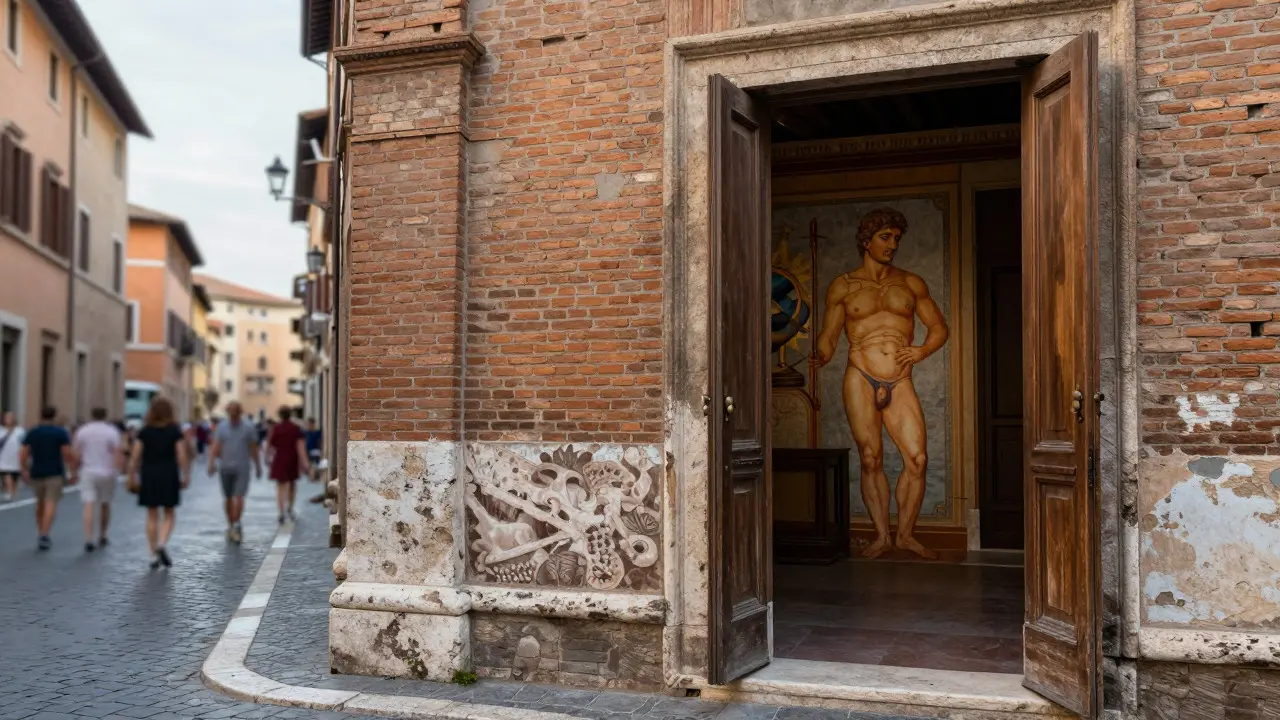
Today, we often view these paintings through a Victorian lens, assuming the Romans must have been either prudish or wildly libertine. Both extremes are wrong. The reality is pragmatic. Sex was a natural part of life, regulated by social norms rather than religious prohibition. There was no equivalent to the Christian sin of lust. Instead, there were rules about who you could sleep with, when, and for what purpose. Adultery was a crime because it disrupted property rights and lineage, not because it was morally impure. The frescoes reflect this legalistic approach. They show sex as a transaction, a celebration, or a duty, rarely as a secret vice.
Another misconception is that all Romans looked the same. The frescoes show diverse body types, ages, and ethnicities. Slaves are depicted alongside masters in some scenes, highlighting the complex power dynamics of the household. The art serves as a mirror to the social hierarchy, showing who had access to pleasure and who provided it. This makes the frescoes valuable historical documents, not just artistic curiosities.
Preserving the Evidence
Conserving these frescoes is a delicate task. The pigments used-earth reds, carbon blacks, and chalk whites-are fragile. Over time, salt crystallization from the soil can cause the paint to flake off. Conservators use specialized techniques to stabilize the walls without altering the original colors. In recent years, digital mapping has allowed researchers to analyze the chemical composition of the paints, revealing trade routes for pigments like cinnabar and malachite. This scientific analysis helps us date the frescoes more accurately and understand the economic networks that supported Roman art production.
As we continue to excavate and study these sites, new insights emerge. Every brushstroke tells a story about the people who lived there. They weren't just creating art; they were defining their identities. By looking closely at these erotic frescoes, we gain a window into the minds of ancient Romans. We see a society that was sophisticated, practical, and deeply connected to the physical world. Their art reminds us that our own ideas about privacy and propriety are historically specific, not universal truths.
Were erotic frescoes only found in wealthy Roman homes?
While high-quality, detailed frescoes were primarily a luxury for the wealthy, simpler phallic symbols and basic erotic motifs were found in modest homes and public buildings like taverns. The complexity and size of the artwork correlated with the owner's status, but the theme itself was widespread across social classes.
What was the purpose of the phallus symbol in Roman art?
The phallus, or fascinus, served as an apotropaic symbol meant to ward off the evil eye and bad luck. It also represented fertility and prosperity. Placing it above doorways or in shops was a way to protect the household or business from misfortune and ensure abundance.
Did Romans distinguish between public and private sex?
Not in the way we do today. Privacy was limited in Roman housing designs. Sexual activity was often visible to family members and servants. The distinction was less about visibility and more about social context: sex was acceptable when it aligned with social duties like marriage or procreation, and frowned upon if it disrupted social order, regardless of where it happened.
How does the art in Herculaneum differ from Pompeii?
Herculaneum was preserved by a hot pyroclastic flow, which baked the walls and changed the color palette to darker tones. Pompeii was covered in cooler ash, preserving brighter colors and finer details. Thematically, both share similar erotic motifs, but Herculaneum offers unique insights into earlier architectural styles and domestic layouts.
Why were these paintings considered acceptable in Roman society?
Roman culture did not view sex as inherently sinful. It was seen as a natural bodily function tied to civic duty and religious rituals. As long as sexual behavior adhered to social norms regarding status and lineage, visual representations of sex were accepted as part of everyday life and decoration.