Etruscan Myth Fact Checker
Test Your Knowledge
This interactive quiz uses evidence from the article to help you distinguish between Greek myths about Etruscan children and archaeological facts.
Question 1: What percentage of children's graves contained items with sexual symbolism?
Question 2: What did Etruscan children's graves primarily contain?
Question 3: What was the primary purpose of Etruscan children's play?
Question 4: What did Greek historian Theopompus claim about Etruscan women?
Question 5: What percentage of tomb paintings included child figures?
The Myth That Wouldn't Die
For centuries, stories claimed Etruscan children watched their parents have sex and learned about relationships through observation. These tales come from Greek historians like Theopompus, who wrote around 350 BCE. But modern archaeology shows something very different. The truth about Etruscan cultureAn ancient civilization in central Italy that flourished from 900 BCE to 100 BCE family life comes not from biased Greek texts, but from what we find in tombs, artifacts, and careful research.
Why Greek Accounts Can't Be Trusted
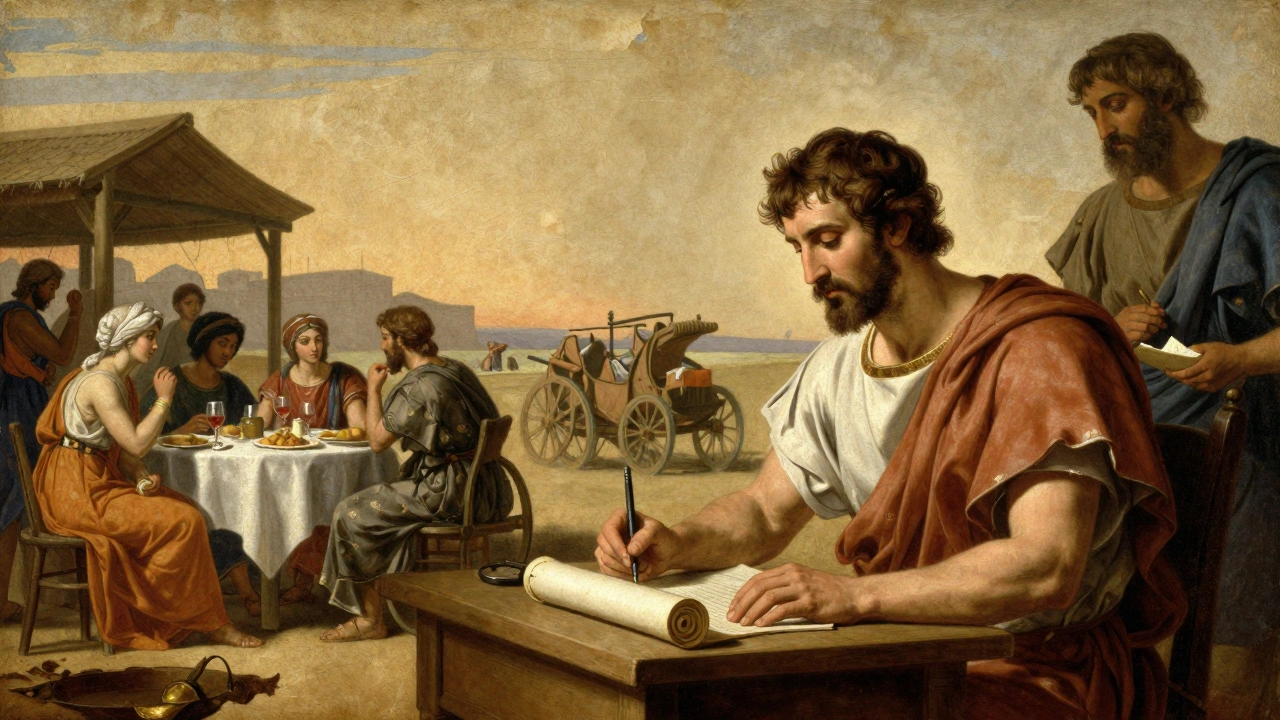
Greek society was deeply patriarchal. Women were confined to the home, while Etruscan women enjoyed freedom: they dined with men, owned property, and even drove chariots. Greek observers saw this as immoral. Theopompus of ChiosA Greek historian whose writings about Etruscans were heavily biased and used to portray them as barbaric claimed Etruscans had no shame in public sex and children learned from watching. But Dr. Jean MacIntosh TurfaCurator at the University of Pennsylvania Museum and leading Etruscan expert explains: 'Greek writers used Etruscans as a contrast to their own society. Their claims tell us more about Greek anxieties than Etruscan reality.'
Greek historian Theopompus wrote that Etruscan women 'take particular care of their bodies and exercise often, sometimes along with the men'-which scandalized Greeks. But this was just social freedom, not sexual license. As Dr. Ingrid Edlund-Berry wrote in 2017, 'Greek historians misinterpreted Etruscan women's status as evidence of sexual promiscuity. They simply didn't understand a society where women had equal rights.'
What Archaeology Really Shows
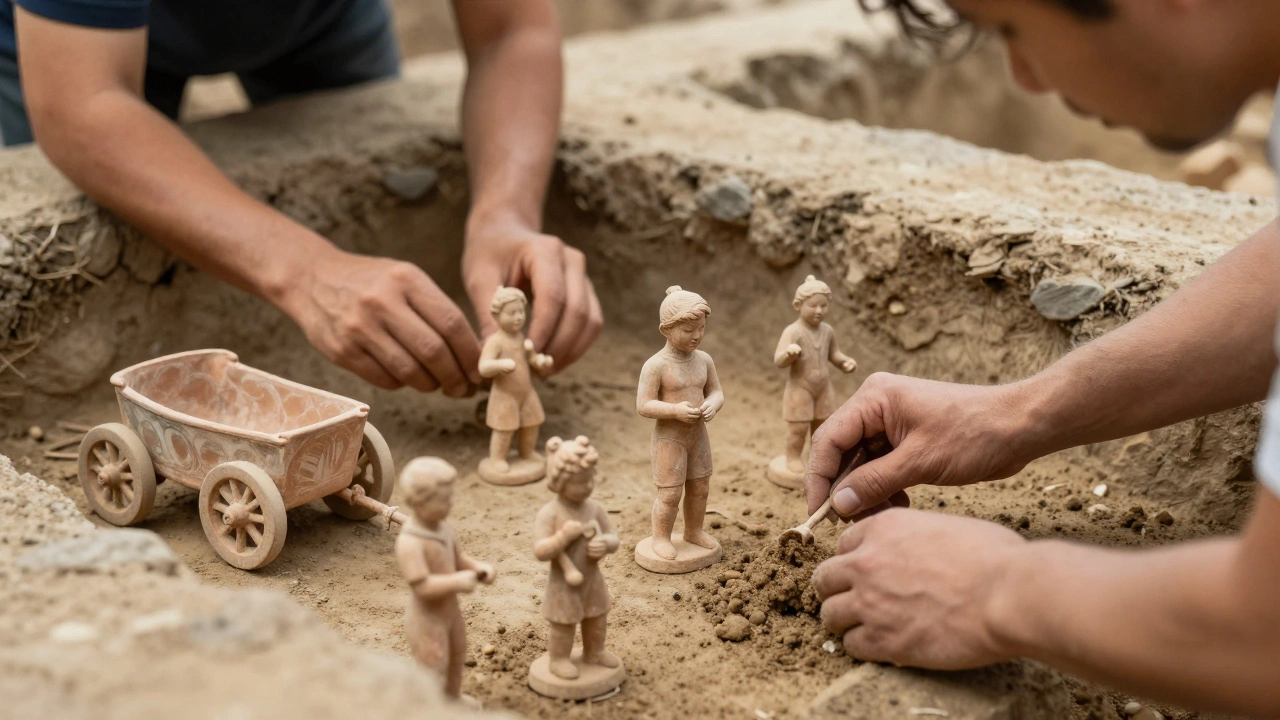
When archaeologists dig into Etruscan sites, they find no evidence supporting the myths. At the Murlo excavationsArchaeological site in Etruria with children's artifacts excavated between 2018-2022 (2018-2022), researchers discovered terracotta figurines of children playing games-no sexual content. Children's graves contained toys like miniature chariots and jewelry, but only 2.3% had items with sexual symbolism, compared to 18.7% in adult graves. This shows sexual themes were for adults, not children.
At the Etruscan sanctuary of Poggio Colla, archaeologists found the oldest known depiction of childbirth in Western art-a goddess squatting to give birth-on a 4-foot by 2-foot sandstone slab with Etruscan inscriptions. This artifact shows childbirth as a sacred event, not something hidden from children. The famous 'Sarcophagus of the Spouses' from Cerveteri (520 BCE) shows a couple reclining together, holding a pomegranate (a fertility symbol). But no children are present. Dr. Mario Torelli's study of 327 tombs found only 8.4% included child figures, and those children were shown in family settings-playing, attending religious ceremonies, or with parents. Not in sexual contexts.
Etruscan Children's Actual Lives
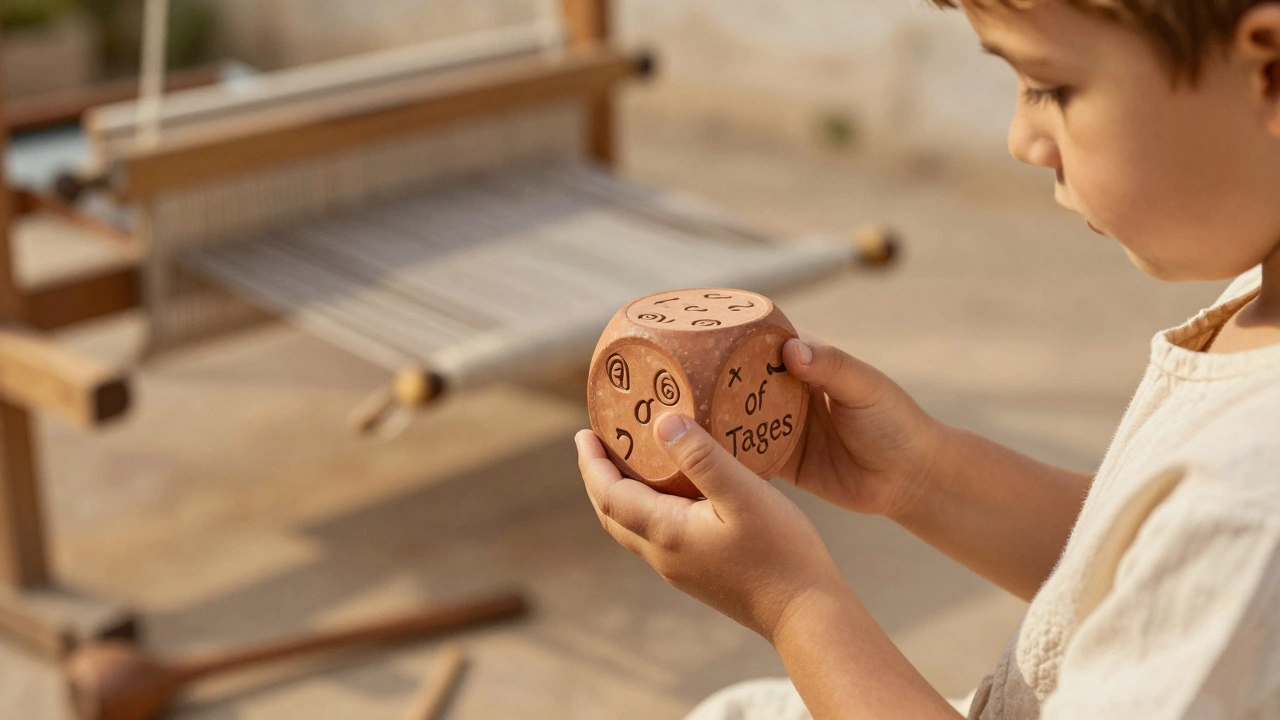
Etruscan children were socialized into family and religious roles. Excavations at Tarquinia uncovered 400 BCE 'dice of Tages'-a toy inscribed with religious text. This shows Etruscan children learned about mythology and community roles through play. Similar toys found in children's graves include miniature tools for farming and weaving, indicating they were preparing for adult responsibilities.
University of Florence's analysisStudy of 150 Etruscan children's burial sites across Tuscany confirmed: no artifacts linked to sexual education. Instead, toys mirrored adult activities like farming or weaving. Dr. Stefano Giannotti, director of the Murlo excavations, states: 'Children's graves contained miniature versions of adult tools and jewelry, suggesting socialization into adult roles, but no artifacts specifically related to sexual education.'
Dr. Nancy de GrummondEditor of the Oxford Handbook of Etruscan Studies and leading archaeologist emphasizes: 'The persistent myth of Etruscan sexual depravity serves as a cautionary tale. Modern archaeology shows Etruscan childhood was about learning social duties, not sexual practices.'
Why This Myth Persists
Even today, some websites repeat Theopompus's claims without context. But scholars agree: Greek writers had a clear agenda. They wanted to position Etruscans as 'barbaric' to justify Roman conquest. As Philip Harland notes in 2024, 'Theopompus's account was propaganda. He described Etruscans as they would have liked Greeks to see them-wild and uncivilized.'
The real story is simpler: Etruscan society valued family, community, and religious traditions. Children grew up learning these values through play, education, and participation in rituals-not through sexual exposure. This is the truth archaeology reveals.
Did Etruscan children witness their parents' sexual activity?
No credible evidence supports this claim. The only source is Theopompus's Greek writings, which were biased. Archaeological evidence from children's graves and tomb paintings shows no sexual content related to children. Modern scholars like Dr. Jean MacIntosh Turfa confirm this is a myth created by Greek historians to portray Etruscans as barbaric.
What did Etruscan children actually do for play?
Etruscan children played with toys like miniature chariots, terracotta figurines, and dice inscribed with religious symbols. Excavations at Murlo and Tarquinia reveal children's games focused on social roles-such as pretending to farm or weave. These artifacts show they were learning adult responsibilities through play, not sexual activities.
Why did Greek historians misrepresent Etruscan culture?
Greek society was highly patriarchal, with strict gender roles. Etruscan women's freedom-dining with men, owning property, and participating in public life-was seen as immoral by Greeks. Historians like Theopompus exaggerated these differences to frame Etruscans as uncivilized, justifying Roman conquest. This bias shaped false narratives about Etruscan sexuality.
Are there any Etruscan texts about their own culture?
Very few Etruscan written records survive. Most of what we know comes from Greek and Roman accounts, which are often biased. Archaeologists rely on tomb art, artifacts, and inscriptions-like the sandstone slab from Poggio Colla with Etruscan language engravings-but these don't mention sexual education for children.
What does the sarcophagus of the spouses tell us?
The 'Sarcophagus of the Spouses' (520 BCE) shows a couple reclining together, symbolizing marital unity and fertility. It contains no children or sexual imagery. This tomb art reflects Etruscan values of family and continuity-not sexual license. Dr. Mario Torelli's research confirms most tomb paintings focus on religious and familial themes, not sexual activity.