Onanism History Quiz
Test Your Knowledge
This quiz explores the history of how the biblical story of Onan became linked to masturbation, and how misconceptions were created through religion and medicine. How much do you know?
Onanism isn’t what you think it is. Most people assume it’s just an old-fashioned word for masturbation. But the truth is far stranger-and more revealing about how society controls bodies through religion and science. The story of onanism isn’t about sex. It’s about power, fear, and how a single biblical verse got twisted into a medical emergency.
The Biblical Origin: Onan Wasn’t Masturbating
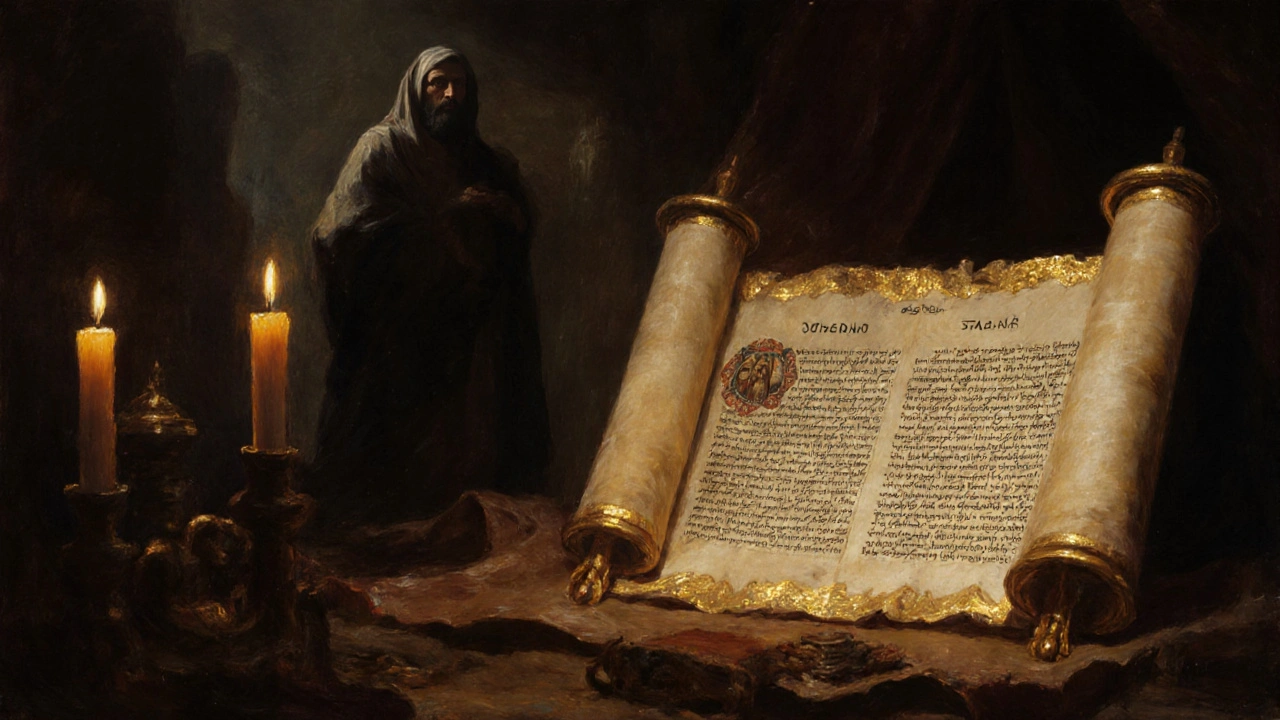
The word "onanism" comes from Genesis 38:7-10. Onan, son of Judah, was ordered by his father to sleep with his dead brother’s widow, Tamar, and give her a child to carry on his brother’s name. That was the custom-levirate marriage. But Onan didn’t want to raise a child who wouldn’t be his. So when he had sex with Tamar, he pulled out and spilled his semen on the ground. God killed him for it. Here’s the catch: the Bible doesn’t say Onan masturbated. It says he refused to fulfill his family duty. The sin wasn’t the act of ejaculation-it was the refusal to produce an heir. Ancient Jewish scholars knew this. The Talmud, written centuries later, clearly links the story to levirate obligations. But by the time Augustine of Hippo got hold of it in the 4th century, the meaning had shifted. He turned it into a condemnation of "wasting seed," no matter the context. That’s when masturbation became a sin.From Sin to Disease: The 18th-Century Medical Panic
For over a thousand years, onanism was a sin. Then, in 1760, a Swiss doctor named Samuel-Auguste Tissot changed everything. He wrote a book called L’Onanisme, claiming that masturbation caused epilepsy, blindness, madness, and death. He didn’t have proof. He just interviewed people who were already sick and blamed their condition on "self-pollution." Tissot’s book became a bestseller. Doctors across Europe and America started treating masturbation like a contagious disease. In the U.S., Benjamin Rush, a signer of the Declaration of Independence, warned that "masturbatory mania" could lead to "complete derangement of the intellect." In 1834, preacher Sylvester Graham-yes, the guy behind the graham cracker-claimed that masturbation caused pulmonary consumption and sudden death. Parents bought "anti-masturbation" devices: chastity belts, spiked rings, even electric shock machines. Medical schools taught it as fact. By 1850, 87% of American medical curricula included warnings about masturbation. It wasn’t just about morality anymore-it was science. And science had the power to lock people up, sterilize them, or force them into "cures."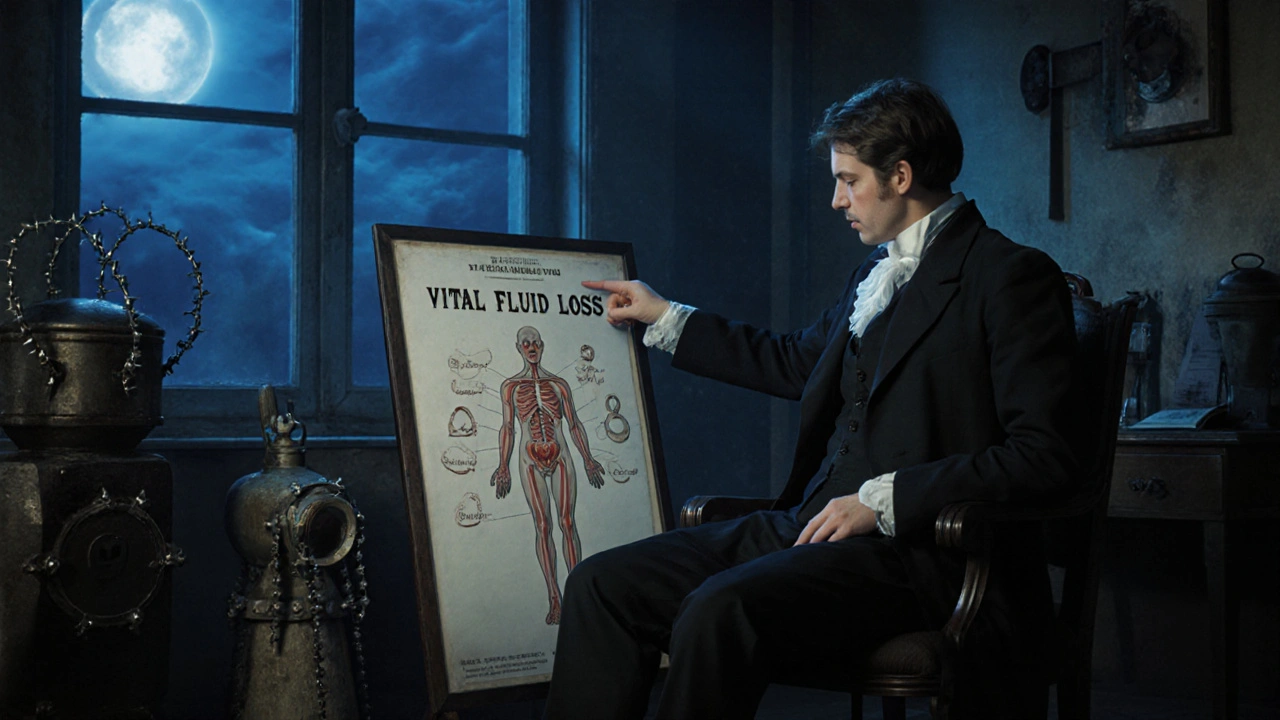
The Turning Point: Kinsey and the Collapse of the Myth
The medical model held strong until 1948. Then Alfred Kinsey published Sexual Behavior in the Human Male. His team interviewed over 5,000 men. What did they find? 92% had masturbated by age 40. Not a few. Not a fringe group. Almost everyone. And here’s the kicker: none of them were going blind, insane, or dying from it. They were just… normal. Kinsey didn’t just challenge the science-he exposed the fear behind it. The "disease" didn’t exist because people were masturbating. It existed because society needed a way to control sexuality. By the 1970s, the American Psychiatric Association removed "masturbation" from its list of mental disorders. The American Medical Association declared it a "normal and healthy sexual activity." The medical panic collapsed. But the religious one? It didn’t go away.Religion’s Last Stand: The Catholic Church and the Doctrine of Procreation
While science moved on, the Catholic Church doubled down. In 1930, Pope Pius XI quoted Augustine directly in his encyclical Casti Connubii: "Onan, the son of Juda, did this and the Lord killed him for it." The Vatican still teaches that any act meant to prevent conception-whether withdrawal, condoms, or birth control pills-is "intrinsically evil." Modern theologians disagree. In 2016, Catholic scholar Charles Curran admitted the traditional reading of Genesis 38 "requires serious reconsideration." Jewish scholars like David Novak point out that the Torah’s real concern was lineage, not semen. Even the Shulhan Arukh, the central code of Jewish law, says the prohibition on "spilling seed" only applies when it’s "in vain"-not when it’s part of marital intimacy. The irony? The Vatican’s entire stance on contraception rests on a 1,600-year-old misreading of a 2,500-year-old story about inheritance, not sex.
What We’re Still Getting Wrong Today
We still hear the old myths. "Masturbation is addictive." "It lowers testosterone." "It ruins relationships." None of these are true. Studies show masturbation improves sleep, reduces stress, and helps people understand their own bodies. It’s not a vice. It’s biology. The real problem isn’t the act. It’s the shame. People still feel guilty because they were taught onanism was a sin-and then a disease-and now, somehow, it’s still a secret. Even today, teenagers are told to "stop doing it" or face consequences. Parents don’t know how to talk about it. Schools avoid it. Religion still whispers it like a dirty word. We’ve moved from burning people at the stake for witchcraft to prescribing antidepressants for "masturbation guilt." The tools changed. The fear didn’t.The Modern Truth: A Natural, Normal, Human Act
Today, the science is clear. Masturbation is as normal as breathing. It’s part of human development. Children do it. Adults do it. People in long-term relationships do it. People who’ve never had sex do it. People who’ve had dozens of partners do it. It’s not a moral failure. It’s not a medical emergency. It’s just… human. The story of onanism is the story of how societies turn biology into sin, then sin into sickness, then sickness into silence. We’ve spent centuries pathologizing a natural act. We’re only now starting to unlearn it. The real question isn’t whether masturbation is okay. It’s why we ever thought it wasn’t.Is onanism the same as masturbation?
Technically, "onanism" originally meant coitus interruptus-the act of withdrawing before ejaculation during intercourse, as described in Genesis 38. But by the 18th century, the term was used interchangeably with masturbation in medical and religious texts. Today, most people use "onanism" as an archaic synonym for masturbation, though scholars avoid it because it carries outdated moral baggage.
Why did doctors think masturbation caused insanity?
In the 1700s and 1800s, doctors like Samuel-Auguste Tissot believed semen was a "vital fluid" that, once lost, couldn’t be replaced. They linked any unexplained illness-fatigue, headaches, depression, even epilepsy-to "excessive" masturbation. There was no evidence. It was a theory based on fear, not data. The medical community accepted it because it fit the era’s belief that sex was dangerous and needed control.
Does the Bible really condemn masturbation?
No. Genesis 38 condemns Onan for refusing to fulfill his duty to his dead brother’s wife by producing an heir. He used withdrawal to avoid fathering a child who would inherit his brother’s name. The text never mentions masturbation. The link between Onan’s act and masturbation was created centuries later by theologians like Augustine, who reinterpreted the passage to fit their views on sexual purity.
What do modern religious groups say about masturbation?
The Catholic Church still officially condemns masturbation as "intrinsically disordered," though many Catholics ignore this. Orthodox Judaism prohibits "spilling seed in vain," but allows exceptions for health and marital needs. Most Protestant denominations no longer consider it sinful. Reform Judaism and liberal Christian groups generally view it as a personal, private matter with no moral implications.
Was masturbation ever considered a crime?
In some places, yes. In 18th- and 19th-century Europe and America, masturbation was sometimes treated as a medical emergency, leading to forced treatments, institutionalization, or even surgical interventions like castration. While not a formal crime in most legal systems, it was treated as a moral and medical offense that justified state intervention in private life.
Is there any health risk to masturbation?
No credible medical evidence shows masturbation causes physical or mental harm. It can improve sleep, reduce stress, and help with sexual health by increasing body awareness. The only risks come from shame, secrecy, or compulsive behavior-which are psychological, not biological. These issues stem from cultural stigma, not the act itself.
Why does this history matter today?
Because the same patterns are still at work. Today, we’re told to "be careful" with pornography, "don’t get addicted" to sex toys, or "save yourself" for marriage. These messages echo the same fears that once led to electric shock treatments for teens. Understanding how onanism became a myth helps us see how religion and medicine have been used to control bodies-and why we need to question those stories today.