Etruscan Identity Decoder
Your interpretation will appear here.
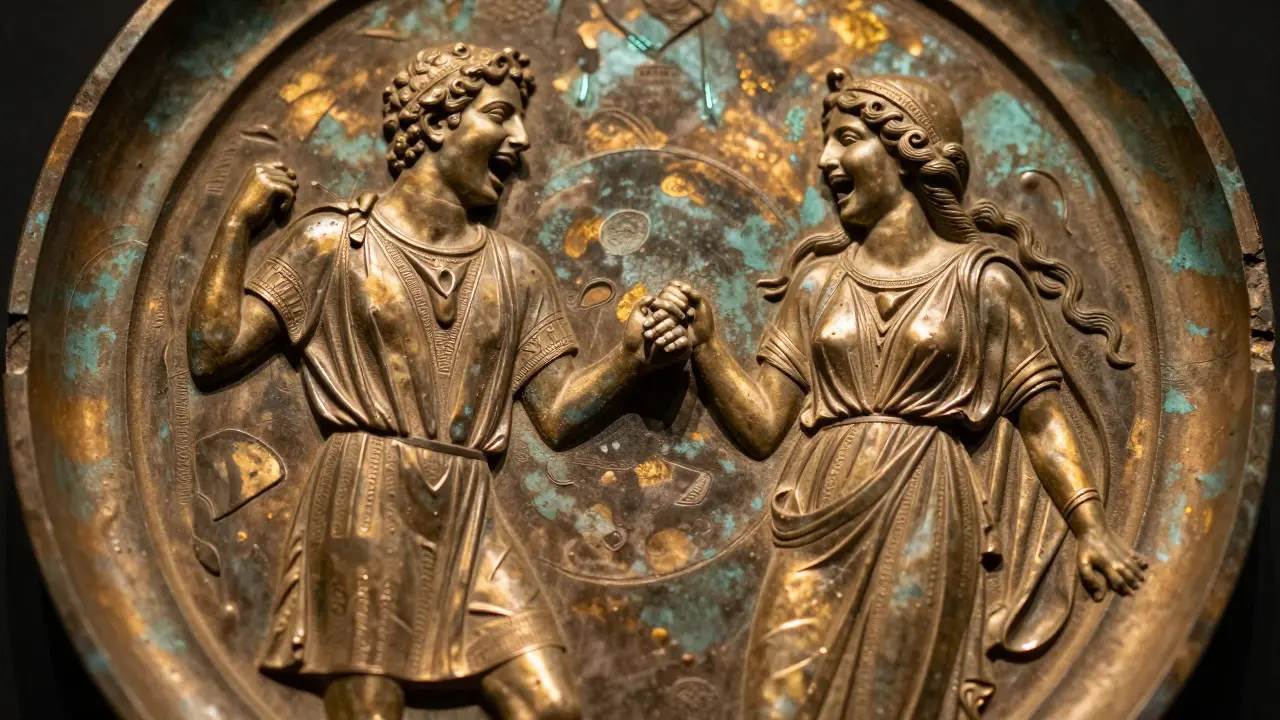
When you look at a typical Roman statue, the figure usually stands rigid, serious, and fully clothed. Now, imagine finding a bronze mirror where a man is laughing, wearing a short tunic, and holding hands with a woman who is also laughing. This isn't just a random scene; it is a window into Etruscan sexuality and social norms that were radically different from their Roman neighbors. For centuries, scholars assumed the Etruscans were simply "proto-Romans" or mysterious barbarians. But recent archaeological findings suggest they had a distinct culture where clothing, hair, and public behavior signaled identity in ways we are only beginning to understand.
The Language of Fabric: What Clothes Told Us About Status
In the ancient Mediterranean, what you wore was not just about fashion; it was a legal and social statement. The Etruscans, who dominated central Italy before Rome rose to power, used textiles to map out their society. Unlike later Roman strictures that dictated specific garments for specific classes, Etruscan attire appears more fluid, yet highly symbolic.
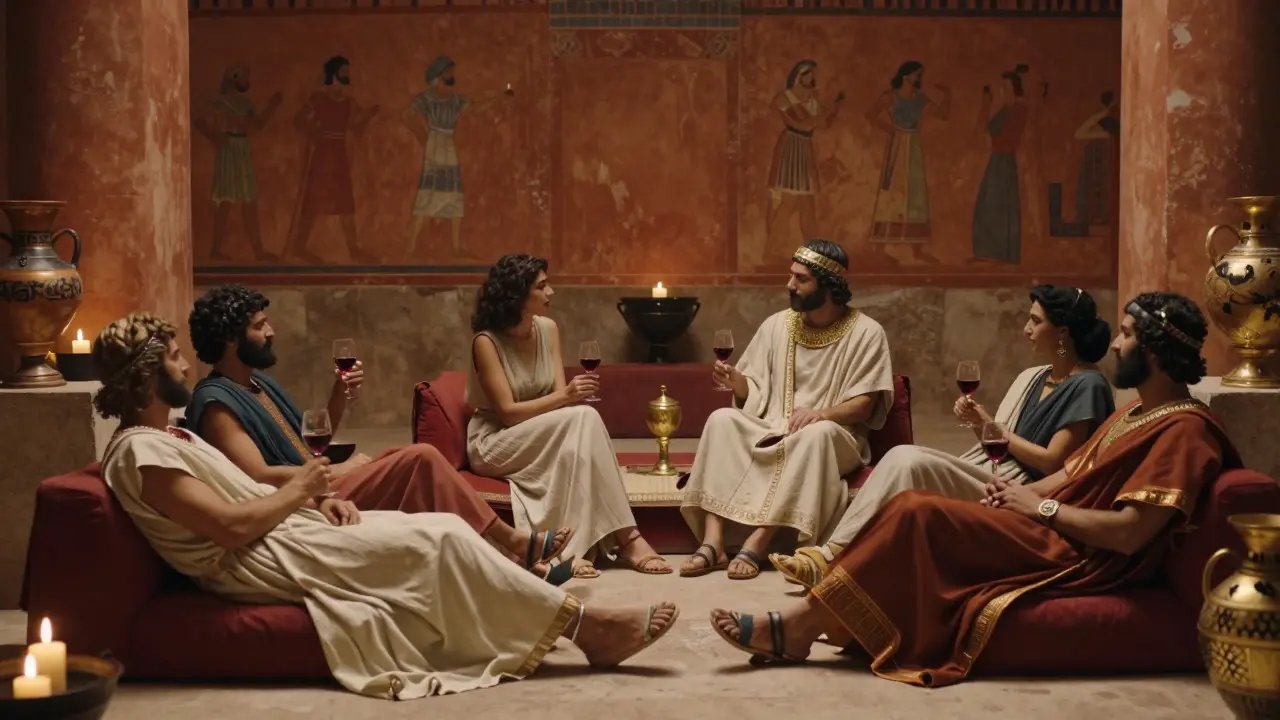
One of the most striking differences lies in the depiction of women. In many Greek and early Roman artworks, women are often shown in long, heavy peplos or chitons that restrict movement. Etruscan women, however, are frequently depicted in lighter, draped garments that reveal the shoulder and arm. This wasn't necessarily about modesty in the way we think today. Instead, it highlighted physical presence and vitality. A woman showing her arm in an Etruscan banquet scene signals participation, not passivity. She is eating, drinking, and conversing on equal footing with the men around her.
Menswear offers another layer of complexity. The standard male garment was the tunica, but its length and cut varied significantly based on age and status. Younger men often wore shorter tunics, while older, higher-status individuals might wear longer robes or cloaks. Interestingly, there is evidence of men wearing accessories typically associated with femininity in other cultures, such as elaborate belts or jewelry. In Etruscan iconography, these items didn't diminish masculinity; they enhanced it. They marked the wearer as someone of wealth and leisure, capable of adorning themselves. This challenges the binary view of gender we often project onto antiquity. Here, adornment was a marker of power, regardless of sex.
Hair as a Marker of Age and Role
If clothing told you who someone was, hair told you how old they were and what stage of life they occupied. Etruscan hairstyles are remarkably detailed in their artwork, allowing us to trace developmental stages with surprising accuracy.
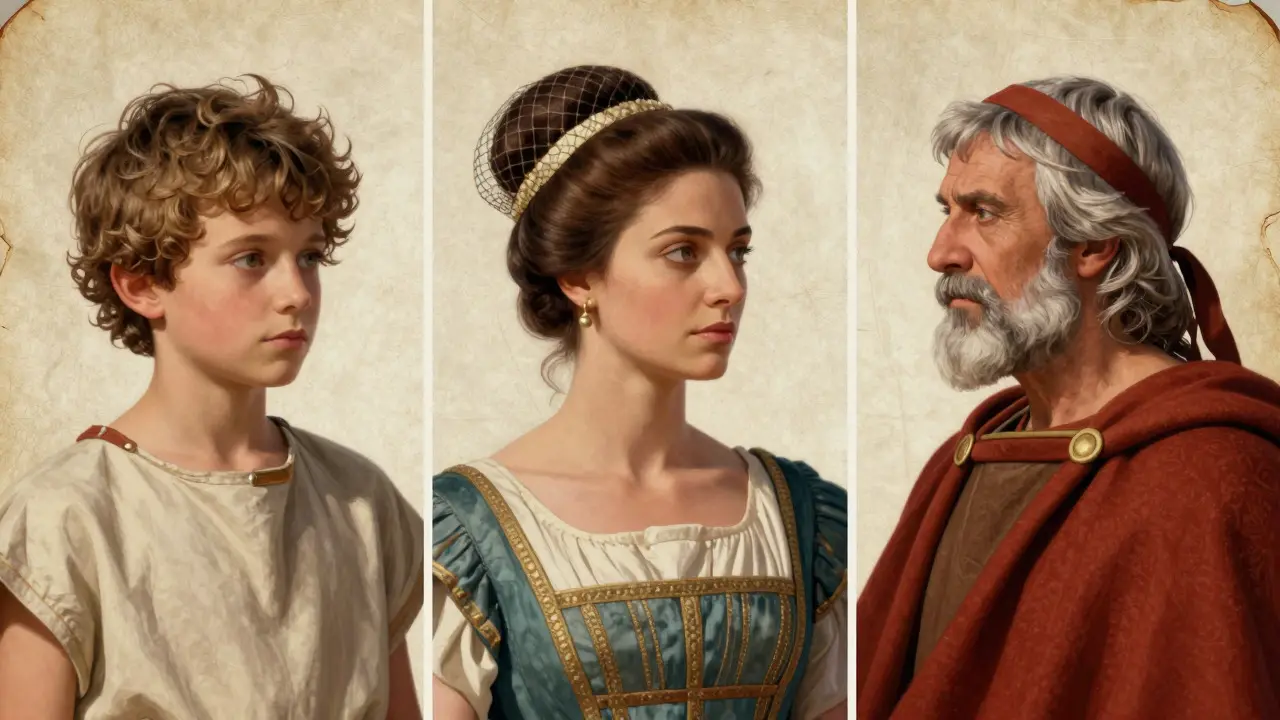
Children, both boys and girls, are often depicted with curly, short hair or simple braids. As they entered adolescence, hairstyles became more structured. For young men, a common style involved a short crop with a slight curl at the forehead, signaling youth and potential military readiness. However, as men aged and took on civic or priestly roles, their hair was often depicted as longer, sometimes tied back or adorned with ribbons. This shift from short to long hair mirrored a transition from private family life to public civic duty.
Women’s hair followed a similar trajectory but with distinct variations. Young women might have loose, wavy hair, while mature women often wore their hair in elaborate updos, secured with pins or nets. These styles weren't just decorative; they required significant time and skill to maintain, indicating a household with servants or resources. The complexity of the hairstyle could even indicate marital status. An unmarried woman might wear her hair down or in simpler arrangements, while a married woman would adopt the more complex, pinned styles that symbolized her new role within the family structure.
Banquets and Bodily Autonomy
Perhaps the most controversial aspect of Etruscan identity is found in their depictions of banqueting. In Greek art, women rarely appear at symposia (drinking parties). If they do, they are often segregated or passive observers. In Etruscan art, this norm is shattered. Women recline on couches alongside men, eat meat, drink wine, and engage in conversation.
This visual evidence suggests a level of bodily autonomy and social integration that was rare in the ancient world. The act of reclining was not merely about comfort; it was a display of status and relaxation. By placing women in this position, Etruscan artists affirmed their right to leisure. This directly impacts our understanding of sexual identity because it implies that female desire and pleasure were acknowledged, if not celebrated, in public spheres.
Scholars have debated whether these scenes represent reality or idealized fantasy. Some argue that while elite Etruscan women did participate in banquets, it was a controlled environment. Others point to grave goods, including mirrors and jewelry found in women's tombs, which depict intimate moments between couples. These artifacts suggest that personal relationships were valued and documented, providing a counter-narrative to the stoic ideals later promoted by Rome.
Comparing Etruscan and Roman Gender Norms
To truly grasp the uniqueness of Etruscan identity, we need to compare it with the culture that eventually absorbed them: Rome. The table below highlights key differences in how clothing, hair, and social behavior were portrayed in art.
| Feature | Etruscan Depiction | Roman Depiction |
|---|---|---|
| Women at Banquets | Frequent, reclining with men, active participants | Rare, usually seated separately or absent |
| Male Adornment | Jewelry and elaborate belts common for status | Minimal jewelry; focus on toga/stola simplicity |
| Hairstyle Significance | Indicates age, marital status, and civic role | Indicates political office and imperial favor |
| Expression | Smiling, laughing, dynamic poses | Serious, static, idealized features |
This comparison reveals a cultural shift. When Rome conquered Etruria, they didn't just take territory; they took people. Over time, Roman values of gravitas (seriousness) and pudor (modesty) began to overshadow Etruscan expressiveness. The rigid gender roles we associate with "ancient Rome" were partly a reaction against the perceived looseness of Etruscan customs. Understanding this helps us see Etruscan sexuality not as a deviation, but as a sophisticated system of identity expression that was deliberately suppressed by a rising empire.
Decoding Intimate Scenes in Bronze Mirrors
One of the richest sources for understanding Etruscan private life comes from small bronze mirrors. These objects, often decorated with engraved scenes, provide a glimpse into daily intimacy that larger public monuments rarely offer. Many of these mirrors show couples in various states of undress or embrace.
These scenes are not explicit in the modern pornographic sense, but they are undeniably affectionate. Men and women are shown touching, kissing, and sharing space in ways that suggest emotional closeness. The presence of these images on personal grooming tools implies that these relationships were part of everyday self-care and routine. It humanizes the Etruscans, moving them away from the image of distant, ritualistic priests and warriors to people who loved, laughed, and lived complex social lives.
Furthermore, the diversity of body types depicted in these mirrors is notable. We see robust figures, slender frames, and varying ages. This realism contrasts sharply with the idealized perfection found in Greek sculpture. It suggests that Etruscan art valued individuality and recognition over generic idealization. A viewer looking at a mirror would see themselves reflected, not just in the metal, but in the faces and forms carved into it.
Why This Matters Today
You might wonder why the clothing and hair of a civilization that vanished two thousand years ago should matter to us now. The answer lies in how we construct identity. Just as Etruscans used dress and demeanor to signal who they were, we do the same today. The Etruscan example reminds us that gender roles are not fixed biological facts but cultural constructs that can be flexible, expressive, and deeply meaningful.
By studying Etruscan iconography, we learn that alternative models of social interaction existed in the ancient world. This challenges the notion that patriarchal, rigid gender separation is the only historical norm. It opens the door to re-evaluating other ancient cultures through a lens of diversity rather than uniformity. Whether you are a student of history, an artist interested in costume design, or simply curious about human behavior, the Etruscans offer a compelling case study in how visual cues shape social reality.
Frequently Asked Questions
Did Etruscan women have more rights than Roman women?
Yes, generally speaking. Etruscan women could own property, vote in some contexts, and participate in public banquets. Roman women were largely confined to the domestic sphere and required male guardianship for most legal transactions. The artistic evidence strongly supports greater social freedom for Etruscan women.
What does the smiling face in Etruscan art signify?
The smile, known as the "Etruscan smile," is a distinctive feature of their art. It likely signifies vitality, good health, and a connection to the divine or ancestral spirits. It contrasts with the solemn expressions common in Greek and Roman portraiture, suggesting a different cultural attitude toward death and celebration of life.
How did Etruscan hairstyles change over time?
Hairstyles evolved from simpler, natural-looking cuts in earlier periods to more elaborate, stylized updos in the late Archaic and Classical periods. This shift reflects increasing influence from Greek aesthetics and a growing emphasis on displaying wealth and status through grooming.
Are there any surviving Etruscan clothing items?
Very few intact garments survive due to the organic nature of wool and linen. However, fragments of fabric have been found in tombs, and detailed descriptions exist in literary sources. Most of our knowledge comes from visual representations in frescoes, reliefs, and bronze mirrors.
How did Rome view Etruscan sexual customs?
Rome often viewed Etruscan customs with suspicion, labeling them as excessive or licentious. Roman writers like Livy criticized the Etruscan practice of women mixing freely with men at banquets, seeing it as a lack of moral discipline. This negative portrayal helped justify Roman dominance and the imposition of stricter social codes.