Trans vs. Intersex Identity Comparison Tool
Being transgender means your gender identity doesn't match the sex you were assigned at birth. It's about how you internally understand yourself, not your physical body.
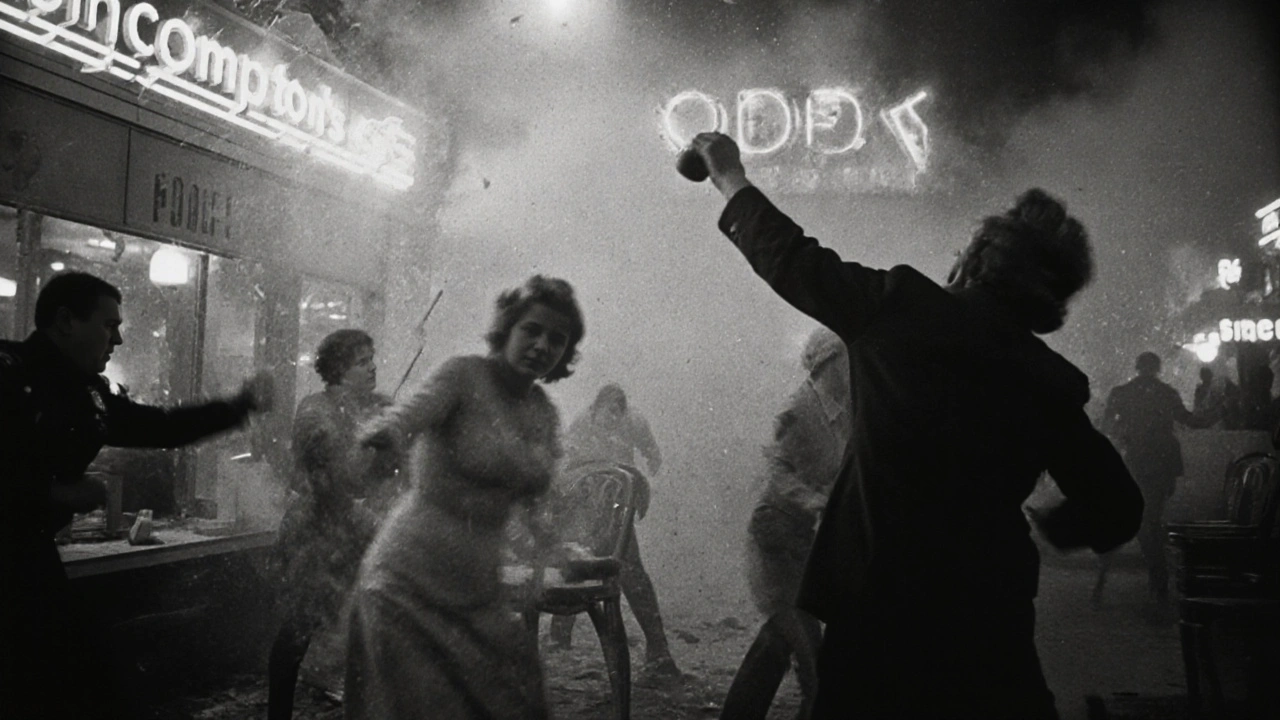
The Compton's Cafeteria riot in 1966, where transgender women and drag queens fought back against police harassment in San Francisco.
Often involves gender-affirming care including hormones, surgeries, and other medical interventions to align body with gender identity.
Access to gender-affirming care, legal recognition of gender identity, and protection from discrimination.
"Transgender people are just confused about their gender."
Being intersex means you're born with physical sex characteristics (chromosomes, hormones, anatomy) that don't fit typical definitions of male or female.
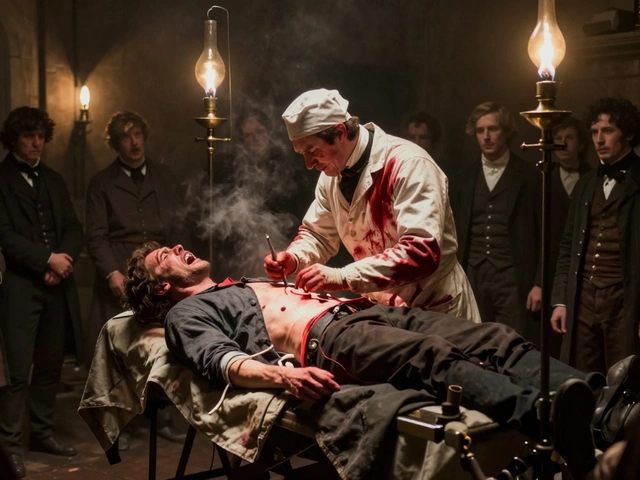
The destruction of Magnus Hirschfeld's Institute for Sexual Science in 1933, which erased much of early intersex history.
Often involves non-consensual surgeries performed on infants and children to 'normalize' anatomy, leading to lifelong physical and psychological harm.
Ending non-consensual surgeries on intersex children and protecting bodily autonomy.
"Intersex people are just transgender."
Why this distinction matters
This comparison highlights why conflating these identities harms both communities. Transgender people fight for recognition of their gender identity, while intersex people fight for bodily autonomy. Both need different forms of support and advocacy.
When you think of LGBTQ+ history, names like Marsha P. Johnson and Sylvia Rivera often come up. They were at the front lines of the Stonewall Riots. But what many don’t realize is that their stories are part of something bigger - a long, messy, often erased history of people who didn’t fit into the boxes society tried to force them into. Among them were transgender people fighting to live as themselves, and intersex people fighting just to be left alone. These two groups share space in the LGBTQ+ movement, but their experiences, struggles, and histories are not the same. And understanding that difference matters - not just for accuracy, but for justice.
Transgender History: Living Against the Grain
Transgender people have always existed. Long before the word "transgender" was coined, people lived outside the gender they were assigned at birth. One of the earliest documented cases comes from 576 CE: Anastasia the Patrician, a woman in the Byzantine court, left her life behind and lived as a man for nearly three decades in a monastery in Egypt. She wasn’t hiding - she was living. Today, many in the LGBTQ+ community see her as a transgender saint.
The 20th century brought medical attention - and also medical harm. In 1919, German physician Magnus Hirschfeld opened the Institute for Sexual Science in Berlin. He didn’t just study sexuality; he treated transgender people with dignity. He helped arrange early gender-affirming surgeries. One of the first known surgeries was performed on Karl M. Baer in 1906. By 1931, Toni Ebel and Charlotte Charlaque became the first known trans couple to receive vaginoplasty. Hirschfeld didn’t just support transgender people - he included intersex people too. His work was radical for its time.
Then came the Nazis. In 1933, they burned down his institute. Books, research, patient records - all gone. Thousands of years of documentation, destroyed in one night. That loss still echoes today. Much of what we know about early transgender history comes from fragments, whispers, and survivors’ stories.
Fast forward to 1952. Christine Jorgensen returned to the U.S. after undergoing gender-affirming surgery in Denmark. Her story hit newspapers across the country. For many Americans, she was the first transgender person they’d ever heard of. She became a celebrity, but also a target. People didn’t know how to handle her. They called her a "freak," a "curiosity," a "medical miracle." But she kept speaking out. She made it impossible to ignore.
And then came the activism. In 1966, three years before Stonewall, transgender women and drag queens - many of them Black and Latina - fought back at Compton’s Cafeteria in San Francisco. Police were harassing them nightly. That night, someone threw a cup of coffee at an officer. The whole cafeteria erupted. Chairs flew. Windows shattered. The riot lasted for hours. It was the first known transgender-led uprising in U.S. history. And it was ignored by most of the gay rights movement at the time.
Intersex History: The Body as a Battlefield
Intersex people are born with physical sex characteristics that don’t fit typical definitions of male or female. This includes variations in chromosomes, hormones, or anatomy. It’s more common than most people think - about 1 in 1500 to 2000 babies are born with intersex traits. But for decades, doctors didn’t ask them. They didn’t tell their parents. They just operated.
There’s no single "intersex movement" with clear milestones like Stonewall. That’s because intersex history has been erased by medicine. Doctors in the 1950s and 60s decided that intersex babies needed to be "fixed" - often without consent, sometimes without anesthesia. They cut, stitched, and altered bodies to make them look "normal." Many of those children grew up in pain, confused, and ashamed. They weren’t told why they’d been operated on. Some never found out until they were adults.
Magnus Hirschfeld was one of the few in his time who recognized intersex people as human beings, not medical errors. But after his institute was destroyed, that perspective vanished. For most of the 20th century, intersex people were hidden in hospital records. No parades. No protests. No media. Just silence.
It wasn’t until the 1990s that intersex activists began speaking out. Groups like InterACT and the Intersex Society of North America started demanding an end to non-consensual surgeries. They argued: your body is not a mistake. You don’t need to be fixed. You deserve autonomy. That’s a fundamentally different fight than the one transgender people have been waging - which is about recognition, identity, and access to care.
Today, countries like Malta and Portugal have banned non-consensual surgeries on intersex children. But in the U.S., it’s still legal. And thousands of children are still being operated on every year. The silence is breaking - but slowly.
Where They Overlap: Shared Oppression, Shared Resistance
Trans and intersex people didn’t choose to be lumped together under the LGBTQ+ umbrella. Society did. But the overlap isn’t accidental. Both groups have faced the same kind of violence: medical control, legal erasure, social stigma. Both have been called "abnormal." Both have been treated as problems to be solved - not people to be respected.
At Stonewall, Marsha P. Johnson and Sylvia Rivera were trans women of color. They were also poor. They were also often excluded from gay bars and organizations. The Mattachine Society, one of the earliest gay rights groups, didn’t want transgender people in their meetings. They thought it would make the movement look "too strange." But Johnson and Rivera didn’t wait for permission. They organized. They fought. They built spaces for people no one else would protect.
And Hirschfeld? He was one of the few who saw the connection. He didn’t separate transgender from intersex. He didn’t separate gay from straight. He saw human diversity as something to be understood, not punished. That’s why the Nazis burned his library. He threatened the idea that there are only two kinds of people.
Even today, many LGBTQ+ organizations still struggle with inclusion. Some pride events still leave out intersex people. Some trans advocacy groups still don’t talk about intersex rights. But the truth is, you can’t fight one kind of oppression without seeing how it connects to others. The same doctors who force surgeries on intersex babies are the ones who pathologize trans identities. The same laws that deny gender markers on IDs hurt both communities.
Where They Diverge: Different Battles, Different Needs
Here’s where it gets real: transgender and intersex people need different things.
Trans people often need access to hormones, surgeries, legal name changes, and protection from discrimination. They need to be seen as who they are - not as a medical case.
Intersex people need protection from non-consensual surgeries. They need their bodies respected as they are. They need truth - not silence. They need the right to decide for themselves what happens to their bodies, when they’re ready.
One group fights for identity. The other fights for bodily autonomy. One group wants to be recognized. The other wants to be left alone.
That’s why the term "LGBTQIA+" exists. The "I" stands for intersex. The "A" stands for asexual. These aren’t afterthoughts. They’re essential parts of the story. When we say "LGBTQ+," we’re not just being inclusive. We’re being honest.
And yet, most history books still leave out intersex people. You’ll find pages on Harvey Milk. You’ll find photos of the Stonewall Riots. You’ll find documentaries about transgender activists. But you won’t find stories about intersex children who were operated on without consent. You won’t hear their names. You won’t see their faces. That’s not an accident. It’s erasure.
Why This Matters Today
When you erase intersex history, you make it easier to justify surgeries on babies. When you ignore transgender history, you make it easier to ban gender-affirming care. Both are forms of control - control over bodies, control over identities, control over truth.
The fight isn’t over. In 2025, 22 U.S. states have banned gender-affirming care for minors. In 2024, the U.S. Surgeon General released a report acknowledging that non-consensual intersex surgeries cause lifelong trauma. These aren’t old problems. They’re current ones.
And the people who are still fighting? They’re the same kind of people who stood up at Compton’s Cafeteria. They’re the ones who refused to be invisible. They’re the ones who kept talking, even when no one was listening.
Trans and intersex histories aren’t just footnotes in LGBTQ+ history. They’re the backbone. Without them, the movement loses its soul. Because the real goal of LGBTQ+ rights isn’t to fit into society’s boxes. It’s to break the boxes - and let everyone live as they are.
What You Can Do
You don’t need to be trans or intersex to help. Here’s how:
- Learn the difference between gender identity and sex characteristics. They’re not the same thing.
- Support intersex-led organizations like InterACT or the Intersex Justice Project. They’re doing the work no one else will.
- Speak up when someone says "transgender and intersex are the same." They’re not. And it matters.
- Push for policy change - demand bans on non-consensual surgeries on children, and support laws that protect gender-affirming care.
- Listen to trans and intersex voices. Read their books. Watch their documentaries. Follow their activists on social media.
This isn’t about being politically correct. It’s about being human.