Etruscan Banquet Simulator
Select a scenario below to see how an elite woman's experience at a banquet differed across three major ancient civilizations.
Etruria (c. 500 BCE)
The Northern Neighbor
IntegratedAthens (Classical Period)
The Southern Critic
SegregatedRome (Early Republic)
The Future Conqueror
RestrictedBanquet Analysis
CultureThe Scene
...
Social Perception
...
Quick Reference Comparison
| Feature | Etruria | Greece | Rome |
|---|---|---|---|
| Seating | Mixed couples on couches | Men only on couches | Men on couches, women seated |
| Alcohol | Shared socially | Public male activity | Restricted for women |
| Visibility | Frequent & Integrated | Absent (except courtesans) | Limited/Segregated |
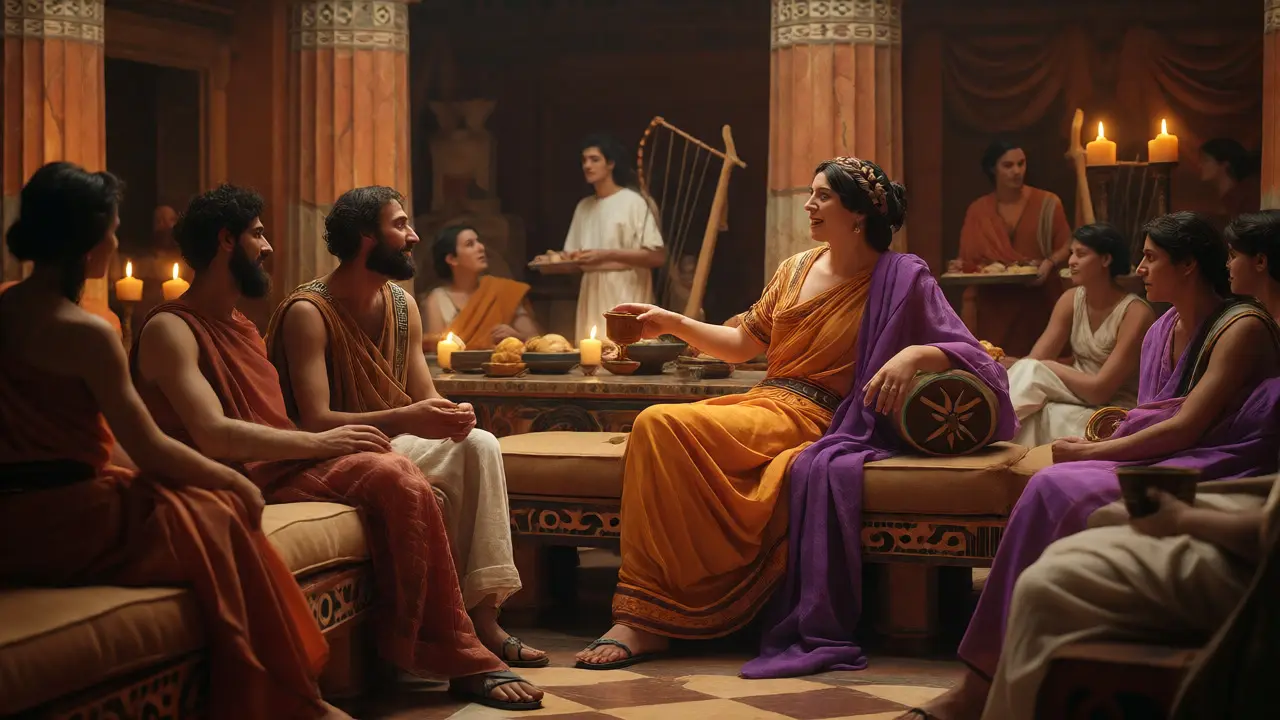
Imagine walking into a room in modern-day Rome or Athens around 500 BCE. If you were a woman, you likely wouldn't be there. You’d be in the back of the house, out of sight, while men drank wine and debated politics. But travel north to Etruria, and the scene changes drastically. Here, women reclined on couches alongside men, ate the same food, and watched the same performances. This wasn’t just a minor cultural quirk; it was a social structure so different from their neighbors that it sparked centuries of debate. Did Etruscan women attend banquets freely? The evidence says yes, but the interpretation is where things get messy.
The core of this historical puzzle lies in the clash between two types of sources. On one side, you have the physical evidence: tomb paintings, sarcophagi, and artifacts dug up from sites like Tarquinia and Cerveteri. These show women present, active, and comfortable in public spaces. On the other side, you have the written records from Greek and Roman authors. These writers, often hostile to Etruscan power, described Etruscan women as shameless, sexually promiscuous, and overly dominant. So, who are we supposed to believe? The artists painting their own culture, or the critics writing about them?
The Visual Evidence: What the Tombs Actually Show
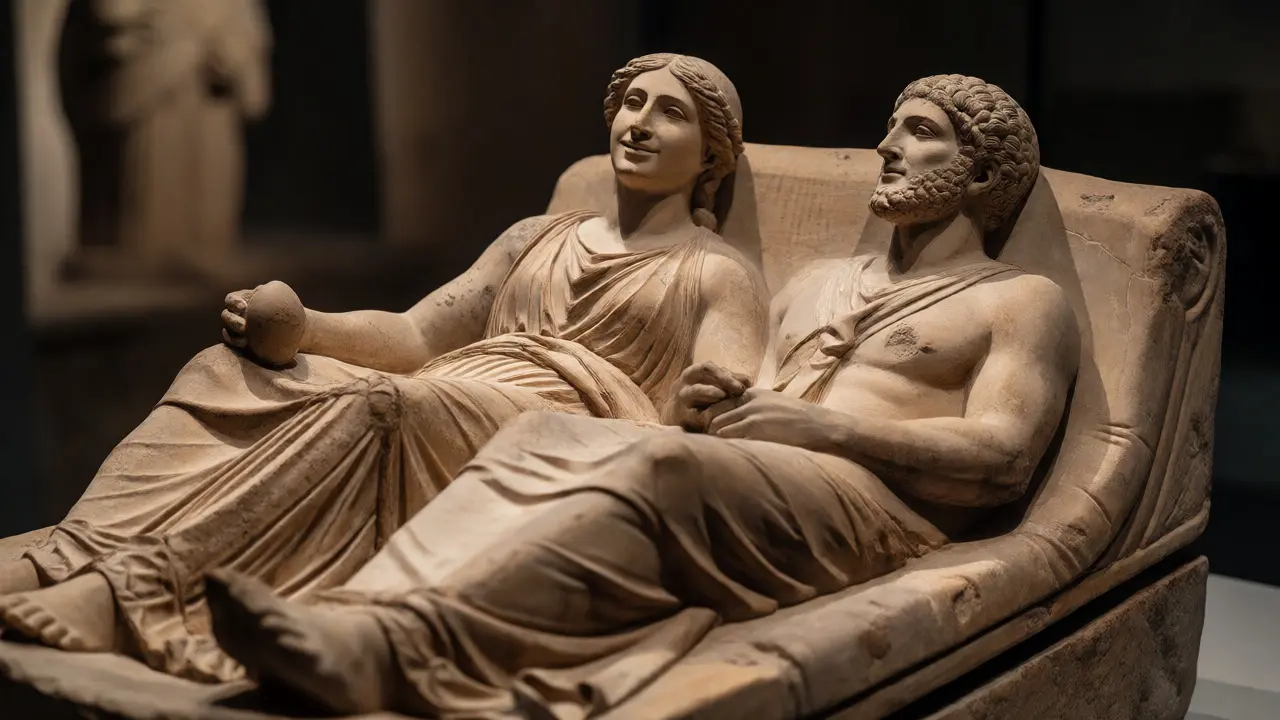
If you visit the Necropolis of Banditaccia or look through high-resolution scans of the Tomb of the Reliefs, you see something remarkable. In Etruscan funerary art, women are not hidden behind veils or relegated to the edges of the frame. They are central figures. A prime example is the famous Sarcophagus of the Spouses from Cerveteri (c. 520 BCE). It depicts a man and a woman reclining together on a banquet couch. The woman is not sitting passively; she is holding an egg (a symbol of rebirth) and engaging with her husband. Her posture is relaxed, confident, and equal to his.
This visual pattern repeats across hundreds of tombs. Paintings show mixed-gender groups dining together. Women serve themselves wine. They hold fans, interact with musicians, and appear fully integrated into the social ritual of the symposium (the drinking party). In Greek art, by contrast, respectable women are almost never shown at these parties. Only hetairai (courtesans) or slaves are depicted serving or attending. The fact that Etruscan wives are shown sharing the couch suggests they had legal and social standing that allowed them to participate in civic and religious life publicly.
| Feature | Ancient Greece (Athens) | Ancient Rome (Early Republic) | Etruria |
|---|---|---|---|
| Women's Presence | Absent (except courtesans/slaves) | Limited/Segregated | Frequent & Integrated |
| Seating Arrangement | Men only on couches | Men on couches, women seated | Mixed couples on couches |
| Alcohol Consumption | Public male activity | Restricted for women | Shared socially |
| Social Perception | Domestic virtue | Pudicitia (modesty) | Public visibility |
The Literary Bias: Why Greeks Hated Etruscan Freedom
If the art looks progressive, why do history books often paint Etruscan women as scandalous? Blame the Greeks. Writers like Theopompus and Herodotus wrote extensively about the Etruscans, but their perspective was deeply biased. For a Greek citizen, a woman’s honor was tied to her invisibility. Seeing an Etruscan woman drink wine, dance, and kiss her husband in public looked like moral decay to a Athenian observer.
Theopompus, a historian from the 4th century BCE, famously claimed that Etruscan women were "promiscuous" and that they would sleep with multiple men simultaneously. He suggested that because they ate with men, they must also be sexually available to them. This logic reveals more about Greek anxieties than Etruscan reality. To the Greeks, eating together implied sexual access. Since Etruscan women ate with men, Greek writers assumed they were loose morals. It’s a classic case of projecting cultural norms onto a foreign society.
Roman authors later inherited this bias. Livy, the Roman historian, described Etruscan women as dangerous influencers who could sway political decisions. When the Romans conquered Etruria, they didn’t just take land; they absorbed a narrative that framed Etruscan independence as decadence. By labeling Etruscan women as "shameless," Greek and Roman elites justified their own patriarchal restrictions. If your neighbor’s women are "wild," your controlled women are "civilized."
Reconstructing Daily Life: More Than Just Party Guests
To understand if women attended banquets "freely," we need to define what that meant. It wasn’t about freedom in the modern sense of individual liberty. It was about social permission. In Etruscan society, women owned property. Inscriptions show women inheriting wealth and managing estates. If a woman could own a business or a farm, it makes little sense to assume she couldn’t eat dinner with her husband.
Archaeological finds support this economic agency. We find jewelry and personal items in female burials that indicate status independent of their husbands. Some inscriptions name women without naming their fathers, suggesting they had recognized identities in their own right. This economic power likely translated to social confidence. At a banquet, an Etruscan woman wasn’t just a guest; she might have been the hostess, the co-owner of the household, or even a patron of the arts.
Consider the role of religion. Etruscan priests, both male and female, participated in rituals. Women were involved in divination and prophecy. If women held spiritual authority, their presence at communal feasts-which were often religious events-would be expected, not scandalous. The banquet was a space for bonding, political networking, and honoring gods. Excluding half the population from such key societal functions would have been economically and spiritually inefficient.
The Debate: Agency vs. Objectification
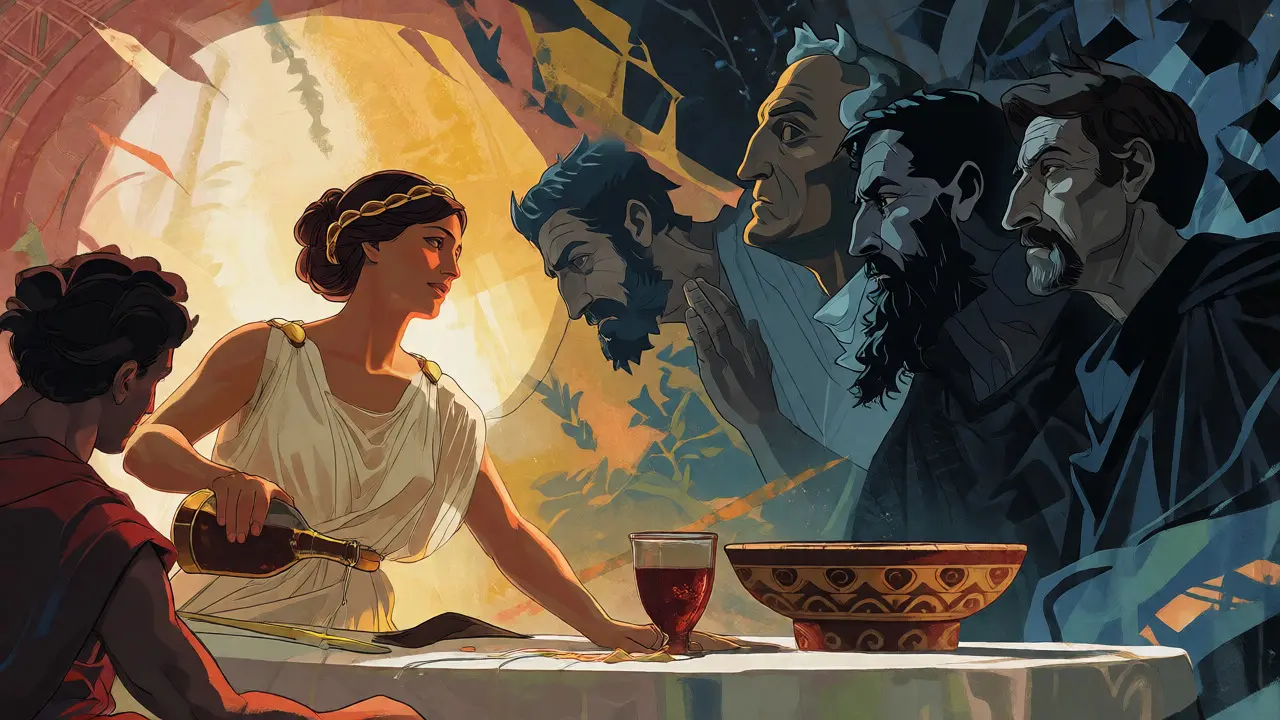
Not all scholars agree that Etruscan women were empowered. Some argue that being visible doesn’t mean being free. In many ancient societies, women displayed in public art were objects of male gaze, not active agents. Critics point out that while women are present in art, they are rarely shown speaking or leading. They are beautiful, adorned, and passive recipients of attention.
However, recent feminist archaeology challenges this view. Scholars like Larissa Bonfante argue that we should stop interpreting Etruscan art through Greek eyes. When we look at the details, we see women directing servants, gesturing during conversation, and interacting with children. These aren’t passive dolls; they’re participants. The argument isn’t that Etruscan society was a utopia for women, but that it offered a different kind of participation. They weren’t locked away, which gave them influence over domestic and possibly political spheres.
The truth likely sits in the middle. Etruscan women had more freedom than their Greek counterparts, but they still lived in a patriarchal world. Their freedom was bounded by class and family status. An elite woman could recline at a banquet; a slave woman served the wine. But within the elite class, the gender divide was porous compared to Athens. This nuance matters because it shows that ancient gender roles weren’t monolithic. There were variations, and Etruria represents a significant deviation from the Mediterranean norm.
Why This Matters Today
Understanding Etruscan women helps us break the stereotype that "ancient equals oppressive." It reminds us that gender dynamics are culturally constructed, not biologically fixed. The Etruscans managed to integrate women into public life in ways that surprised-and annoyed-their neighbors. This integration likely contributed to Etruscan resilience and cultural richness.
Furthermore, studying this debate teaches us how history is written. Much of what we think we know about the past comes from the winners’ narratives. The Greeks and Romans wrote the history books, so their prejudices shaped our understanding of Etruscan women. By digging up the actual evidence-the bones, the pots, the paintings-we can rewrite those narratives. We can see that the "shameless" Etruscan woman was likely just a woman who refused to stay silent.
Did Etruscan women drink alcohol at banquets?
Yes, artistic evidence strongly suggests that Etruscan women consumed wine at banquets. Unlike in early Rome, where women were strictly forbidden from drinking wine (and faced severe penalties if caught), Etruscan women are frequently depicted holding cups or pouring wine. This indicates that alcohol consumption was a shared social activity rather than a male-exclusive privilege.
Why did Greek historians claim Etruscan women were promiscuous?
Greek historians like Theopompus equated public visibility with sexual availability. In Greek culture, respectable women stayed home. Seeing Etruscan women reclining, kissing, and eating with men led Greek observers to assume they were sexually loose. This was largely a projection of Greek moral standards onto a culture with different social norms, used to portray the Etruscans as morally inferior.
What is the most famous depiction of an Etruscan couple?
The Sarcophagus of the Spouses from Cerveteri is the most iconic example. Dating to around 520 BCE, it shows a married couple reclining together on a banquet couch. The woman is depicted as an equal partner, smiling and engaged, challenging the notion that Etruscan women were subordinate or invisible in social settings.
Did Etruscan women have legal rights?
Evidence suggests Etruscan women had significant legal rights, including the ability to own property and inherit wealth. Inscriptions often identify women by their own names, sometimes without reference to a father or husband, indicating independent legal identity. This economic autonomy likely supported their social freedom to participate in public events like banquets.
How does Etruscan gender equality compare to Ancient Rome?
Etruscan women generally enjoyed more public freedom than early Republican Roman women. Roman law heavily restricted women’s public activities and emphasized modesty (pudicitia). Etruscan women were visible in public spaces, art, and religious rites. However, neither society was egalitarian by modern standards; both were patriarchal, but Etruria allowed for greater social integration of women in elite circles.