Medieval Sexuality Comparison Tool
Explore the Gap: Medieval Writings vs. Reality
This tool compares what medieval texts claimed about women's sexuality with what historical evidence shows actually happened.
Select a topic to see what medieval texts claimed.
Select a topic to see what historical evidence shows actually happened.
What Medieval Writers Said About Women’s Sexuality - And What Women Actually Did
Medieval texts are full of warnings about women’s sexuality. Nuns were told to guard their purity. Wives were instructed to be silent, obedient, and sexually restrained. Sinful women were painted as temptresses, seductresses, or worse - vessels of original sin. But if you look beyond the sermons, legal records, and romances, a different picture emerges. Women weren’t just passive victims of male fear and doctrine. They navigated, resisted, and sometimes rewrote the rules - even when the system was designed to silence them.
The gap between what medieval writers claimed about female sexuality and what women actually experienced is enormous. One thing is clear: the Church and legal systems didn’t control women’s bodies the way textbooks suggest. Real women had sex, got pregnant, had affairs, sought pleasure, and sometimes even spoke up about it - even if they had to do it quietly.
The Virginity Obsession: More Than Just Chastity
In medieval Europe, virginity wasn’t just about not having sex. It was currency. For noblewomen, it meant marriage alliances. For nuns, it meant spiritual power. For common women, it meant survival - because losing your virginity outside marriage could mean public whipping, social ruin, or worse.
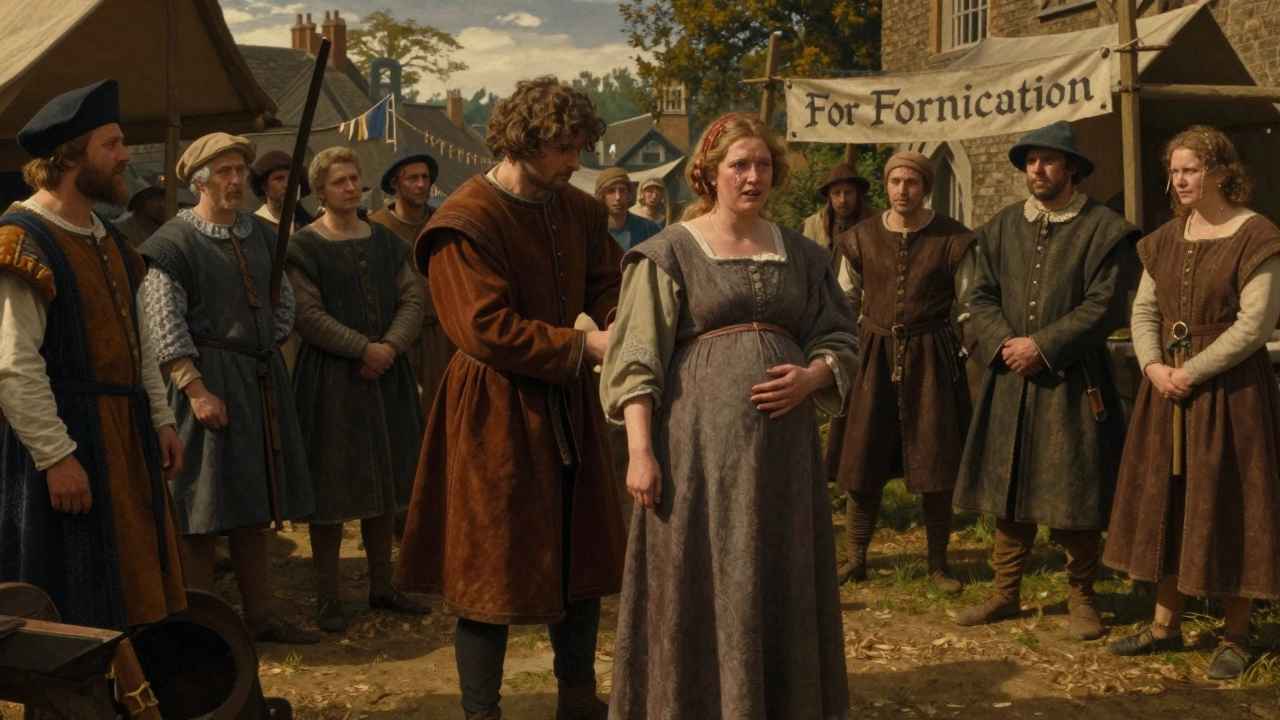
Take the 13th-century case of Julia Redes. She was whipped through the market for having sex with John, a clerk. She was also pregnant. Her punishment wasn’t just about morality - it was about control. Pregnancy made her visible. It proved she’d broken the rules. Men could sleep around with little consequence. Women? One slip, and the whole town knew.
But here’s the twist: virginity wasn’t always about biology. A woman could be called a virgin even if she’d had sex - if she was married. The Church taught that sex within marriage was holy, as long as it was for procreation. So a woman who’d had ten children could still be called chaste. Meanwhile, a girl who’d never had sex but was seen flirting might be labeled corrupt. Virginity was a social performance, not a physical state.
Women’s Bodies in Medical Texts: Cold Wombs and Male Seed
Medieval doctors didn’t think women were just smaller men. They thought they were fundamentally different - and flawed. Drawing from ancient Greek ideas, they believed a woman’s womb was cold and needed the heat of male semen to function. Without it, the womb would wander, causing hysteria, infertility, or madness. This wasn’t metaphor. It was medical fact - according to them.
That belief had real consequences. Women who didn’t want sex were seen as sick. Women who wanted sex too much were seen as dangerous. The idea that women had strong sexual desires was terrifying. So texts warned: “A woman’s weakness in resisting desire is an obstacle to conception.” Translation: if you enjoy sex, you might not get pregnant - and if you don’t get pregnant, you’re failing your duty.
But again, reality didn’t match the theory. Women knew their bodies. They used herbal remedies to prevent pregnancy. They sought out lovers. They wrote poems about desire. And in some cases, they even argued back - like the Wife of Bath in Chaucer’s tales, who says outright: “I’ve been married five times. I know what I’m doing.” She wasn’t an outlier. She was speaking for many.
Sexual Violence: Art, Law, and the Gaze
Images of rape in medieval art look strange to modern eyes. Sometimes, the woman is shown crying. Other times, she’s almost smiling. Sometimes, the attacker is dressed like a knight. Sometimes, he’s a demon. Why the inconsistency?
Because medieval artists weren’t documenting crimes - they were making points. A scene of Susanna being watched by elders wasn’t just about a biblical story. It was about whether married women could be chaste. Was her modesty enough to protect her? Could she be blamed for being beautiful? These images were theological debates in visual form.
Legal records show rape was prosecuted - but rarely. A woman had to prove she screamed, fought, and was physically injured. If she didn’t, her word meant little. In one case, a woman accused a nobleman of rape. He claimed she was his lover. She had no witnesses. He walked free. Her reputation was destroyed. His, untouched.
And yet - women still spoke up. Not always in court. Sometimes in letters. Sometimes in confessionals. Sometimes in stories they told each other in secret. The fact that they risked it at all tells us something: they knew their voices mattered, even if no one listened.
The Wife of Bath: A Woman Who Spoke Out - and Got Away With It
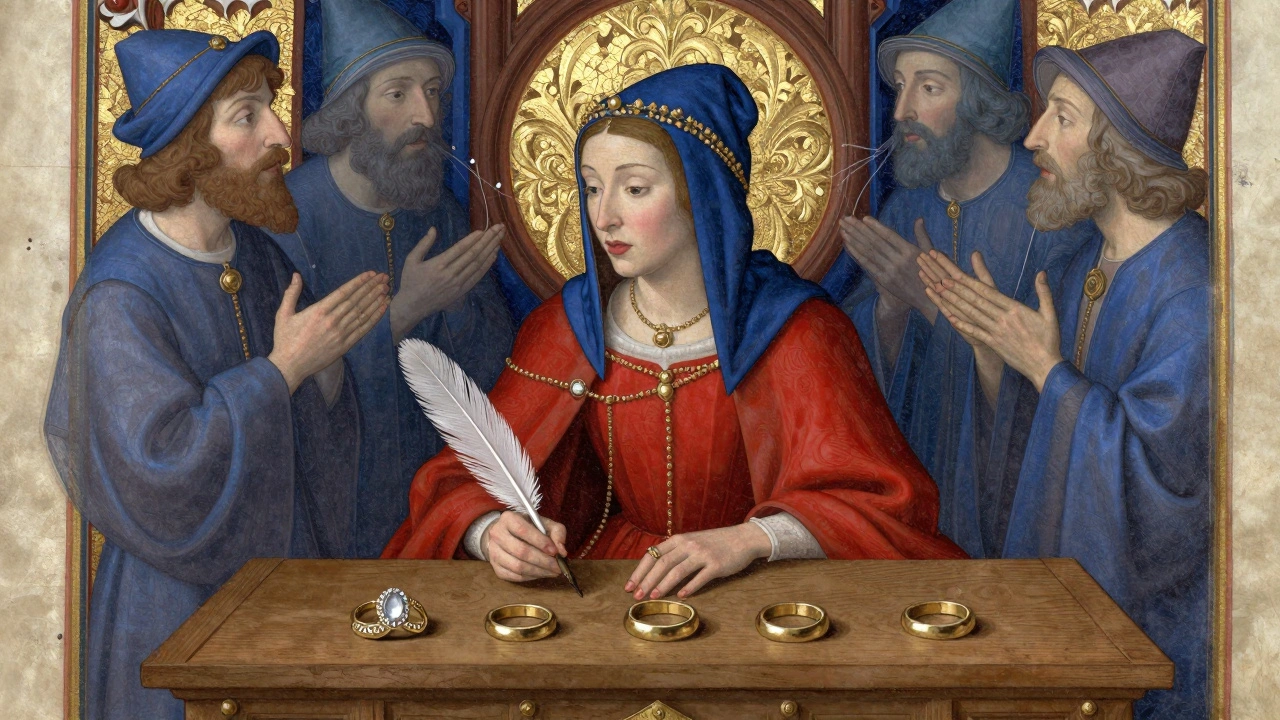
Chaucer’s Wife of Bath is one of the most radical figures in medieval literature. She’s not a saint. She’s not a villain. She’s a woman who’s been married five times, admits to enjoying sex, and doesn’t apologize for it. She quotes Scripture to justify her behavior. She mocks the idea that virginity is superior to marriage. She says: “God didn’t command us to be virgins. He told us to multiply.”
She’s fictional - but not made up out of nowhere. Chaucer based her on real women: merchants’ wives who managed businesses, widows who inherited land, nuns who left convents. These women weren’t invisible. They were economically powerful. And power changed how they could talk about sex.
Her prologue isn’t just funny. It’s revolutionary. She turns the male-dominated debate about female sexuality on its head. She doesn’t ask for permission. She doesn’t beg for forgiveness. She claims her right to speak - and to desire.
And Chaucer lets her win. He doesn’t punish her. He doesn’t make her repent. He lets her have the last word. That’s unusual. Most medieval texts silence women. Chaucer gave one a platform.
When Desire Wasn’t Just Sexual - It Was Spiritual
Some of the strangest medieval texts are the ones where women describe touching Christ’s body in dreams. St. Christina of Markyate feared that when she imagined holding Jesus to her chest, she’d lost her virginity. She was terrified she’d sinned - even though no physical act occurred.
Why? Because medieval people didn’t separate spiritual and sexual desire the way we do. For some women, love for God felt like love for a man. The language was the same: burning, trembling, longing, union. Hagiographers (writers of saints’ lives) had to explain this away. They called it “mystical marriage.” They said: “It’s not lust. It’s grace.”
But here’s the thing: these women knew what they felt. And they weren’t always willing to let men interpret it for them. When St. Gilbert dreamed of touching a young woman’s breast, his advisors told him it was a symbol of peace - not desire. But did he believe them? We don’t know. What we do know is that these women used spiritual language to express what they couldn’t say any other way.
The Good Wife Poem: Medieval Advice for Women - And Why It Backfired
There was a popular poem in late medieval England called The Good Wife. It told young women how to behave: don’t wear bright clothes, don’t laugh too loud, don’t walk alone with men, don’t talk to strangers. The goal? Protect your reputation.
Sound familiar? It’s the same advice given to women today - except back then, your reputation could get you killed. Or worse - left penniless.
But here’s the irony: the poem was written by men. And it assumed women were passive. But real women weren’t passive. They read these texts. They mocked them. They found loopholes. A woman might follow the rules in public - but in private, she’d write love letters. She’d visit a healer for contraception. She’d flirt with the baker’s son.
The poem didn’t control women. It revealed how scared men were of losing control. The more they wrote about restraint, the more they admitted: women were already acting outside the lines.

Christine de Pizan: The Woman Who Wrote Back
When most medieval writers were painting women as sinners or saints, Christine de Pizan was writing books - and getting paid for them. In 1405, she published The Book of the City of Ladies. In it, she built a city made of women: queens, scholars, warriors, poets. She didn’t ask for permission. She didn’t apologize. She said: “You say women are weak? Look at what they’ve done.”
She didn’t just list names. She rewrote history. She took the male symbols of genius - like Minerva - and made them female. She showed that wisdom, reason, and truth weren’t masculine. They were human.
Her work was radical. And it survived. Why? Because she wrote for powerful women - queens, duchesses, noble widows. She had patrons. She had money. She had a voice. And she used it.
She didn’t change the world overnight. But she proved that women could write, think, and lead - even in a world that said they couldn’t.
The Bigger Picture: Why This Matters Today
Medieval women weren’t trapped in a dark age of silence. They were navigating a system designed to control them - and they found ways to live anyway. They had sex. They loved. They resisted. They wrote. They argued. They laughed. They cried. They survived.
Today, we still debate women’s bodies, desire, and autonomy. The language has changed. The clothes are different. But the questions? They’re the same. Who gets to define female sexuality? Who gets to speak? Who gets punished?
Medieval texts give us a mirror. They show us how power works - not just in the past, but now. The Church, the law, the advice columns, the social media comments - they all try to tell women how to be. But women have always found ways to live beyond the rules.
What We Can Learn From Medieval Women
They didn’t wait for permission to exist. They didn’t wait for the right time to speak. They didn’t wait for the world to change.
They acted - quietly, boldly, creatively - within the limits they had. And that’s the real lesson. History isn’t just about what was written. It’s about what people did despite what was written.
Women in the Middle Ages weren’t victims. They were survivors. And their stories - even the ones buried under centuries of male writing - still speak to us today.