Interactive Timeline: The Reproductive Health Revolution
How to use: Click on the different phases of the healthcare model to see how Marie Stopes expanded her reach and the impact each phase had on public health.
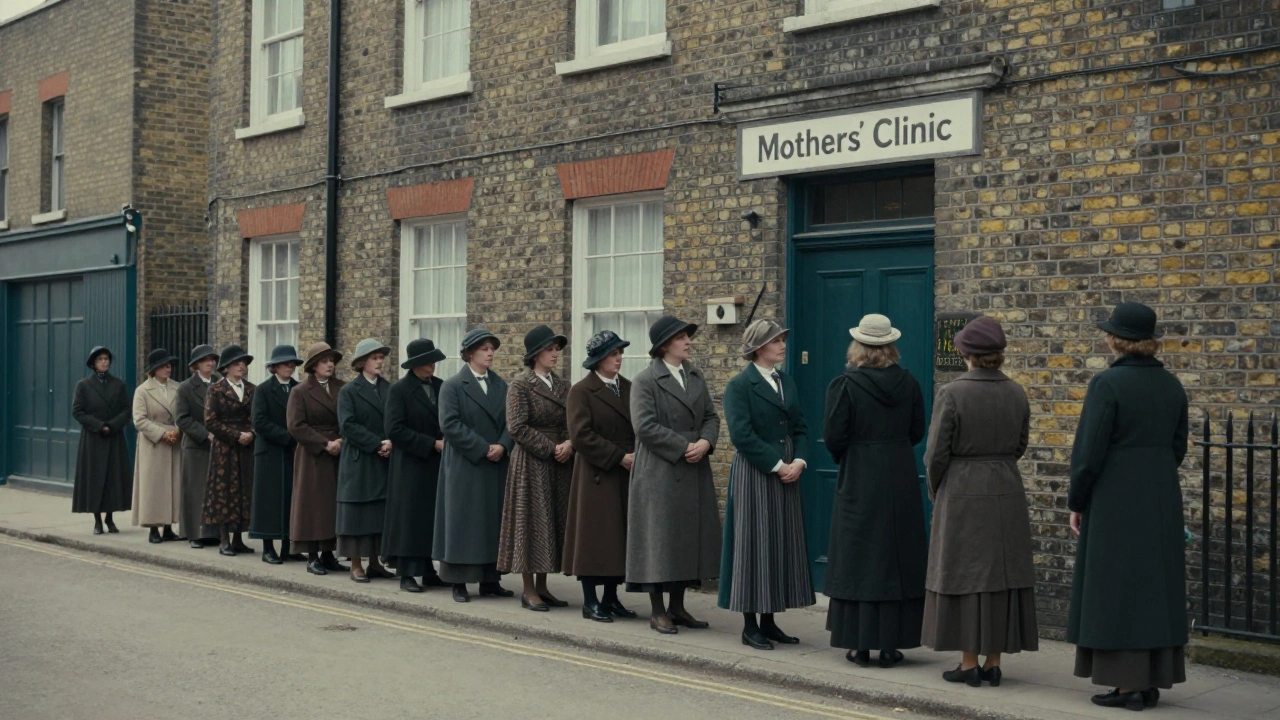
Imagine walking down a working-class street in North London in 1921 and seeing a crowd of women queuing up outside a building, not for food or clothes, but for information on how to stop having children. At the time, talking about contraception was practically a crime or a deep social taboo. Yet, on March 17, 1921, Marie Stopes is a pioneering British social reformer and scientist who established the world's first dedicated birth control clinic. She didn't just open a medical office; she sparked a public health revolution that shifted the power over reproduction from the state and the church directly into the hands of women.
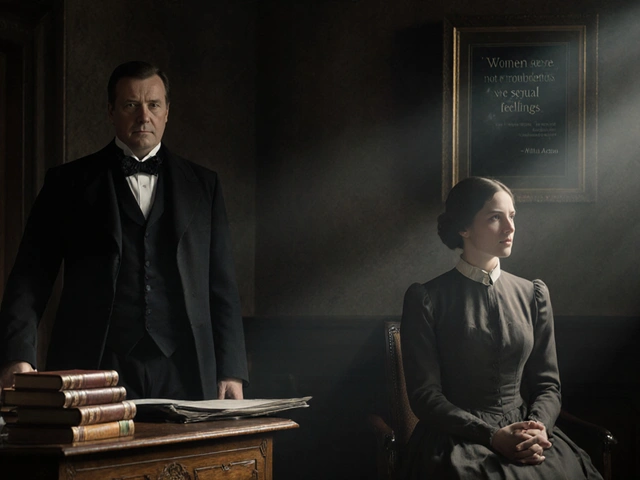
The Woman Who Challenged Victorian Silence
Before she became the face of reproductive rights, Marie Stopes was a powerhouse of academia. She earned a Ph.D. in paleobotany, proving she could thrive in scientific circles that were almost exclusively male. This intellectual rigor defined her approach to sexual health. She didn't just want to provide a service; she wanted to educate the masses using clear, accessible language.
In 1918, she published Married Love, a manual that did the unthinkable: it talked about marital intimacy and pleasure. For the average person in the early 20th century, this was like reading a forbidden text. She followed this with "A Letter to Working Mothers" in 1919, specifically targeting women who were struggling under the weight of large families and poverty. Stopes argued that sexual happiness and personal autonomy weren't just luxuries for the rich-they were fundamental rights.
Launching the Mothers' Clinic in Holloway
The theory became a reality at 61 Marlborough Road in Holloway. Along with her husband, Humphrey Verdon Roe, she founded the Mothers' Clinic for Constructive Birth Control. This wasn't just a local health center; it was a radical experiment in public health. The clinic was free and open to all married women, offering education on contraceptive methods that had previously been whispered about in shadows.
The response was immediate. The very first day saw a massive line of women who had seen her promotional posters. They weren't just looking for a device; they were looking for a way to manage their own lives. By 1929, roughly ten thousand women had sought advice at the clinic. To put this in perspective, her first official report, "The First Five Thousand," showed that less than one percent of her patients became pregnant while using her recommended methods. That kind of efficacy was a game-changer for maternal health.
Taking Reproductive Care on the Road
Stopes realized that a single building in London wasn't enough to create a true revolution. If women in rural areas couldn't reach the city, she would bring the city to them. This led to one of the most innovative moves in medical history: the creation of mobile health services. She operated two horse-drawn Caravan Clinics that traveled to small towns and villages.
These mobile units were essentially the ancestors of today's health vans. They broke down the geographic and social barriers that kept working-class women in the dark. Throughout the 1930s, she expanded her footprint further by establishing a network of regional clinics in cities like Leeds, Aberdeen, Belfast, Cardiff, and Swansea. Each site followed the same model: science-backed advice delivered with a focus on the woman's well-being.
| Phase | Primary Method | Target Audience | Key Outcome |
|---|---|---|---|
| Literary (1918-1920) | Books (Married Love) | General Public / Married Women | Normalized conversations on sex |
| Stationary (1921-1925) | Mothers' Clinic (Holloway) | Urban Working Class | Proven efficacy of contraceptives |
| Mobile (1930s) | Caravan Clinics | Rural Populations | Democratized access to healthcare |
| Regional (1930s+) | Network of City Clinics | National Reach | Standardized reproductive care |
The Philosophy and the Friction
Stopes' vision of Reproductive Autonomy was based on three pillars: preventing unwanted births, spacing children to improve maternal health, and helping infertile couples conceive. However, her approach wasn't without contradiction. While she fought for contraception, she was firmly against abortion, urging her midwives to promote contraceptive technology as the only ethical alternative to pregnancy termination.
This stance didn't make her popular with everyone. She faced a wall of resistance from the Catholic Church and a male-dominated medical establishment. Doctors of the era often viewed birth control as immoral or medically dangerous. Stopes didn't back down; she used her scientific credentials to argue that birth control was a matter of public health and social progress, not just a moral debate.
A Complex Legacy: From Clinics to Global Choice
The organization she started eventually grew into a global powerhouse. By 1976, it became Marie Stopes International, expanding its services to 36 countries. Interestingly, the organization eventually moved past Stopes' own beliefs, incorporating abortion care into its services to ensure women had a full spectrum of choices.
But history is rarely clean. In recent years, scholars have highlighted the darker side of Stopes' philosophy: her association with Eugenics. She believed in "racial progress," an idea that suggested only certain people should reproduce to "improve" the human race. This is a stark contrast to the modern values of reproductive justice.
Recognizing this, the organization took a bold step in 2020. They rebranded from Marie Stopes International to MSI Reproductive Choices. The goal was to separate the vital work of providing healthcare from the controversial views of the woman who started it all. It was an admission that while her clinics changed the world, her ideology did not reflect the universal right to choice.
Why It Matters Today
Whether you agree with her personal views or not, the impact of the Mothers' Clinic is undeniable. Stopes took complex medical knowledge and translated it into a language that a woman in a North London tenement could understand and use. She proved that reproductive health is a pillar of public health. By treating contraception as a medical necessity rather than a moral failing, she paved the way for the modern healthcare systems we rely on today.
When was the first birth control clinic opened?
The first dedicated birth control clinic, the Mothers' Clinic for Constructive Birth Control, was opened by Marie Stopes and her husband on March 17, 1921, in Holloway, North London.
Did Marie Stopes support abortion?
No, Marie Stopes explicitly opposed abortion. She viewed contraceptive education and the use of birth control devices as the necessary and ethical alternative to prevent the need for pregnancy termination.
What were the "Caravan Clinics"?
The Caravan Clinics were horse-drawn mobile units that Marie Stopes used to bring reproductive health advice and contraceptive services to women living in rural areas who could not travel to her city clinics.
Why did Marie Stopes International change its name?
In 2020, the organization changed its name to MSI Reproductive Choices to distance itself from Marie Stopes' historical views on eugenics, which contradict the organization's modern commitment to inclusive healthcare and individual choice.
What was the significance of the book "Married Love"?
Published in 1918, "Married Love" was one of the first popular marriage manuals to candidly discuss intimacy and contraception in accessible language, challenging the Victorian era's silence on sexual health.