Timeline of Olisboi History
Explore the fascinating journey of olisboi through human history. Click on each era to learn more about how these devices were used, perceived, and documented across different civilizations.
Did You Know?
The city of Miletus in Asia Minor became so famous for producing high-quality olisboi that they became a recognized export commodity throughout the Mediterranean. Manufacturers from Miletus were even referenced in classical poetry!
When we think of ancient Greece, we usually picture marble statues, philosophical debates, or the Olympic Games. We rarely imagine the private lives of its citizens, let alone their intimate tools. Yet, historical records show that olisboi-the Ancient Greek term for dildos-were not hidden secrets but open parts of daily life. These devices appear frequently in comedy, art, and medical texts from over two thousand years ago.
The word itself gives us a clue about how they were used. Olisbos comes from the verb olisthánein, which means 'to slip' or 'to glide'. This suggests a focus on smooth movement and lubrication, likely aided by olive oil, the most common substance available in Mediterranean households at the time. Understanding these objects helps us see how ancient societies viewed pleasure, gender roles, and medicine in ways that feel surprisingly modern.
Making an Olisbos: Materials and Craftsmanship
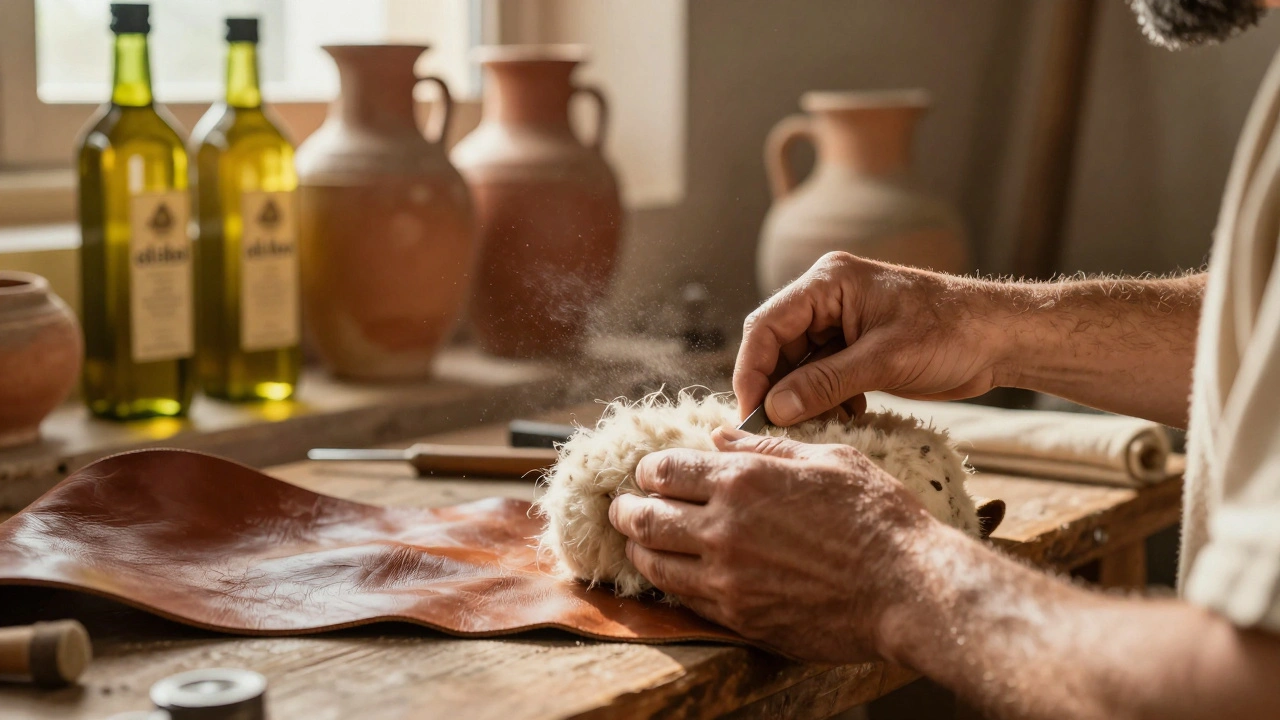
You might expect such items to be rare luxury goods, but evidence points to widespread availability across different social classes. The construction was simple yet effective. Most olisboi were made from polished leather, often sourced from dogs or other animals. Inside, they were stuffed with wool. This combination allowed users to adjust the firmness and thickness according to their preference.
Olive oil played a crucial role as a lubricant. It wasn't just a cooking ingredient; it was the standard personal care product for Greeks. Applying oil ensured comfort and hygiene. While wealthy individuals might have access to more refined materials, even stone, bone, or gold versions existed, the leather-and-wool model was the everyday standard. The city of Miletus in Asia Minor became famous for producing high-quality olisboi, turning them into a recognized export commodity throughout the Mediterranean.
| Material | Source/Context | Purpose/Note |
|---|---|---|
| Leather (Dog/Animal) | Greece (Miletus) | Flexible, durable, stuffed with wool |
| Olive Oil | Mediterranean | Lubricant and hygiene |
| Stone/Bone | Ancient Egypt/Germany | Rigid, ceremonial or long-term use |
| Gold | Roman/Egyptian Elite | Luxury gift (e.g., Caesar to Cleopatra) |
| Breadsticks | Greece | Edible alternative (olisbokollikes) |
Olisboi in Comedy and Social Commentary
If you want to understand how Greeks talked about sex, look at their comedies. Playwrights didn't shy away from explicit topics. The most famous reference appears in Aristophanes' play Lysistrata, performed in 411 BCE. In this satire, women launch a sex strike to force men to end the Peloponnesian War. During the strike, the women discuss using dildos to satisfy themselves without male partners.
Aristophanes makes wordplay with the phrase "eight-fingered dildo," comparing the device to a hand. This wasn't just crude humor; it was a political statement. By showing women taking control of their own pleasure, the play highlighted female agency in a society where men dominated public life. The scholia (ancient commentaries) on Lysistrata explicitly define olisbos as a "leather penis" used particularly by widows and Milesian women. This indicates that the audience would have immediately understood the reference without confusion.
Other poets, like Herodas, also mentioned these devices. In his mime poem Mimo 6, characters discuss a renowned manufacturer from Miletus. This casual conversation shows that buying such items was a normal part of shopping, similar to buying clothing or pottery today. There was no stigma attached to discussing them openly in literary contexts.
Medical Beliefs and the Wandering Uterus
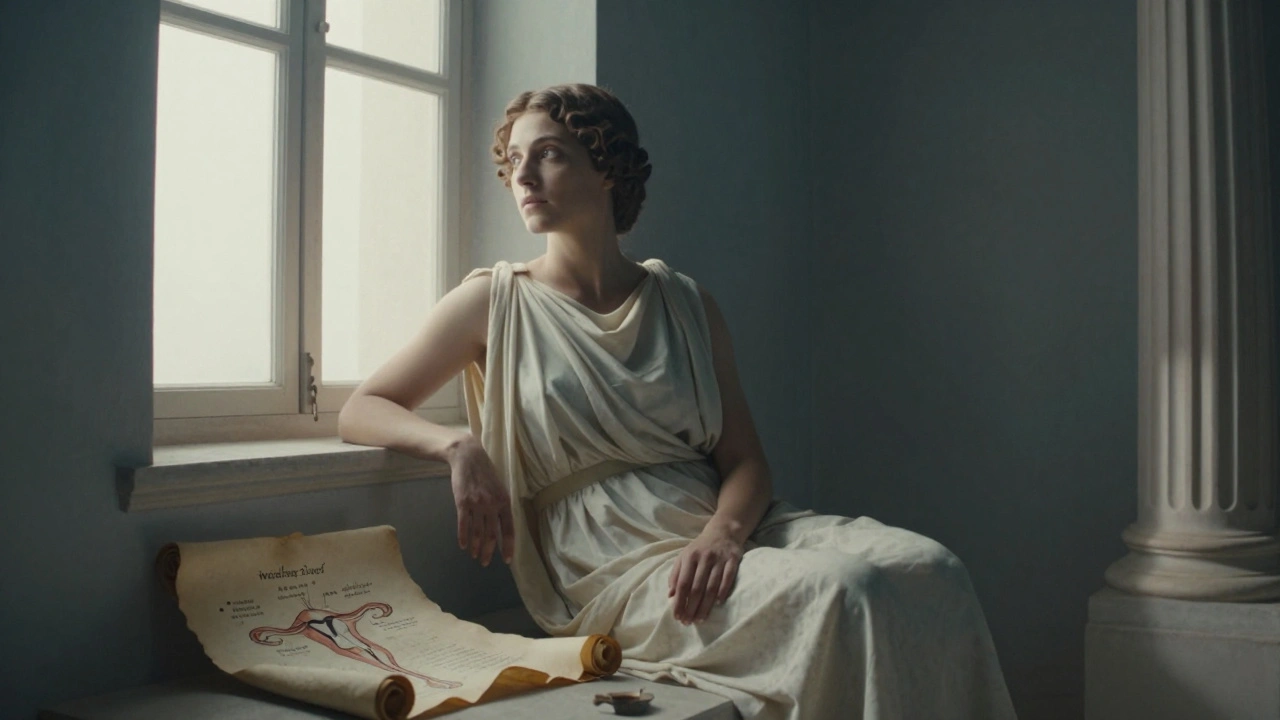
Sexual health in ancient Greece was deeply tied to medical theory. Physicians believed in the concept of the "wandering uterus." They thought that if a woman did not release bodily fluids through intercourse, her womb would become dry, wander around the body, and cause illness-a condition known as hysteria.
This belief had practical consequences for marriage. When Greek men left for war or long travels, they sometimes provided their wives with olisboi. This wasn't just about convenience; it was seen as a prophylactic measure to keep their wives healthy. The device served a medical function, ensuring the wife remained balanced and free from hysterical symptoms. This rationale persisted for centuries, influencing later European medical practices and eventually leading to the invention of mechanical vibrators in the 19th century.
Feminist scholar Page duBois argues that the prevalence of dildos in Greek art reflects a male-centric view of sexuality. She suggests that Greek men struggled to imagine sexual activity without penetration. Therefore, even female masturbation required a phallic substitute. This perspective highlights how cultural norms shaped both the design and the justification for these tools.
Visual Evidence in Vase Art
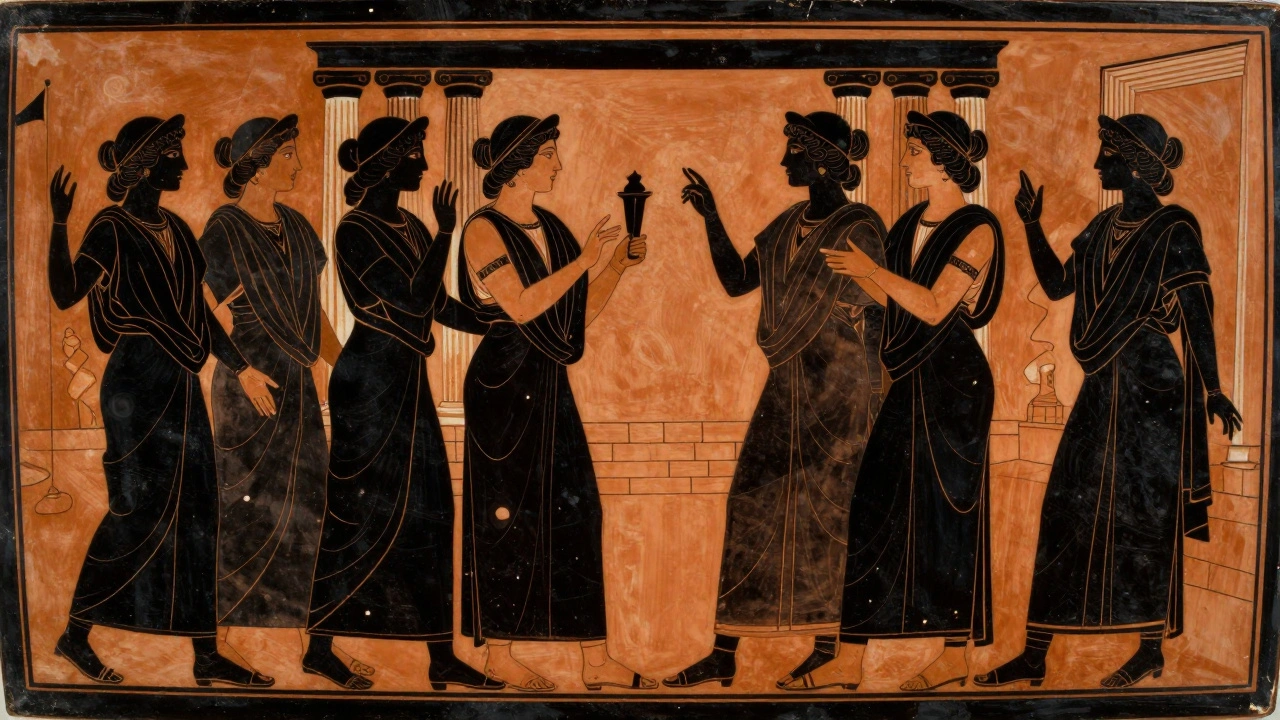
Texts are one thing, but visual art provides undeniable proof of usage. Greek vase painting from the 6th and 5th centuries BCE frequently depicts sexual scenes involving olisboi. Artists showed heterosexual couples, homosexual encounters, and solitary female masturbation.
One notable example from 500 BCE shows an athletic figure holding a substantial olisbos next to a basket of phalli. Another sixth-century vase depicts a complex scene involving multiple participants and devices. These images were not hidden; they decorated homes and public spaces. The presence of these scenes in mainstream art demonstrates that sexual device use was culturally accepted and visible.
However, there were strict social rules. Women were generally not permitted to penetrate men, as penetration was considered a masculine act. This boundary defined the acceptable limits of sexual behavior, even when artificial aids were involved. The olisbos fit within these boundaries by serving as a passive object rather than an active penetrator in same-sex female contexts.
Global Context: Egypt, India, and Beyond
Greece was not the first culture to use sexual devices. Archaeological finds in Hohle Fels, Germany, reveal stone phalluses dating back to 27,000 BC. Ancient Egyptian art from 3,000 BCE shows women wearing large phallic objects as tributes to Osiris, the Lord of the Underworld. Egyptians used stone, bone, and even hardened camel dung for these devices.
In India, the Kama Sutra (composed between 400 BC and 200 AD) mentions dildos explicitly. Unlike some Greek attitudes, Indian culture did not associate strap-on use with emasculation. Instead, it encouraged men to use alternative means to satisfy their partners if necessary. This contrast shows diverse approaches to sexual aid across ancient civilizations.
The Roman era continued these traditions. Julius Caesar famously gifted Queen Cleopatra a solid gold phallus during her visit to Rome in 46 BC. Legend also claims Cleopatra created an early vibrator by filling a hollow gourd with bees. Whether true or not, these stories illustrate the continuity of sexual innovation from Greece to Rome.
The Shift to Suppression
The open acceptance of olisboi did not last forever. With the rise of Christianity, attitudes toward sex changed dramatically. The Church discouraged any sexual activity outside of marriage and viewed non-procreative sex within marriage as sinful. This religious shift forced sexual aids underground in Europe.
The word "dildo" itself entered English much later, around the 16th century, possibly from the Italian diletto (delight) or Latin dilatare (to expand). For nearly two millennia, the practice that was once celebrated in Greek comedy and medicine became taboo. It wasn't until the sexual liberation movements of the 20th century that open discussion and production resumed.
Why This History Matters Today
Studying olisboi isn't just about satisfying curiosity regarding ancient erotica. It reveals how societies normalize or stigmatize bodily pleasure. In Greece, these devices were medical tools, marital aids, and symbols of female autonomy during war. They were integrated into daily life without shame.
Today, we still debate the role of sexual wellness products. Looking back at classical antiquity reminds us that openness about sexual health is not a new phenomenon. It has deep roots in human history, interrupted only by specific cultural and religious shifts. Understanding this lineage helps us approach modern conversations about sex with greater historical context and less judgment.
What does the word "olisbos" mean?
Olisbos is the Ancient Greek word for a dildo. It derives from the verb olisthánein, meaning "to slip" or "to glide," referring to the smooth motion facilitated by lubricants like olive oil.
Were olisboi commonly used in ancient Greece?
Yes, they were widely used and socially accepted. References appear in comedy plays like Lysistrata, lexicographical dictionaries, and numerous vase paintings, indicating they were part of everyday life for many Greeks.
How were olisboi constructed?
Typically, they were made from polished leather (often dog skin) stuffed with wool to provide firmness. Olive oil was used as a lubricant. Wealthier individuals might have used stone, bone, or gold versions.
Did ancient Greeks use dildos for medical reasons?
Yes. Greek physicians believed that lack of sexual release caused "hysteria" or a wandering uterus. Husbands traveling for war often gave their wives olisboi to maintain their health according to these medical theories.
Where were the best olisboi made?
The Ionian city of Miletus in Asia Minor was famous for producing high-quality olisboi. They were so well-known that manufacturers from Miletus were referenced in classical poetry and literature.
How did Christian influence change the use of sexual devices?
Christian doctrine discouraged non-procreative sex and labeled many sexual acts as sinful. This led to the suppression of open discussion and use of sexual aids in Europe, forcing them underground for centuries until the modern era.