Legal Blueprint Explorer: The Path to Privacy
How to use: Click on a landmark case below to see how the legal definition of "privacy" expanded and who was protected by each decision.
Griswold v. Connecticut
The FoundationEisenstadt v. Baird
The ExpansionRoe v. Wade
The ApplicationSelect a case above to analyze the legal shift.
Imagine a world where a doctor could be thrown in jail just for telling a married couple how to avoid having another child. That wasn't a plot from a dystopian novel; it was the reality in Connecticut until 1965. For decades, the government didn't just regulate reproductive choices-it criminalized them. But a series of three massive court cases changed the DNA of American liberty, moving the conversation from "what does the law allow?" to "what is my fundamental right to privacy?"
The shift didn't happen overnight. It was a calculated legal demolition of old laws that treated adult sexual autonomy as a crime. By looking at Griswold v. Connecticut, Eisenstadt v. Baird, and Roe v. Wade, we can see how the U.S. Supreme Court built a foundation for reproductive rights that fundamentally altered the 1960s social revolution.
Griswold v. Connecticut: The Birth of Privacy
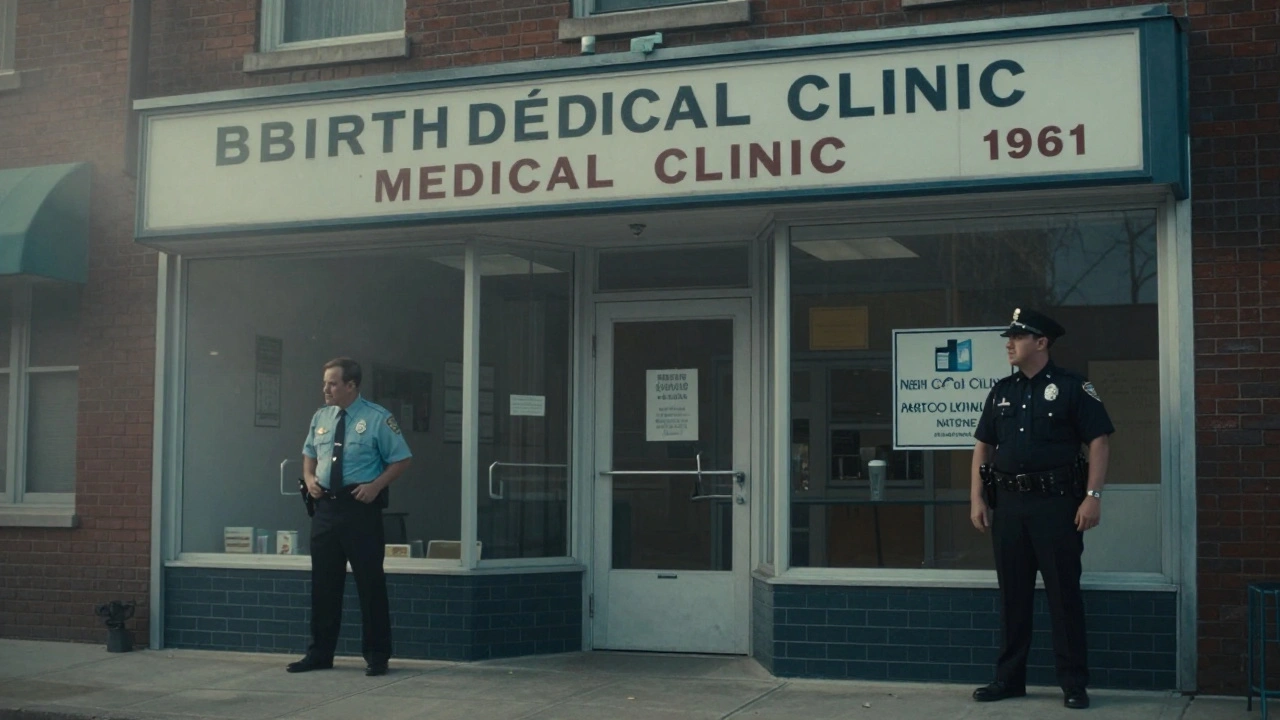
In 1961, Estelle Griswold and Dr. C. Lee Buxton decided they had enough. They opened a birth control clinic in New Haven, Connecticut, specifically to challenge a law that banned the use of contraceptives. They didn't hide it; they wanted to be arrested. They were. Both were fined $100, but their real goal was to get the case in front of the highest court in the land.
When the case reached the Supreme Court in 1965, Justice William O. Douglas did something brilliant and controversial. He admitted that the Constitution doesn't explicitly mention a "right to privacy." However, he argued that various amendments-like the First, Third, Fourth, and Ninth-create "emanations" or "penumbras." Think of it like a shadow cast by a light; even if the law doesn't name the right to privacy, the existing protections create a "zone of privacy" that the government cannot enter.
The Court ruled 7-2 that the state couldn't stop married couples from using contraception. This was a game-changer. For the first time, the court recognized that the bedroom was a sacred space where the government had no business interfering. It shifted the legal focus from the "morality" of birth control to the "liberty" of the individual.
Eisenstadt v. Baird: Breaking the Marriage Barrier
While Griswold was a victory, it had a huge loophole: it only protected married couples. If you weren't married, you were still subject to archaic laws. This is where Eisenstadt v. Baird (1972) comes in. In this case, a man was arrested for giving contraceptive advice to an unmarried woman.
The Supreme Court looked at the logic from Griswold and realized that privacy isn't a "marital right"-it's an individual right. Justice William Brennan famously wrote that if the right to privacy means anything, it is the right of the individual, married or single, to be free from unwarranted government intrusion. This decision effectively decoupled reproductive freedom from the marriage contract, acknowledging that sexual autonomy belongs to the person, not the couple.
| Case | Year | Core Legal Victory | Who was protected? |
|---|---|---|---|
| Griswold v. Connecticut | 1965 | Established constitutional right to privacy | Married couples |
| Eisenstadt v. Baird | 1972 | Extended privacy to individuals | Unmarried adults |
| Roe v. Wade | 1973 | Applied privacy to abortion access | Pregnant individuals |

Roe v. Wade: The Ultimate Test of Privacy
By 1973, the legal trajectory was clear: privacy was the new gold standard for personal liberty. Roe v. Wade took the "zone of privacy" established in Griswold and applied it to the most contested issue of all: abortion. The Court argued that a woman's decision to terminate a pregnancy falls under the right to privacy protected by the Fourteenth Amendment.
However, the Court didn't give this right a blank check. They created a "trimester framework" to balance the individual's privacy against the state's interest in protecting fetal life. While this framework was later modified, the core impact was seismic. It took the logic of the 1960s sexual revolution-the idea that people should control their own bodies-and codified it into federal law.
Connecting the Dots: The Ripple Effect
These three cases didn't happen in a vacuum. They were the legal engine behind the cultural shifts of the era. When you have a legal right to privacy, everything changes. It paved the way for the Women's Liberation Movement by giving women actual control over their biological destiny. Why settle for a domestic role if you can decide when and if you become a parent?
Moreover, the "right to privacy" didn't stop at birth control. This legal foundation eventually became the primary weapon used to challenge laws criminalizing consensual same-sex relationships. Once the court admitted the government couldn't tell a married couple how to prevent a baby, it became much harder for the government to justify policing what happened between consenting adults behind closed doors.

The Fragility of Precedent
It's a mistake to think of these foundations as permanent concrete. Law is a living thing, and as we've seen in recent years, precedents can be overturned. The logic used in Griswold and Roe relied on the Due Process Clause of the Fourteenth Amendment. When the composition of the Supreme Court changes, the interpretation of those "penumbras" can shift.
The move from Griswold's marital privacy to Eisenstadt's individual privacy and then to Roe's reproductive autonomy shows a clear expansion of the definition of "personhood." It moved from the group (the couple) to the individual. This evolution is why these cases are often grouped together; they aren't just about medicine or law, they are about the definition of freedom in the modern age.
Did Griswold v. Connecticut make birth control legal for everyone?
Not immediately. Griswold specifically protected the right of married couples to use contraceptives. It took another seven years, until the Eisenstadt v. Baird decision in 1972, for the Court to rule that the right to privacy applied to unmarried individuals as well.
What is a "penumbra" in legal terms?
In the context of Griswold v. Connecticut, a penumbra refers to a group of rights derived from other rights. Justice Douglas argued that while "privacy" isn't explicitly written in the Bill of Rights, the various guarantees against unreasonable searches and the right to free speech create a surrounding area (a penumbra) of protection that encompasses the right to privacy.
How did the 14th Amendment play a role in these cases?
The Fourteenth Amendment contains the Due Process Clause, which prohibits states from depriving any person of life, liberty, or property without due process of law. The Court used this clause to "incorporate" the Bill of Rights, meaning it applied those federal protections to state laws, allowing them to strike down Connecticut's state-level ban on contraceptives.
Why is the order of these cases important?
The order represents a logical expansion of rights. Griswold established the concept of privacy; Eisenstadt expanded that concept to the individual; and Roe applied that individual privacy to the medical decision of abortion. Without the first two, the legal foundation for Roe would have been non-existent.
Who were Estelle Griswold and C. Lee Buxton?
Estelle Griswold was the Executive Director of the Planned Parenthood League of Connecticut, and C. Lee Buxton was a Yale gynecologist. They deliberately opened a clinic in violation of state law to create a "test case" that would force the legal system to address the constitutionality of birth control bans.
Next Steps for Understanding Legal Liberty
If you want to dig deeper into how these cases shaped today's world, look into the concept of Substantive Due Process. It's the legal theory that allows courts to protect certain rights that aren't explicitly mentioned in the Constitution but are fundamental to a free society.
For those interested in the social side, research the Comstock Laws. These were the federal laws that originally banned the mailing of "obscene" materials, which included birth control information. Understanding the Comstock era explains exactly why the fight in Griswold and Roe was so uphill-they weren't just fighting a few state laws, but a century-old federal culture of reproductive repression.