Medieval Medical Theory Explorer
Select a medieval medical concept to see how it influenced the perception of female biology, health, and society.
Humoral Theory
Medical Logic:
Physicians believed humans were composed of blood, phlegm, black bile, and yellow bile. Gender was defined by temperature and moisture.
If you imagine the Middle Ages as a time of total sexual repression where women were viewed as mindless vessels for reproduction, you've been fed a myth. Medieval doctors didn't just acknowledge that women felt pleasure; they believed it was a biological requirement for the human race to survive. In their eyes, a woman's orgasm wasn't a luxury or a moral failing-it was the physiological trigger for conception.
The Biology of Balance: Humors and Heat
To understand how medieval physicians viewed the female body, you have to start with humoral theory is a medical system based on the balance of four bodily fluids: blood, phlegm, black bile, and yellow bile. This wasn't just a rough guess; it was the gold standard of medicine for centuries, heavily influenced by the works of Galen is a prominent Greek physician and philosopher whose theories on anatomy and physiology dominated Western medicine until the Renaissance.
Doctors believed men were naturally "hot and dry," while women were "cold and wet." This temperature difference explained everything from personality traits to sexual drive. Because women were viewed as having a "colder" nature, their bodies were seen as less efficient at "refining blood," which doctors linked to their perceived physical and moral weakness. Yet, paradoxically, this same medical framework suggested that women had a much stronger sexual appetite than men. Why? Because their "wet" nature made them more susceptible to the urges of the flesh.
The Two-Seed Theory: Why Pleasure Was Mandatory
The most shocking part of medieval medicine to a modern reader is the "two-seed theory." Today, we know that only sperm is needed for fertilization, but medieval doctors believed both partners produced a "seed" that had to merge to create a baby. For a woman to release her seed, she had to reach a peak of sexual excitement.
Constantine the African is an 11th-century physician and scholar who translated Arabic medical texts into Latin, introducing advanced medical knowledge to Europe took this further. He argued that women actually experienced more intense pleasure than men. While men only felt pleasure from expelling their seed, Constantine claimed women enjoyed a "twofold pleasure": the thrill of releasing their own seed and the sensation of receiving the man's. In this medical world, the female orgasm was the engine of fertility.
| Attribute | Male Perspective (Medieval) | Female Perspective (Medieval) |
|---|---|---|
| Humoral State | Hot and Dry | Cold and Wet |
| Sexual Drive | Lower / More controlled | Higher / More impulsive |
| Role in Conception | Active seed expulsion | Active seed expulsion + Reception |
| Pleasure Level | Singular / Direct | Twofold / Complex |

Suffocation of the Womb and Medical Interventions
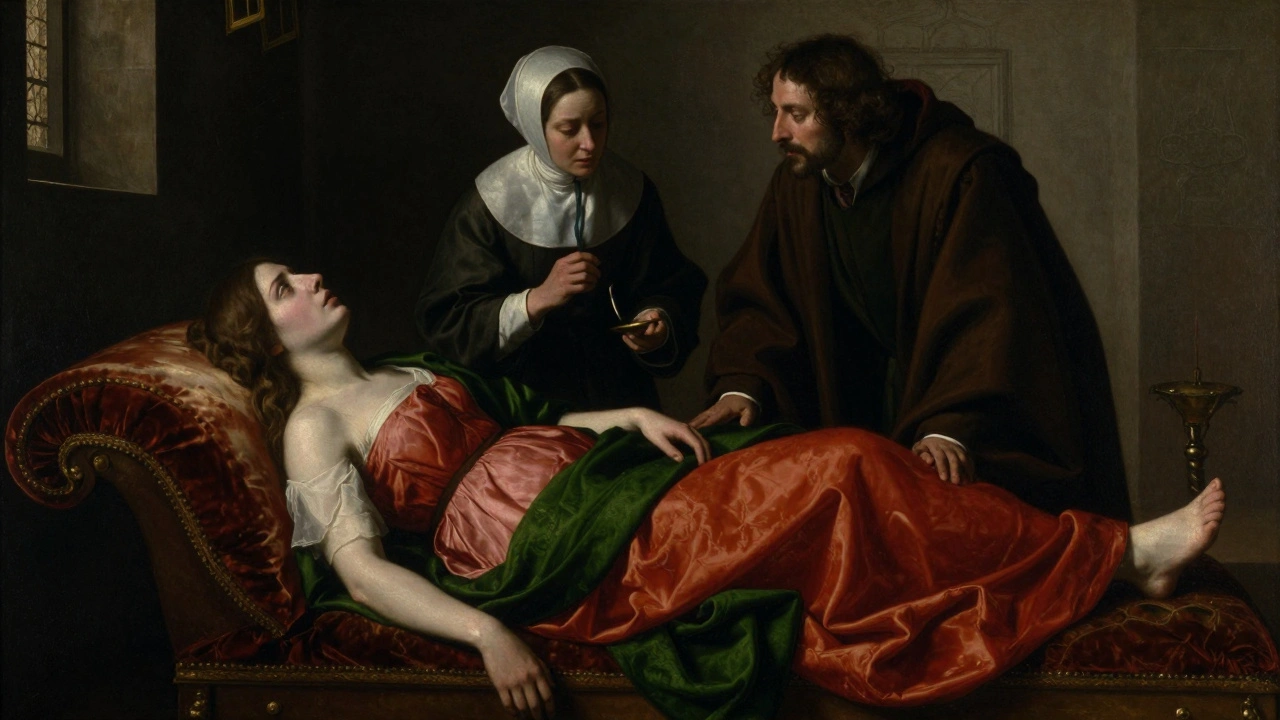
Because pleasure and the release of "seed" were tied to health, a lack of sexual activity was seen as a genuine medical crisis. Doctors identified a condition known as "suffocation of the womb." If a woman didn't have regular sexual release-whether through marriage or other means-it was believed that retained seed would build up and poison her system, potentially leading to death.
John of Gaddesden is a 13th-century English physician known for his practical medical treatises and focus on clinical observation and other doctors had a specific hierarchy of treatment for this. First, they'd recommend exercise or travel to distract the mind and move the body. If that failed, they turned to medication. But as a final resort, the medical establishment sanctioned something quite radical: medical masturbation.
Midwives would use plant oils to lubricate their fingers and vigorously massage the patient's genitals. While the church generally hated self-stimulation, physicians argued that this was a therapeutic necessity. If a woman's life was in danger from "seed retention," this procedure was permitted "without sin." It's a strange glimpse into a world where a medical emergency could override strict religious morality.
The Philosophy of Anatomy: Albertus Magnus and the Womb
As the Middle Ages progressed, some thinkers tried to move beyond simple seed expulsion. Albertus Magnus is a 13th-century Dominican friar and philosopher who synthesized Aristotelian philosophy with Christian theology suggested that pleasure didn't just come from the "seed," but from the physical touch of the penis against the vaginal walls. This was a major shift-it acknowledged that the external and internal anatomy of the woman played a role in her pleasure, regardless of the reproductive outcome.
However, the womb is the uterus, which in medieval theory was viewed as the central organ defining female physiology and psychological disposition remained the center of everything. Doctors viewed the womb as the source of a woman's passivity. They described female genitalia as "open," a term that wasn't just anatomical but moral. To the medieval mind, an "open" body meant an "open" mind-implying that women were naturally more prone to lust and less capable of resisting temptation than men.
The Dark Side: Misogyny and "The Secrets of Women"
While some doctors were focused on health and pleasure, others used these theories to fuel hatred. A hugely popular text called De secretis mulierum (On the Secrets of Women) took the biological facts of the time and twisted them into a weapon. This treatise argued that since women were "cold" and "wet," they were inherently defective.
The text focused heavily on menstrual blood, describing it as a toxic waste product that proved women's bodily inferiority. By framing women as biologically dangerous and unstable, these medical theories laid the groundwork for the witch-hunts of later centuries. The same doctors who recognized the necessity of female pleasure also provided the "scientific" justification for treating women as dangerous creatures who needed constant supervision.

Legal Paradoxes of Consent and Pleasure
These medical beliefs leaked into the courtroom. In medieval law, the link between pleasure and conception created a bizarre legal loophole. Because doctors insisted that a woman must feel pleasure for a pregnancy to occur, the presence of a pregnancy was often used as evidence that the woman had consented to the act.
This meant that if a woman claimed she was raped but became pregnant, the "medical evidence" of her pleasure (manifested as the pregnancy) could be used against her to prove consent. It's a grim example of how a medical theory intended to explain biology ended up stripping women of their legal agency.
Did medieval doctors believe women had orgasms?
Yes, they absolutely did. In fact, based on the "two-seed theory," they believed female orgasms were essential for conception because they triggered the release of the female "seed." Some physicians even argued that women's pleasure was more complex and intense than men's.
What was "suffocation of the womb"?
It was a medical diagnosis based on the belief that if a woman didn't experience sexual release, her "seed" would build up and cause illness or death. This condition was treated with exercise, travel, and, in severe cases, genital massage performed by a midwife.
How did humoral theory affect the view of women?
Humoral theory classified women as "cold and wet." This led to the belief that they were physically weaker and more emotionally unstable than men, but also that they possessed a higher, more uncontrollable sexual appetite.
Was female masturbation considered a sin in the Middle Ages?
Generally, sexual activity outside of procreation was frowned upon. However, some thinkers like Albertus Magnus argued that female self-stimulation didn't involve "generative matter" and thus wasn't necessarily sinful, especially when used as a medical treatment for health.
What was the "two-seed theory"?
The theory that both the man and the woman produce a "seed" during sexual intercourse. For a baby to be conceived, both seeds had to be present, meaning both partners needed to experience sexual pleasure to release their respective contributions.
What to Explore Next
If you're interested in how biology and belief collided in the past, you might want to look into the history of midwifery and the transition from humoral medicine to early modern anatomy. You could also dive into the role of the Inquisition in regulating domestic life and sexuality during the late Middle Ages.