The old way of thinking about sex didn’t include identities
Before the 1880s, people didn’t think of themselves as "homosexual" or "heterosexual." They didn’t label their entire selves based on who they were attracted to. If a man had sex with another man, he was seen as someone who had done something unusual-maybe wrong, maybe just a momentary lapse. But he wasn’t considered a different kind of person. The same went for women. Same-sex acts were seen as behaviors, not as the core of someone’s identity.
This changed completely in the 1880s. A new idea took hold: that some people were born with an inner nature that made them attracted to the same sex. And that this nature made them a specific type of person. This wasn’t just a shift in language-it was a revolution in how society understood human beings.
Karl-Maria Kertbeny and the birth of the word "homosexuality"
The term "homosexuality" was first written down in 1869 by Karl-Maria Kertbeny, a Hungarian writer living in Berlin. He used it in a pamphlet arguing against Prussia’s harsh laws that punished men for having sex with other men. He wanted to show that same-sex attraction wasn’t a crime-it was a natural variation in human behavior.
But Kertbeny’s word didn’t catch on right away. It wasn’t until 1880 that he sent the term to Richard von Krafft-Ebing, a respected Austrian psychiatrist. Krafft-Ebing was collecting case studies of what he called "sexual perversions." He was looking for patterns in human behavior that he could classify like diseases. When he read Kertbeny’s term, he saw a tool he could use.
Krafft-Ebing’s "Psychopathia Sexualis" turned acts into identities
In 1886, Krafft-Ebing published the second edition of his book Psychopathia Sexualis. This wasn’t just another medical text. It became the blueprint for how the modern world would think about sexuality. He used the term "homosexuality" as a clinical diagnosis. He described 224 cases-men and women who had sex with their own gender-and presented them as examples of a fixed, biological condition.
Before this, people might have thought of same-sex behavior as something anyone could do under the right (or wrong) circumstances. After Krafft-Ebing, people started to believe that some people were simply "homosexuals"-a category of person, like a type of criminal or a mental patient. He didn’t invent the idea that same-sex attraction existed. But he invented the idea that it defined you.
Heterosexuality was invented to contrast with homosexuality
Here’s the twist: the word "heterosexuality" didn’t exist until after "homosexuality." It wasn’t coined until 1892 by American psychologist C. G. Chaddock, who translated Krafft-Ebing’s work into English. Before then, there was no term for "normal" sexual attraction. People just assumed it was the default.
Once "homosexuality" became a medical category, doctors and scientists needed a label for everything else. So they created "heterosexuality"-not as a natural state, but as the opposite of a pathology. This made heterosexuality a constructed identity, not a given. The idea that you were either "straight" or "gay" didn’t come from nature. It came from a clinic in Vienna.
Science was used to justify control
The new sexual categories didn’t just describe people-they were used to control them. Doctors, police, and lawmakers used these labels to decide who was dangerous, who was sick, and who needed to be locked up or deported.
German sexologist Magnus Hirschfeld believed homosexuality was a kind of "third sex," where people had the soul of the opposite gender. He thought this made them biologically different. But even his more sympathetic theories were built on pseudoscience-ideas about brain structure, hormones, and heredity that had no real evidence. These theories were used to justify everything from forced sterilizations to immigration bans.
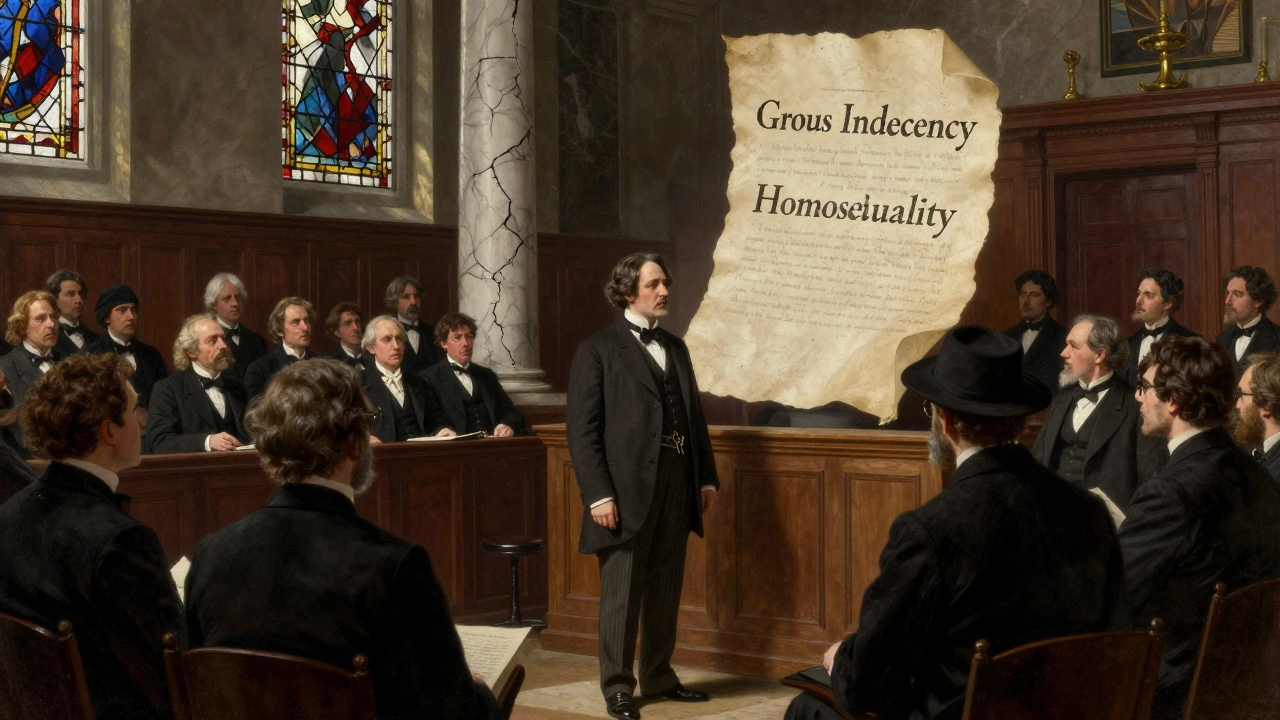
In the U.S., the Bureau of Immigration started turning away people they thought had "indeterminate sex characteristics"-a vague term that often meant anyone who didn’t conform to gender norms. In Britain, the 1885 Labouchere Amendment made "gross indecency" between men a crime, even if no one else saw it. Oscar Wilde was imprisoned under this law in 1895. His trial wasn’t just about sex-it was about who was allowed to exist in polite society.
Class, race, and gender shaped who got labeled
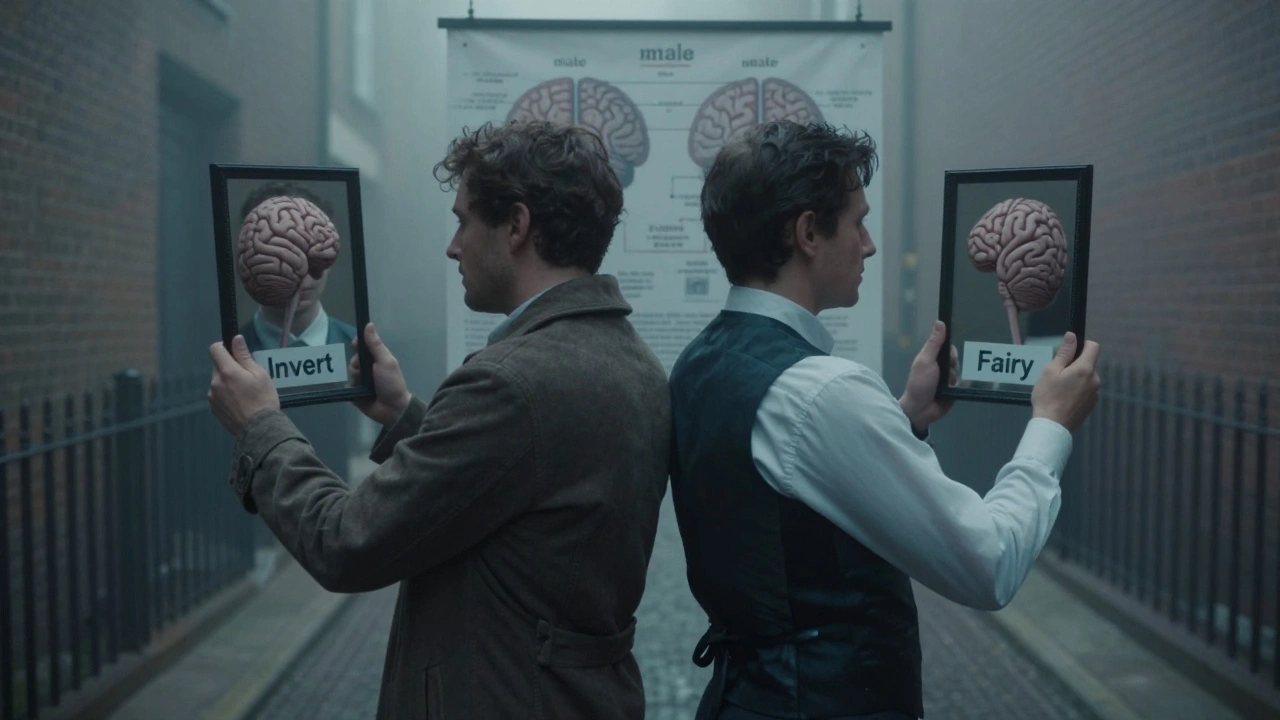
These new categories didn’t affect everyone the same way. Working-class men who showed affection for other men were often called "fairies" and mocked in the streets. Middle-class men who had same-sex desires hid them tightly-they feared losing their jobs, their families, their reputations.
Race played a huge role too. White doctors claimed that non-white people were naturally more sexual, more deviant. They used this to justify colonial rule: "We civilize them because they can’t control their urges." At the same time, white homosexuality was treated as a medical tragedy, not a cultural trait.
Women were mostly left out of the legal crackdowns. In Britain, lesbian relationships weren’t criminalized like male ones. But that didn’t mean they were accepted. Women who lived together, who dressed in men’s clothes, who spoke openly about love for other women-these women were called "inverts," "mannish," or "neurotic." Their lives were policed by gossip, not the law.
Why this matters today
The categories created in the 1880s still shape how we think about sex and identity. The American Psychological Association stopped calling homosexuality a mental illness in 1973. But the language we use-gay, straight, bisexual, transgender-comes from those old medical records.
Today, 92% of LGBTQ+ youth in the U.S. use terms that trace back to the 1880s. That’s not because those terms are perfect. It’s because we don’t have better ones. And even now, transgender people report that they struggle to find words that fit their experiences, because the system was built on a rigid male/female, gay/straight binary.
Some people argue that these categories helped create community. Without the word "homosexual," there might have been no gay rights movement. But others point out that the same system that gave us visibility also gave us stigma, pathologization, and violence.
As historian Jonathan Ned Katz put it: "The very category of the heterosexual required the simultaneous invention of the homosexual." We didn’t just discover these identities. We built them-with pen, paper, and power.
The legacy lives on
Today, the clinics are gone. The diagnostic manuals have changed. But the idea that every person fits neatly into one sexual category still shapes laws, media, schools, and families. We still assume that everyone is either straight or not. We still treat gender and attraction as fixed, biological facts.
But history shows us that these categories are not natural. They were invented in a specific time, by specific people, for specific reasons-to control, to classify, to exclude. Recognizing that doesn’t erase who we are. It just gives us the power to ask: who decided this? And who gets to rewrite it now?