Kāma Sutra Pleasure Position Calculator
Explore Ancient Wisdom
The Kāma Sutra recognized female pleasure as essential to intimacy. Modern research confirms that positions emphasizing clitoral stimulation, emotional connection, and mutual control produce the highest satisfaction.
Calculate Your Pleasure Score
Your Pleasure Estimate
The Kama Sutra isn’t just a book of sexual positions. It’s a 1,700-year-old guide to human connection, written with a level of insight into female pleasure that Western science wouldn’t match until the 1900s. While most people today picture it as a collection of exotic poses, the real power of the Kāmaśāstra lies in how it treated women-not as objects, but as people with their own desires, rhythms, and rights to pleasure.
Women Didn’t Need Men to Feel Pleasure
Before the Kāma Sutra, Hindu philosophy held that women only experienced pleasure through men. Their arousal was invisible, their orgasms unmeasured, so they were seen as passive recipients. The Kāma Sutra flipped that entirely. It said women have their own internal source of pleasure, separate from men. It didn’t just acknowledge this-it described how it worked.The text compared male arousal to fire: quick to ignite, quick to burn out. Female pleasure? It was like a slow-burning ember. It needed time, touch, and attention. It wasn’t about penetration alone. It was about building heat gradually, through massage, kissing, biting, and whispered intimacy. The ancient authors didn’t just assume women enjoyed sex-they mapped out exactly how to help them.
Foreplay Wasn’t Optional-It Was Essential
The Kāma Sutra lists eight types of embraces, each designed to build connection before anything else. But it goes further. It details how to use fingers to stimulate the clitoris, how to use the tongue during oral sex, how to pinch and stroke, how to hold and caress. These weren’t vague suggestions. They were precise techniques passed down through generations.One section describes anguli-pravesha-fingertip stimulation of the vulva-and jihva-pravesha-tongue penetration. These weren’t taboo acts. They were taught as part of a man’s education. A man who didn’t know how to bring his partner pleasure wasn’t just bad in bed-he was failing his duty. Pleasure wasn’t a bonus. It was responsibility.
Women Had the Right to Be Aggressive
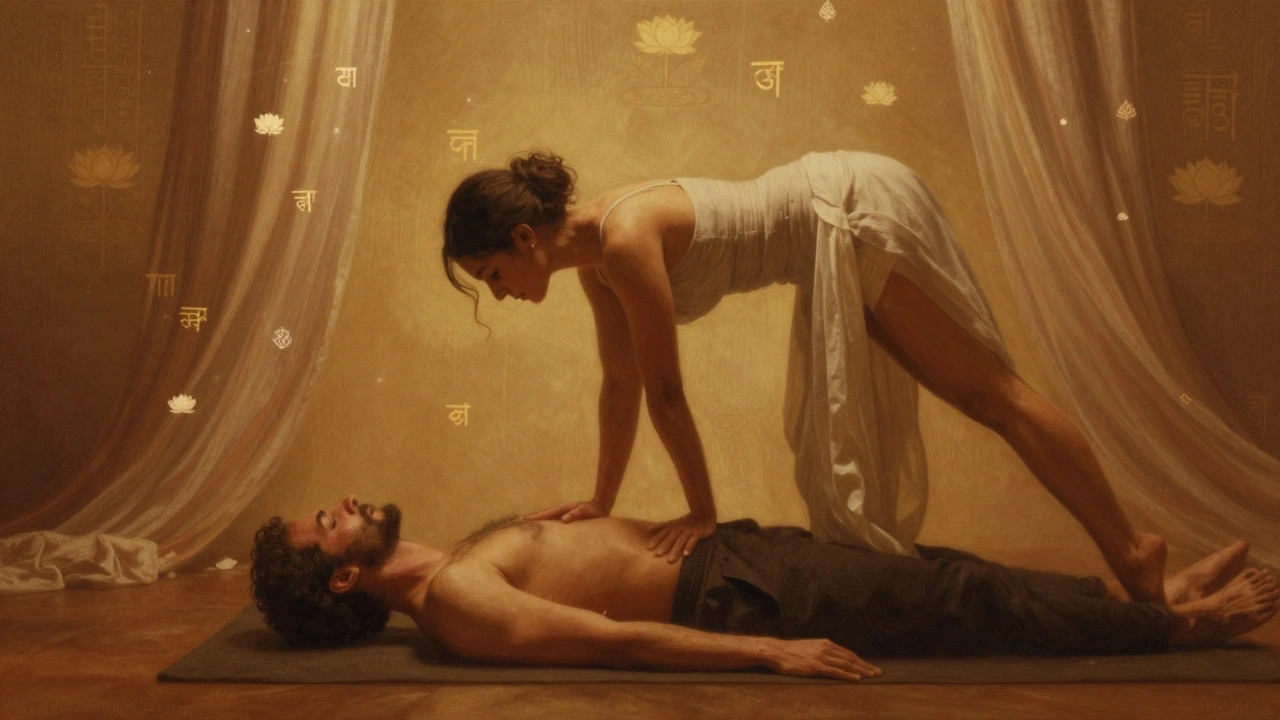
Here’s where the Kāma Sutra gets even more radical: women could hit, kick, scratch, and scream during sex. Not as a sign of frustration, but as a natural expression of desire. The text says if a man is too rough, a woman has the right to respond with twice the force. She could dominate, control, and even punish him if he didn’t listen.This wasn’t fantasy. It was law. In a society where women were often silenced, the Kāma Sutra gave them permission to speak with their bodies. It didn’t just accept female aggression-it expected it. A man’s status depended on how well he could satisfy his partner. If he couldn’t, he wasn’t a good lover. He was a failure.
Positions That Put Women in Control
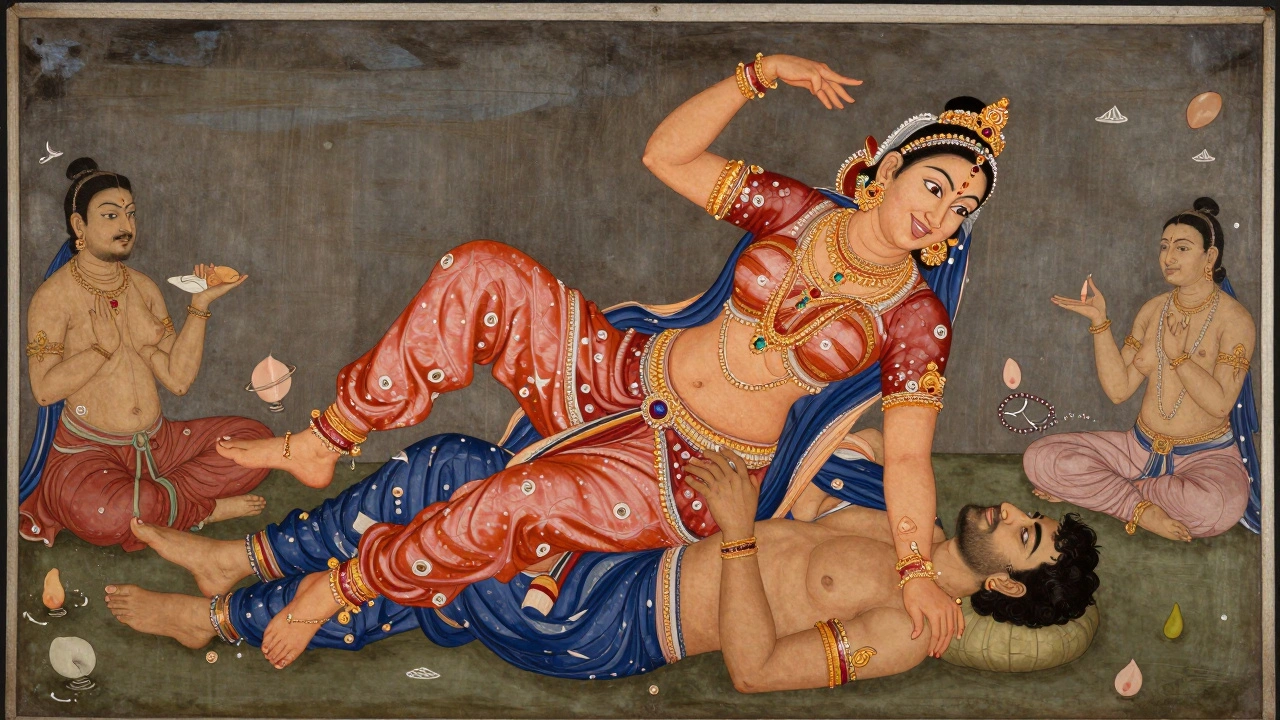
The Kāma Sutra didn’t just describe positions-it designed them around female pleasure. The Cowgirl position, called Ubhayabhadrasana, wasn’t just about dominance. It gave women full control over depth, speed, and angle. They could lean forward to rub their clitoris against their partner’s pelvis. They could sit upright to ease discomfort. They could move how they wanted, when they wanted.The Reverse Cowgirl offered the same control, but with a different sensation. The Spooning position created full-body contact, letting partners breathe together, whisper, and move slowly. The Yab-Yum position, where partners sit facing each other with legs wrapped, turned sex into meditation. Breathing in sync wasn’t just romantic-it was believed to unlock deeper, full-body pleasure beyond orgasm.
And then there was the Sixty-Nine. Not just for fun, but for mutual stimulation. The text treated it as a way to build connection, not just climax. It didn’t prioritize one person’s pleasure over the other. It treated both as equally important.
Science Confirms What the Kāma Sutra Knew
A 2024 study from Prague analyzed over 1,200 women and ranked positions by pleasure. The top two? Face-to-face with the woman on top (26.36/30) and face-to-face with the man on top (28/30). The lowest? Kneeling rear entry (5.85/30) and anal sex (0.89/30).That matches the Kāma Sutra perfectly. The positions women rated highest were the ones that allowed control, clitoral contact, and emotional closeness. The ones they rated lowest were the ones that minimized stimulation and prioritized male access. The text didn’t guess. It observed. And modern science is just catching up.
Even more telling: women rated cunnilingus higher than men rated fellatio. That’s the biggest gender gap in pleasure ratings. The Kāma Sutra knew this centuries ago. It didn’t treat oral sex as a favor. It treated it as a core part of mutual satisfaction.
The Real Legacy: Pleasure as a Right
The Kāma Sutra didn’t just describe sex. It redefined relationships. It said a man’s worth wasn’t in his strength or wealth-but in his ability to bring his partner to pleasure. A woman’s worth wasn’t in her obedience-but in her right to demand it.It didn’t see pleasure as something men gave to women. It saw it as something they created together. And it gave women the language, the tools, and the permission to take charge of it.
Modern wellness coaches now use Kāma Sutra principles to help women reconnect with their bodies. Yoga, breathwork, mindful touch-all of it traces back to these ancient ideas. The text didn’t just survive. It evolved. It’s being used today in therapy, in intimacy workshops, in bedrooms around the world.
What’s shocking isn’t that ancient India understood female pleasure. It’s that we forgot it. For centuries, Western culture reduced sex to reproduction, to male control, to silence. The Kāma Sutra reminds us: pleasure is a language. And women have always known how to speak it.
Is the Kama Sutra only about sex positions?
No. The Kama Sutra is a complete guide to love, relationships, and pleasure. Only one of its seven books focuses on sexual positions. The rest cover how to find a partner, how to maintain intimacy, how to manage jealousy, and how to cultivate emotional connection. It treats sex as one part of a larger life of desire and fulfillment.
Did ancient Indian women really have sexual agency?
Yes. The Kama Sutra explicitly gives women the right to initiate sex, refuse advances, express anger during intimacy, and demand satisfaction. In texts from the same era, women could own property, inherit wealth, and even become teachers. Sexual agency was part of a broader cultural framework that valued women as independent beings-not just wives or mothers.
Why was the Kama Sutra forgotten in the West?
When British colonizers arrived in India in the 1800s, they saw the Kama Sutra as scandalous and banned its teaching. They replaced it with Victorian ideals of modesty and repression. The text was translated, but stripped of its cultural context. For over a century, it was treated as pornography rather than philosophy. Only recently has scholarship begun to restore its original meaning.
Can the Kama Sutra help modern relationships?
Absolutely. Modern couples use its principles to slow down, communicate, and focus on mutual pleasure. The emphasis on foreplay, emotional connection, and body awareness helps people move beyond performance-based sex. Many therapists now incorporate Kama Sutra-inspired exercises to rebuild intimacy after trauma, illness, or long-term disconnection.
Are the Kama Sutra positions only for heterosexual couples?
No. The text never limits pleasure to gender roles. Modern practitioners adapt its principles for all orientations and identities. The focus is on sensation, connection, and mutual consent-not on who is on top. The Cowgirl position works the same whether the top partner is male, female, or nonbinary. The philosophy is about desire, not anatomy.