Devonian Reproduction Simulator
Explore how the shift from external to internal fertilization changed survival rates and behavioral complexity in ancient seas.
External Fertilization Strategy
Example: Lampreys, Early FishesEstimated Survivors:
0
Strategy: "Hope for the best." High predation risk, no parental care.
Internal Fertilization Strategy
Example: Microbrachius (Placoderm)Estimated Survivors:
0
Strategy: "Quality over quantity." Claspers enable coupling; protected development.
Why It Matters
The discovery of claspers in Microbrachius fossils proves that internal fertilization evolved much earlier than previously thought (approx. 380 million years ago). This allowed for:
- Sexual Selection: Males compete or display traits to mate.
- Parental Investment: Energy is focused on fewer, stronger offspring.
- Niche Colonization: Independence from immediate water conditions for spawning.
You probably assume that the first fish just dumped their eggs and sperm into the water and hoped for the best. It’s a clean, simple mental image. But the Microbrachius, a small, armoured fish from the Devonian period, shattered that assumption decades ago. This tiny creature didn’t just lay eggs; it mated. And we know this because its fossils preserved something incredibly rare: direct physical proof of internal fertilization in early vertebrates.
This discovery isn't just a trivia fact for paleontology buffs. It rewrote our understanding of how complex reproductive strategies evolved. Before Microbrachius was properly understood, scientists thought internal fertilization was a later innovation, reserved for sharks or tetrapods (four-limbed animals). Finding it in such an ancient, primitive group suggests that sexual selection and intimate mating behaviors are far older than anyone suspected. Let’s look at what these fossils actually tell us.
The Microbrachius Puzzle
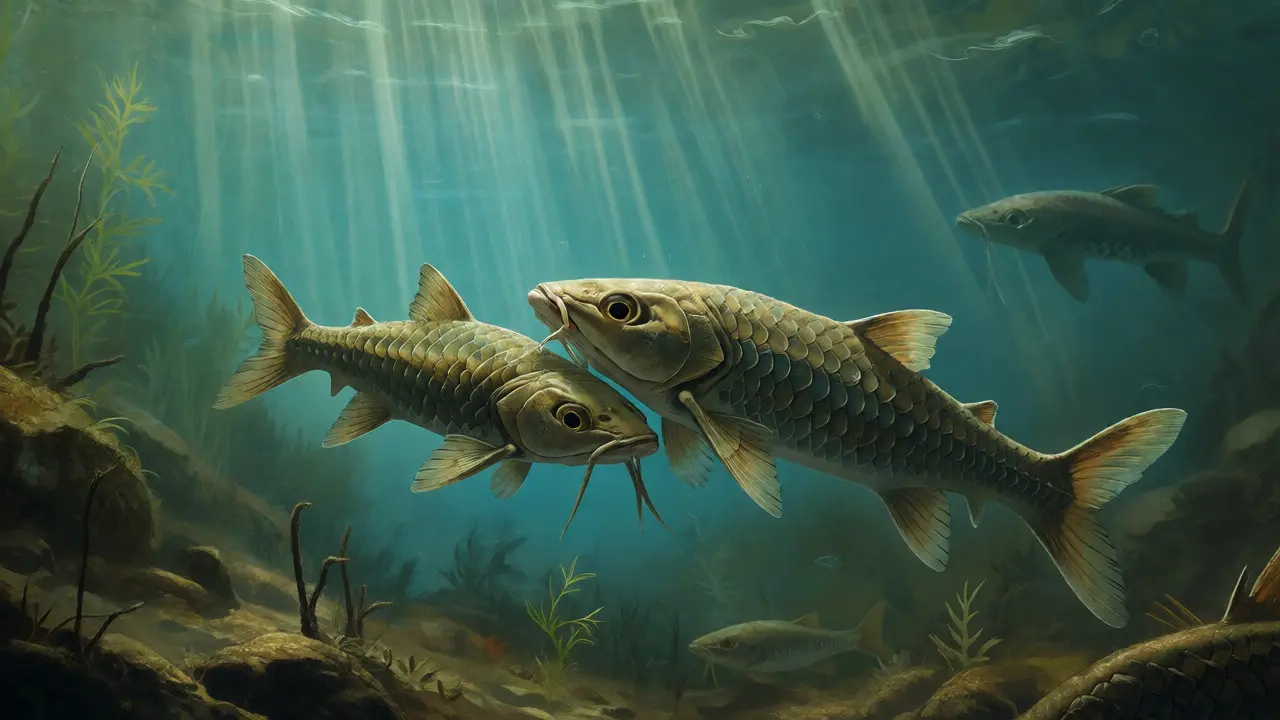
Microbrachius dicki is a type of placoderm, an extinct class of jawed fishes that dominated the oceans roughly 380 million years ago. Placoderms are famous for their heavy bony plates, but Microbrachius was different. It was small, slender, and lacked the massive armour of its cousins like Dunkleosteus. Because of its size and delicate structure, finding complete specimens is tough. Most finds are just fragments.
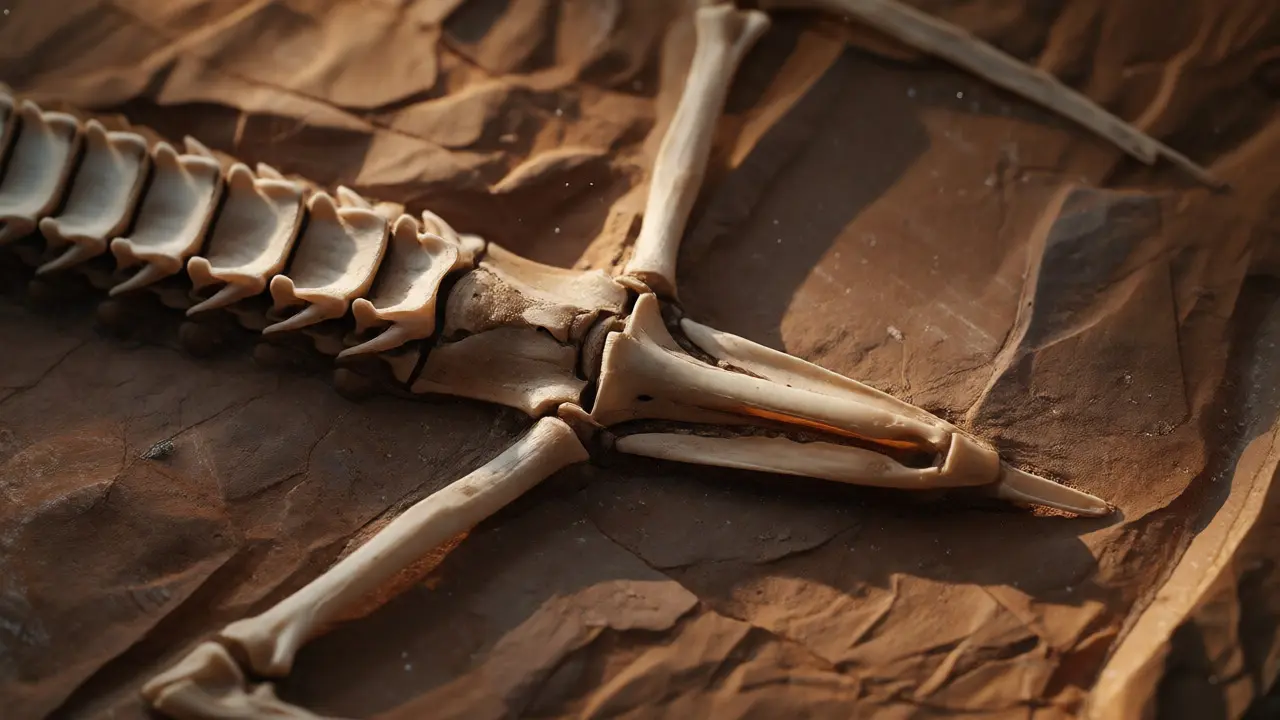
However, two key specimens found in Scotland changed everything. These weren't just random bones. They were articulated skeletons where specific anatomical features were preserved in three dimensions. The breakthrough came when researchers noticed paired structures on the underside of the male pelvis. At first glance, they looked like fins. But their position, shape, and articulation told a different story.
Anatomy of the Claspers
The smoking gun in the Microbrachius fossils is the presence of claspers. In modern biology, claspers are modified pelvic fins used by males to transfer sperm internally to females. You see them today in sharks, rays, and chimaeras. For a long time, scientists believed claspers evolved only once, in the lineage leading to cartilaginous fish (Chondrichthyes).
But here is the twist: Microbrachius belongs to the Osteostraci or Arthrodira groups (depending on classification updates), which are distinct from the shark lineage. If Microbrachius had true claspers, it meant one of two things:
- Internal fertilization evolved independently in multiple lineages of jawed vertebrates.
- The common ancestor of all jawed vertebrates already had the genetic toolkit for internal fertilization, even if not all descendants used it.
The anatomy supports the latter. The claspers in Microbrachius were rigid, segmented structures located between the pelvic fins. They weren't flexible enough for swimming but were perfectly shaped for insertion. This specificity matters. Evolution rarely builds complex, specialized tools without a purpose. If you have a tool designed for coupling, you’re likely using it for coupling.
How We Know It Was Copulation
Detecting soft tissue behavior from stone is hard. You can’t see a mating dance in rock. So, paleontologists rely on indirect evidence and comparative anatomy. Here is the logical chain that confirms copulation in Microbrachius:
- Structural Match: The male pelvic appendages align morphologically with known claspers in living elasmobranchs (sharks/rays).
- Sexual Dimorphism: Males and females show clear differences. Females lack these protruding structures. In many species, such dimorphism signals sexual competition or mate choice.
- Embryological Context: Other placoderms, specifically Materpiscis, provide the other half of the puzzle. Materpiscis fossils contain embryos attached to yolk sacs inside the mother’s body. This proves viviparity (live birth) existed in placoderms. If some placoderms gave live birth, they almost certainly required internal fertilization.
- Phylogenetic Bracketing: Since both major branches of jawed vertebrates (Osteichthyes/bony fish ancestors and Chondrichthyes/cartilaginous fish) have members capable of internal fertilization, parsimony suggests the trait originated in their common ancestor.
It’s not just about having sex; it’s about control. External fertilization is a numbers game-release millions of gametes and pray. Internal fertilization allows for parental investment, better offspring survival rates, and more selective mating. Microbrachius represents a strategic shift in evolutionary history.
Why This Changes Our View of Ancient Seas
Imagine the Devonian ocean. It wasn't just a soup of drifting eggs. It was a world of active courting, physical contact, and behavioral complexity. The existence of internal fertilization implies:
| Feature | External Fertilization (e.g., Lampreys) | Internal Fertilization (e.g., Microbrachius) |
|---|---|---|
| Energy Investment | Low per gamete, high quantity | Higher per gamete, lower quantity |
| Offspring Survival | Very low (predation/drift) | Higher (protected development) |
| Behavioral Complexity | Spawning aggregations | Courtship rituals, pair bonding |
| Evolutionary Impact | Rapid dispersal | Local adaptation, speciation |
This table highlights why the discovery matters. Internal fertilization decouples reproduction from immediate environmental conditions. A female doesn’t need a perfect storm to release eggs; she needs a compatible male. This freedom allowed vertebrates to colonize new niches. It paved the way for the eventual move onto land, where external fertilization becomes nearly impossible due to drying out.
Some critics might argue that these "claspers" were just defensive spines. But defensive spines usually point outward or backward. Microbrachius’s structures pointed inward and forward, toward the female’s cloaca during mating. Their orientation is functional, not just ornamental.
The Broader Implications for Vertebrate Evolution
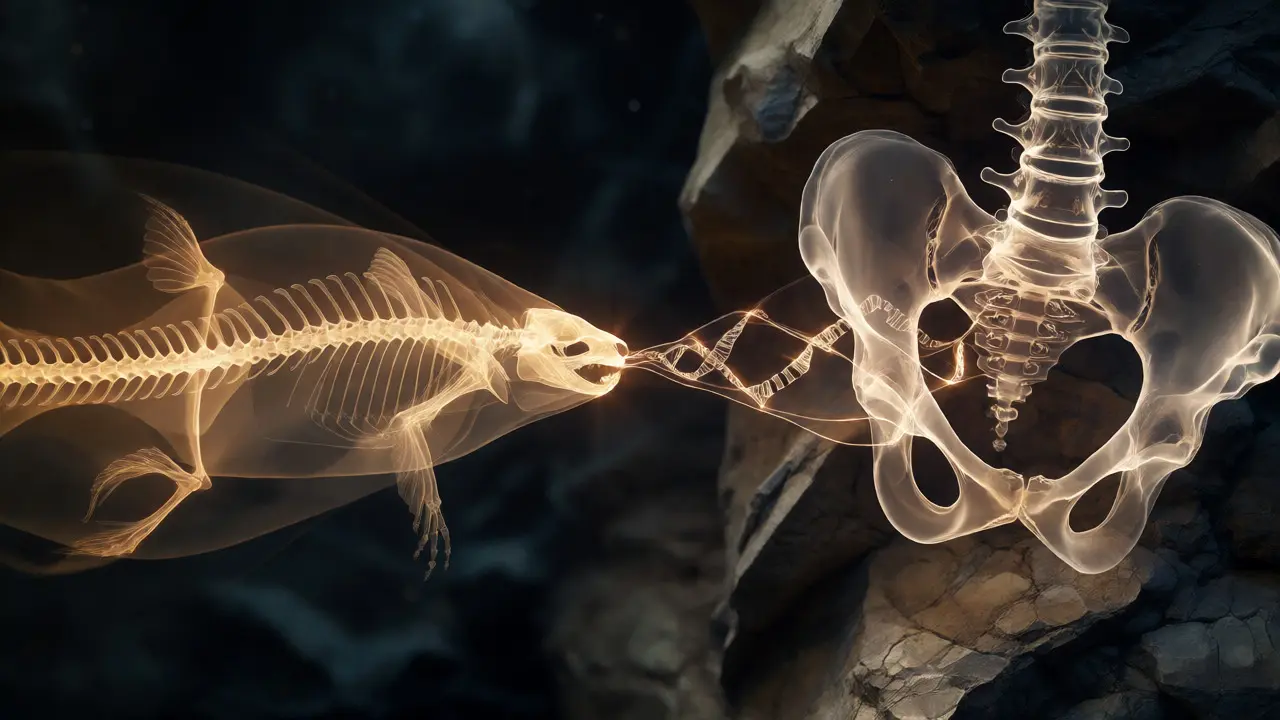
If Microbrachius mated internally, then the last common ancestor of all jawed vertebrates likely did too. This pushes the origin of copulation back to over 420 million years ago. That means the biological machinery for sperm transfer-genitals, sensory nerves, hormonal cues-is deeply conserved.
Think about your own anatomy. The basic plan of pelvic girdles and genitalia has roots stretching back to these armored fish. When you study human embryology, you see echoes of this ancient past. The development of genital tubercles follows pathways established in these early experiments.
Furthermore, this challenges the idea that "primitive" equals "simple." Microbrachius was small and seemingly unremarkable, yet it possessed sophisticated reproductive biology. Complexity isn't always visible in size or armour. Sometimes, it’s hidden in the mechanics of how life begins.
What Comes Next?
Paleontology is constantly refining these stories. New CT scanning techniques allow us to see inside fossils without breaking them. Researchers are currently re-examining other placoderm specimens for similar pelvic modifications. We may find that internal fertilization was even more widespread among early gnathostomes than we thought.
For now, Microbrachius stands as a testament to the power of careful observation. A few inches of bone, analyzed with rigor and curiosity, revealed a secret about intimacy in the ancient world. It reminds us that evolution is driven not just by survival, but by connection.
Did Microbrachius give live birth?
While Microbrachius itself shows evidence of internal fertilization via claspers, direct proof of live birth (viviparity) comes from related placoderms like Materpiscis. However, given the presence of internal fertilization, it is highly probable that Microbrachius also retained embryos internally, though definitive embryonic fossils for this specific genus are rarer.
Are claspers only found in sharks?
No. While most familiar in sharks and rays (Chondrichthyes), the discovery of Microbrachius proved that analogous structures existed in extinct bony-plated fish (Placodermi). This suggests that the genetic basis for these organs evolved before the split between cartilaginous and bony fish lineages.
How old are Microbrachius fossils?
Microbrachius dicki lived during the Late Devonian period, approximately 380 million years ago. Fossils are primarily found in the Old Red Sandstone formations of Scotland.
Why is internal fertilization considered advanced?
It allows for greater parental investment, protection of gametes from predation and environmental hazards, and increased chances of successful conception. It also facilitates sexual selection, driving the evolution of diverse mating behaviors and physical traits.
Can we see soft tissues in Microbrachius fossils?
Rarely. Most information comes from mineralized hard parts like bones and teeth. However, exceptional preservation sites (Lagerstätten) sometimes preserve skin impressions or fin rays, helping scientists infer the function of skeletal structures like claspers.