Family Model Simulator
Select a scenario and click "Analyze Impact" to see how historical forces shaped this family structure.
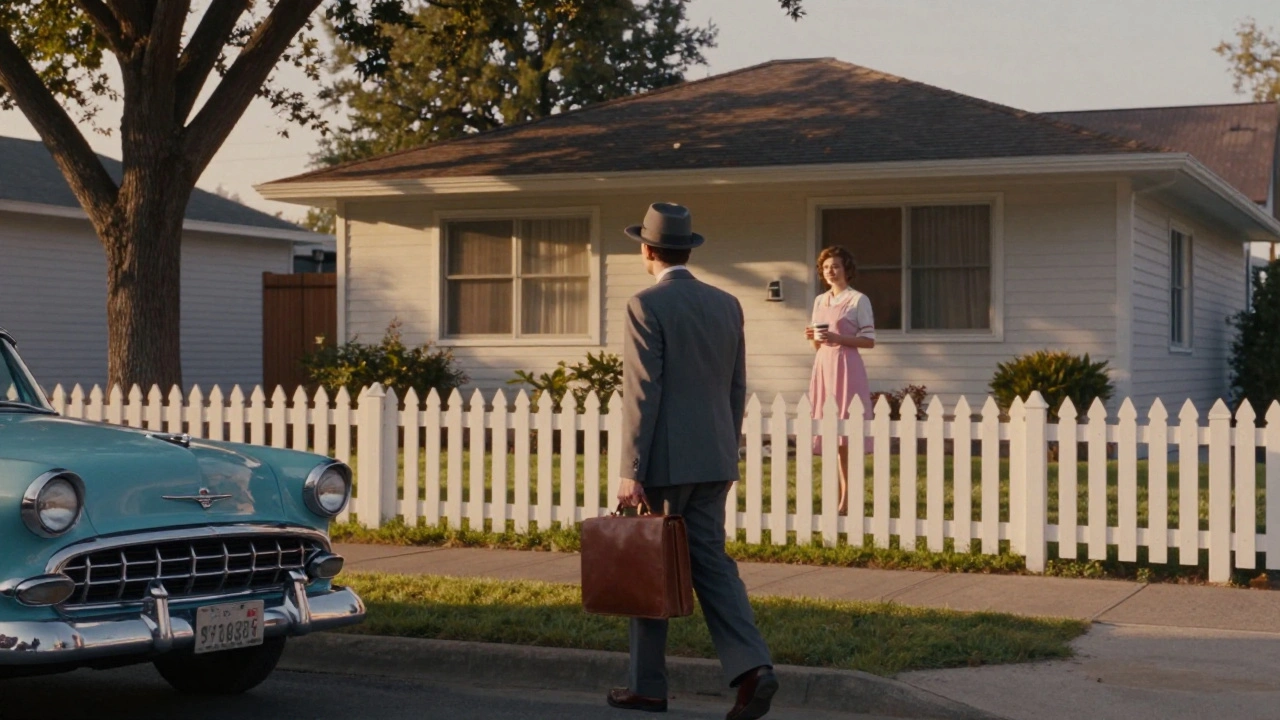
Picture a suburban house in 1955. The father leaves for the factory or office at dawn, carrying a briefcase and the weight of providing for everyone inside. The mother stays behind, managing a household that runs like a small business-cooking, cleaning, teaching, and caring for children without a paycheck to show for it. This wasn't just a personal choice; it was the dominant social script of the mid-20th century. We call this the breadwinner-homemaker model, which is a family structure where one partner earns income while the other manages unpaid domestic labor.
We often think of this arrangement as "traditional" or natural. But here’s the twist: it isn’t. Anthropologists and historians agree that the male-breadwinner/female-homemaker nuclear family is actually a very recent invention. It emerged from industrial capitalism, specific tax laws, and post-war policies. Understanding this model helps us see why modern gender debates feel so intense-they are essentially arguments about dismantling a system that was built by design, not by nature.
The Industrial Roots of Separate Spheres
To understand where this model came from, we have to look back before the 20th century. In pre-industrial agrarian societies, the home was the workplace. Men and women worked side-by-side on farms, in shops, and in craft production. There was no clear line between "public" work and "private" life. Everyone contributed to the family’s survival.
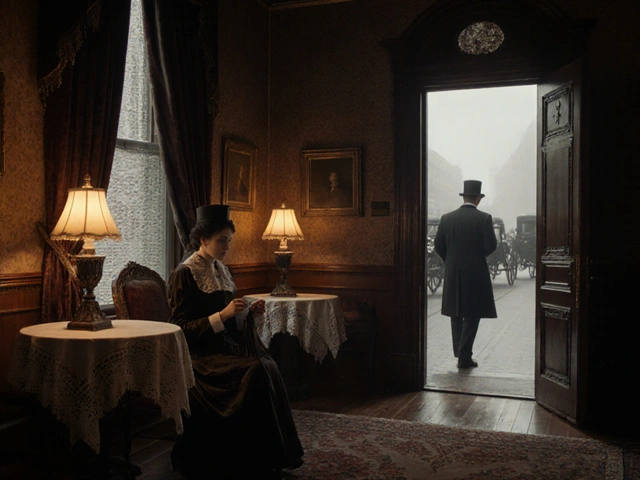
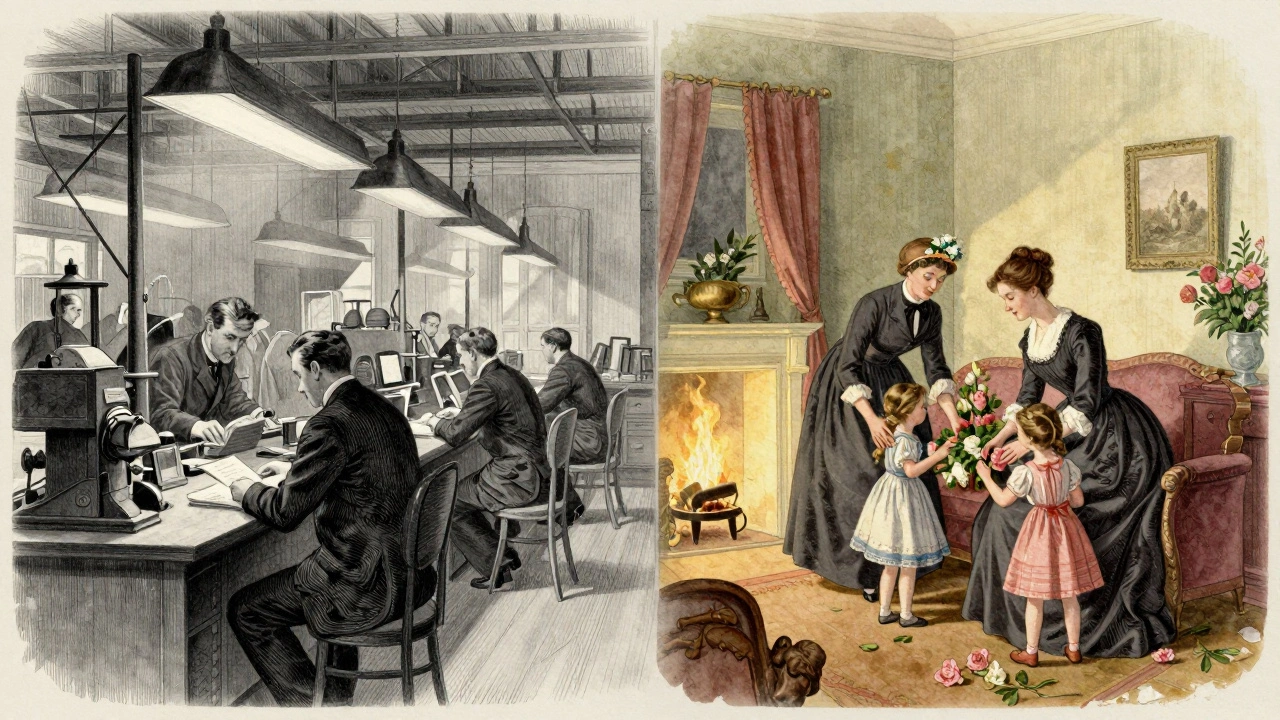
Then came industrialization. As factories and offices grew, wage labor moved out of the home. This physical separation created a new ideology known as the separate spheres doctrine. Society began to view the public world of commerce as masculine and the private world of the home as feminine.
This shift didn't happen overnight, but by the 19th century, middle-class culture in Britain and the United States celebrated the idea of a man who supported his family financially while his wife focused on morality, child-rearing, and domestic comfort. For working-class families, immigrants, and racial minorities, this ideal was often impossible. They needed every available pair of hands to survive, meaning women frequently worked in factories or service jobs alongside men. Yet, the breadwinner-homemaker image remained the powerful normative standard-the goal everyone was supposed to aspire to.
Government Policy Built the System
You might assume this family structure evolved naturally from cultural preferences. In reality, the U.S. government actively engineered it through law and economics. Two major policy shifts in the mid-20th century locked this model into place.
First, consider the Social Security Amendments of 1939. Before this, Social Security was based on individual contributions. The 1939 changes transformed it into a program designed to support the male-breadwinner family. It introduced dependents' benefits that paid wives 50% of their husband's benefit, even if they had never paid payroll taxes themselves. Widows received 75% of what their husbands would have earned, provided they didn't remarry or earn more than $15 a month. These rules explicitly rewarded staying home and penalized working women who married.
Second, the Tax Reform Act of 1948 made single-earner marriages financially superior. By introducing "income splitting," the government allowed married couples to divide their combined income equally for tax purposes. In a progressive tax system, this meant a couple with one high earner and one non-earner paid significantly less tax than two people earning moderate incomes separately. Analysts estimate that these tax breaks effectively subsidized the stay-at-home mom lifestyle, making it the rational economic choice for millions of families.
| Policy Mechanism | Key Legislation | Impact on Family Structure |
|---|---|---|
| Dependents' Benefits | Social Security Amendments (1939) | Provided pensions to non-working wives, tying their financial security to their husbands' employment history. |
| Income Splitting | Tax Reform Act (1948) | Lowered taxes for single-earner couples, creating a financial disincentive for wives to seek full-time work. |
| Housing Subsidies | GI Bill (Post-WWII) | Enabled low-cost mortgages for veterans, facilitating suburban living designed around car-centric commutes and home-centered family life. |
The Cultural Peak: The 1950s Ideal
By the 1950s, the pieces were in place. High union wages for manufacturing jobs meant one income could often support a household. Suburban expansion provided large homes with modern appliances that promised to make housework easier. Media reinforced the message relentlessly. Television shows, advertisements, and school curricula depicted the happy family as one where the father was the provider and the mother was the nurturer.
Sociologist Talcott Parsons argued this division was efficient. He claimed men played an "instrumental role" (dealing with the outside world) while women played an "expressive role" (maintaining emotional stability). This theory gave academic weight to the idea that gender specialization was good for society. However, this "golden age" was largely exclusive. It primarily benefited white, middle-class families. Black women, immigrant women, and poor women continued to work outside the home out of necessity, yet the cultural pressure to conform to the homemaker ideal persisted across all demographics.
Feminist Critique and the Cracks in the Foundation
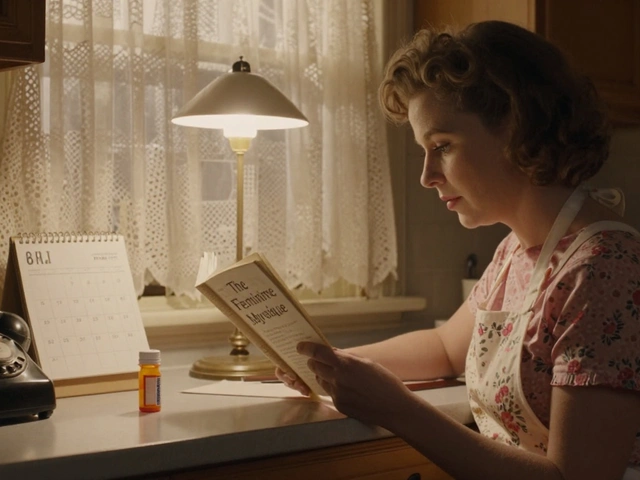
Not everyone bought into the narrative. Behind closed doors, many women felt trapped. Betty Friedan’s 1963 book, *The Feminine Mystique*, gave voice to this frustration. She described the "problem that has no name": a deep sense of emptiness among educated women who were confined to domestic roles despite their capabilities and desires for broader engagement.
Feminist scholars pointed out the structural inequalities baked into the model. Because homemakers did not earn wages, they had no independent financial power. If a marriage ended in divorce or death, the homemaker faced severe economic vulnerability. Furthermore, the model obscured the value of unpaid labor. Housework, childcare, and elder care required dozens of hours per week-often exceeding 40 hours-but generated zero GDP and no pension credits.
As the second wave of feminism gained momentum in the 1960s and 70s, these critiques became mainstream. Women began entering the workforce in record numbers, driven by both ideological change and economic necessity. The rise of the service sector also created jobs that were more accessible to women than heavy industrial manufacturing had been.

From Breadwinner to Dual-Earner
The decline of the strict breadwinner-homemaker model was gradual but steady. By the early 2010s, only about one-third of families with children fit the classic pattern of a sole male earner and a non-working mother. Today, the dominant form is the dual-earner household, where both partners contribute to the family income.
However, the transition hasn't been perfectly equal. While women now work extensively, they still carry a disproportionate share of the "second shift"-the unpaid domestic labor that comes after the paid workday ends. This has led to new tensions around time management, childcare costs, and parental leave policies.
Interestingly, anthropological research suggests that neither the rigid 20th-century model nor the current dual-earner stress-bowl is the universal human norm. A 2021 study in *Philosophical Transactions of the Royal Society B* highlighted that in many historical and small-scale societies, provisioning and caregiving were shared broadly among kin and community members. The 20th-century model was a narrow deviation, shaped by specific industrial conditions, rather than a timeless truth.
Why This History Matters Today
Understanding the breadwinner-homemaker model isn't just an academic exercise. It explains current political and social battles. Debates over tax codes, childcare subsidies, and parental leave are essentially fights over which family model society should support. Should policies favor the traditional single-earner setup, or should they facilitate flexible, shared-care arrangements?
Recognizing that the "traditional" family was a product of 20th-century policy allows us to reimagine our own structures. We can design systems that value caregiving regardless of gender and provide economic security for all individuals, not just those tied to a primary earner. The past shows us that family structures are adaptable. The question is not whether we should return to the past, but how we can build a future that works for the complex realities of modern life.
Was the breadwinner-homemaker model common in all cultures?
No. While it was the dominant ideal in mid-20th-century Western industrial nations, it was never universal. Working-class families, racial minorities, and immigrants in the U.S. often relied on dual incomes out of necessity. Anthropological evidence also shows that most human societies throughout history utilized cooperative caregiving and shared provisioning rather than a strict single-earner/single-caregiver split.
How did the 1948 Tax Reform Act affect family dynamics?
The act introduced "income splitting," which allowed married couples to combine their incomes and split them evenly for tax calculations. In a progressive tax system, this significantly reduced the tax burden for households with one high earner and one non-earner. This created a strong financial incentive for wives to remain out of the workforce, reinforcing the homemaker role.
What is the "separate spheres" doctrine?
The separate spheres doctrine was a 19th-century social ideology that divided life into two distinct areas: the public sphere of work and politics (associated with men) and the private sphere of home and family (associated with women). This concept justified the exclusion of women from the labor market and political life, framing domesticity as their natural and moral domain.
Why did the breadwinner-homemaker model decline after the 1960s?
Several factors contributed to its decline: the feminist movement challenged gender norms, rising education levels for women increased their career opportunities, and economic shifts toward service industries created more jobs for women. Additionally, stagnant wages for many men made single-income households increasingly difficult to maintain, forcing more women into the workforce.
Is the male-breadwinner family considered "traditional" by historians?
Historians and anthropologists argue it is not. Research indicates that the male-breadwinner/female-homemaker nuclear family is a relatively recent phenomenon, emerging specifically during the era of industrial capitalism in the 19th and 20th centuries. Most pre-industrial societies featured more fluid divisions of labor where both genders contributed directly to economic subsistence.