
Sex Education Model Comparison Tool
Select a model to see how it views the individual, their rights, and the outcome of their education.
Risk-Only Model
Focuses on prevention, danger, and restricting behavior.
Sex-Positive Model
Focuses on autonomy, pleasure, and comprehensive skills.
For a long time, the conversation around disabled people and sex has been dominated by one word: risk. If you look at traditional curricula or care home policies, the focus is almost always on preventing abuse, stopping "problematic" behaviors, or treating disabled individuals as either eternal children or potential dangers. This narrow view doesn't just ignore the human need for intimacy; it actually makes people less safe. When we strip away the right to learn about pleasure, boundaries, and identity, we leave people without the very tools they need to protect themselves and build healthy lives.
The reality is that everyone, regardless of their physical or cognitive abilities, has a fundamental human right to experience sexuality and intimacy. Shifting from a risk-only approach to a sex-positive model isn't just about "being nice"-it's a critical public health strategy. Research shows a direct link between comprehensive knowledge and safety: the more a person with a learning disability understands about sex and relationships, the safer they actually are. Yet, disabled students are far less likely to receive comprehensive sexuality education (CSE) in school than their non-disabled peers, leaving a massive gap in their support system.
| Feature | Risk-Only Model | Sex-Positive Model |
|---|---|---|
| Primary Goal | Prevention of abuse and "problem" behaviors | Empowerment, autonomy, and wellbeing |
| View of the Person | Potential victim or potential perpetrator | Whole person with sexual rights and desires |
| Curriculum Focus | Danger, hygiene, and restrictions | Consent, pleasure, identity, and healthy dating |
| Approach to Consent | A barrier used to restrict information | A skill to be taught and practiced |
| Outcome | Social isolation and vulnerability | Increased safety and fulfilling relationships |
The Trap of the "Capacity to Consent"
One of the biggest hurdles in modern disability services is how Consent is handled. In many restrictive systems, educators use a "capacity assessment" to decide what a student is allowed to learn. If a student is deemed unable to consent today, they are often blocked from the very lessons that would help them understand consent. This is a logical loop that traps people in a state of permanent ignorance.
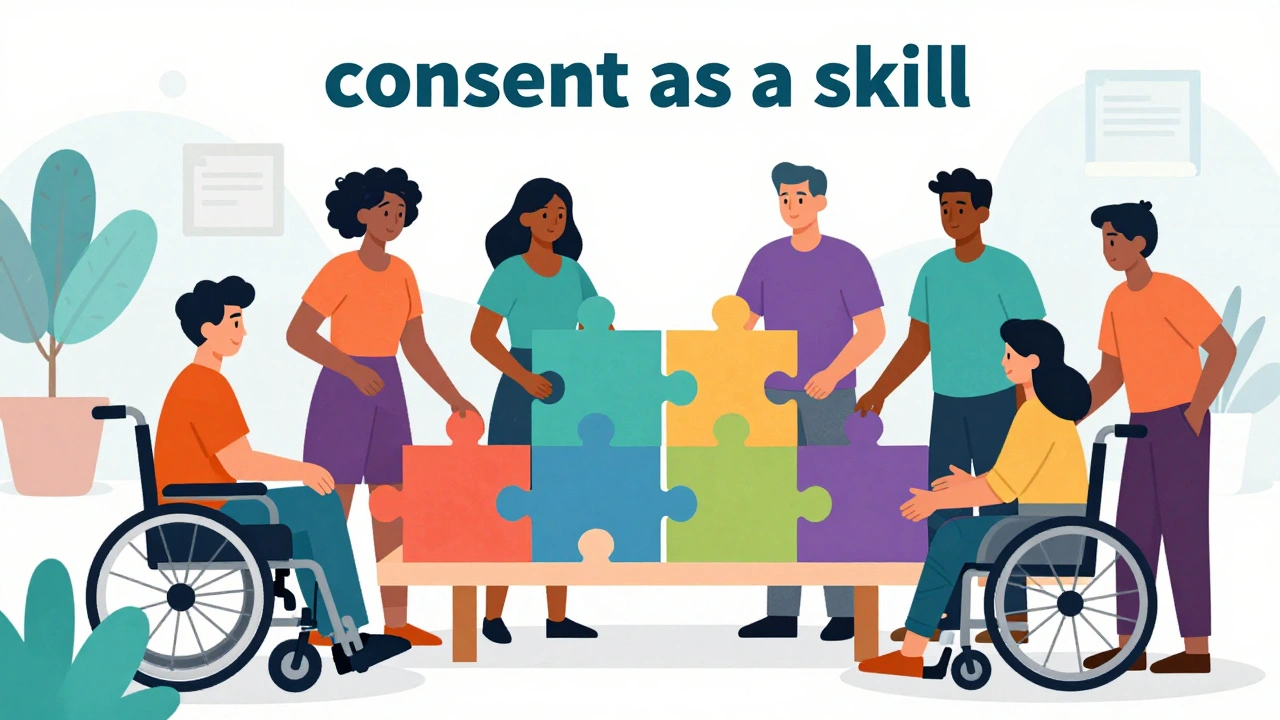
When we treat consent as a static trait-something you either have or don't-we commit what researchers call epistemic injustice. We essentially tell the person that their current lack of knowledge justifies denying them the information needed to gain that knowledge. A sex-positive approach flips this: it views consent as a set of skills that can be developed through experiential learning, activity-based lessons, and consistent support.
Why Risk-Focused Models Actually Increase Danger
It sounds counterintuitive, but by focusing only on the "dangers" of sex, institutions often make disabled people more vulnerable. Consider the statistics: roughly 84% of women and 30% of men with intellectual disabilities will experience sexual assault in their lifetime. Many of these abuses happen because of a lack of sexual autonomy and a dependency on caregivers who may be abusive.
When education is stripped down to a few warnings about "stranger danger" or hygiene, it leaves people unable to recognize the nuances of a healthy versus an abusive relationship. They aren't taught how to identify grooming, how to set a boundary, or how to communicate their desires. By desexualizing disabled people, society effectively silences them, making it harder for them to report abuse or seek help because they haven't been given the language to describe their experiences.
What a Sex-Positive Curriculum Actually Looks Like
A Sex-Positive Model doesn't ignore risk; it integrates risk management into a broader framework of empowerment. Instead of just saying "don't do this," it asks "how can you do this safely and happily?" People with intellectual disabilities have explicitly stated that they want to learn about more than just anatomy. They want to know about making friends, starting conversations, same-sex relationships, and the norms of dating.
Effective, comprehensive sexuality education for this population should include:
- Body Awareness: Understanding one's own anatomy and the right to physical privacy.
- Relationship Skills: Practicing how to flirt, how to handle rejection, and how to build platonic and romantic bonds.
- Digital Safety: Navigating dating apps and social media without falling prey to exploitation.
- Gender and Identity: Acknowledging that Neurodiversity and disability intersect with diverse sexual orientations and gender identities.
- Empowered Decision-Making: Providing the tools to decide if, when, and with whom they want to be intimate.
Overcoming Institutional Resistance
Many educators face a tough battle when trying to implement these changes. Some schools or care facilities are terrified of the liability associated with disabled people engaging in sex. In some cases, teachers have to use a "Trojan Horse" strategy-emphasizing safety and risk to get the administration to approve the program, then slowly introducing the sex-positive, autonomy-focused content once they have access to the students.
To move past this, organizations need to stop being reactive. We can't just wait for a safeguarding crisis to happen before we talk about sex. We need better training for staff to increase their own comfort levels with the topic. When a caregiver is uncomfortable talking about sex, that discomfort is transferred to the disabled person, reinforcing the idea that their desires are shameful or "wrong." Professional development should focus on moving away from the pathologization of disability and toward a rights-based approach.
The Path Toward Sexual Autonomy
The ultimate goal is Sexual Autonomy: the right of every individual to make their own choices about their body and their relationships. This means recognizing that disabled people's sexual experiences are varied. Some may choose a life of celibacy, while others may seek active, fulfilling romantic partnerships. Both choices are valid, but neither can be truly autonomous without the information to make that choice.
By treating sexual health as a vital part of a person's journey-rather than a liability to be managed-we uphold the dignity of the individual. A world where disabled people are equipped with the knowledge of their rights and the skills to exercise them is a world that is fundamentally safer and more just for everyone.
Does sex education increase the risk of sexual activity for people with disabilities?
Actually, the opposite is true. Comprehensive sexuality education provides the tools needed to understand boundaries, recognize grooming, and exercise consent. By increasing knowledge, people are better equipped to make safe decisions and are more likely to recognize and report abuse, which significantly reduces their overall risk.
How do you teach consent to someone with severe cognitive impairments?
Consent should be taught through activity-based and experiential learning rather than just verbal lectures. This includes using visual aids, role-playing simple social scenarios, and focusing on "body autonomy"-the idea that the person has control over who touches them and where. It requires a gradual process of practicing boundaries in low-stakes environments.
What is a "sex-positive" approach in a care setting?
A sex-positive approach recognizes that sexual desire is a natural part of being human and not a symptom of a pathology or a "behavioral issue." In a care setting, this means providing privacy for intimacy, supporting the person's right to pursue romantic relationships, and providing honest, non-judgmental information about sexual health.
Why are disabled people more vulnerable to sexual abuse?
Vulnerability often stems from a combination of factors: physical dependence on caregivers, social isolation, communication barriers, and a systemic lack of sexual education. When society desexualizes disabled people, it creates a environment where abusers feel they can operate without being questioned and where victims don't have the language or agency to resist or report.
Should parents always be the ones to decide when their disabled child receives sex education?
While parental involvement is important, the right to sexual health information is a human right. Waiting until a parent is "ready" can leave a young person vulnerable for years. The goal should be a collaborative approach that respects the young person's growing autonomy and provides age-appropriate, accessible information as they develop.