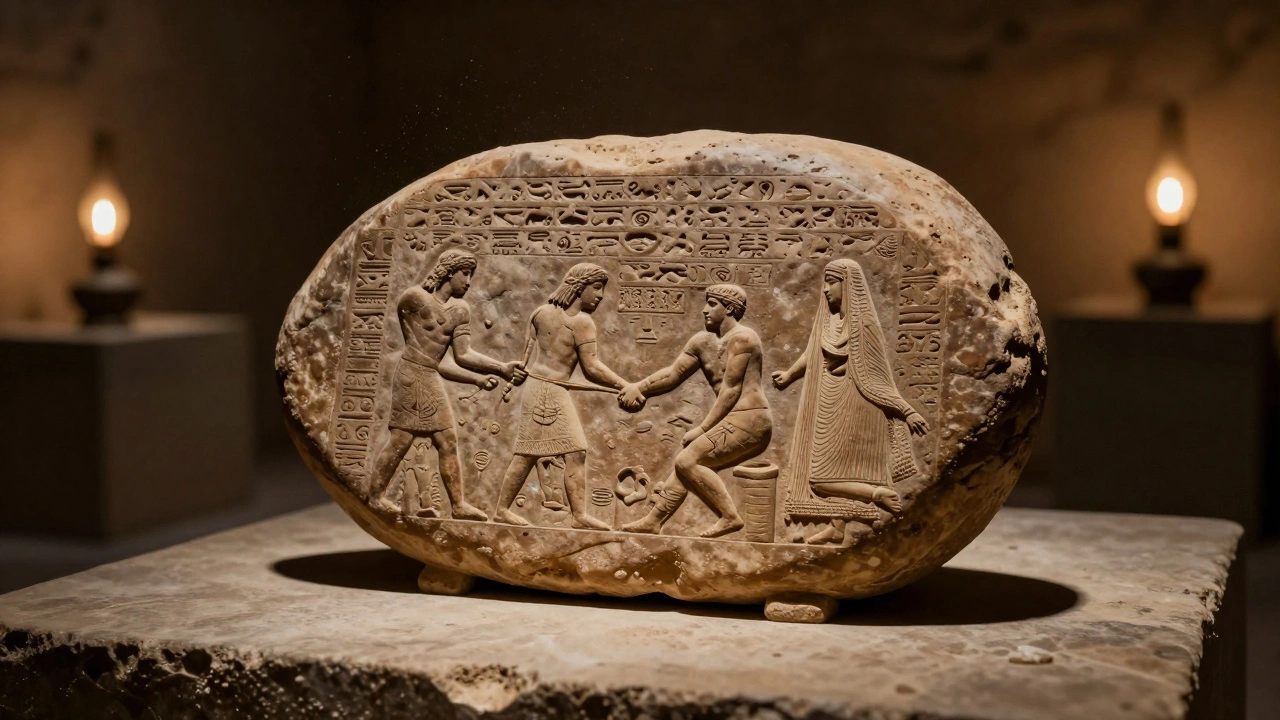
The Middle Assyrian Law Tablets are not just ancient fragments of stone and clay-they are a raw, unfiltered look into how one of the world’s earliest empires handled sex, power, and justice. Discovered in the ruins of Assur (modern-day northern Iraq) during early 20th-century excavations, these cuneiform tablets spell out rules about what people could and couldn’t do with their bodies, who could be punished, and how brutally. This wasn’t abstract philosophy. These laws were enforced. Real people were mutilated, executed, or forced into labor because of them.
Marriage, Property, and the Double Standard
In Middle Assyrian society, a woman’s body was not her own. It was tied to the honor of her father or husband. If a married woman went out to meet another man-even if she was raped-both she and the man could be killed. That’s Paragraph 12. But if a man had sex with an unmarried woman, the punishment wasn’t death. It was marriage. The rapist had to marry her, and he couldn’t divorce her. Or, if her father refused, he paid a fine for her lost virginity. The woman’s consent didn’t matter. Her value was measured in whether she was claimed by a man, not whether she wanted to be with him.Men, on the other hand, had far more freedom. A married man could sleep with another woman-if she wasn’t married. If he didn’t know she was married, he walked free. But if he knew, and had sex with her in a temple-brothel or on the street, the punishment was up to her husband. He could choose to kill her, mutilate her, or do nothing. The man? He was untouched. This wasn’t about morality. It was about control. A woman’s sexuality was a family asset. If it was used without permission, the damage was to the male head of household, not to the woman herself.
Consent? Yes. But Only Sometimes
The law did recognize rape. Paragraph 14 says if a man grabs a woman and says, “Let me have sex with you,” and she resists, and he forces himself on her, he dies. She’s not punished. Witnesses can testify. That’s clear. But even here, the system is twisted. The law doesn’t protect women because they deserve rights. It protects them because their violation threatens male authority. If a woman is raped by a stranger, the state steps in. But if she’s raped by her husband? That wasn’t a crime. It wasn’t even a question.And then there’s the revenge punishment. If a man raped a married woman, and the husband wanted justice, he could have the rapist’s own wife raped. Yes. That’s written into the code. The rapist didn’t get beaten. He didn’t get fined. His wife became the victim. This wasn’t about justice. It was about humiliation. It was about making sure men understood: mess with another man’s property, and you’ll lose your own.
False Accusations and the Cost of Shame
Accusing someone of sexual misconduct was dangerous-but not because it was morally wrong. It was dangerous because it could destroy a family’s reputation. Paragraph 18 says if a man claims another man’s wife is promiscuous and can’t prove it, he gets 40 lashes, one month of hard labor for the king, has his genitals cut off, and pays a fine of one talent of lead. That’s over 30 kilograms of lead. A fortune. Paragraph 19 does the same for false accusations of homosexuality. Same punishment: 50 lashes, mutilation, hard labor, and a massive fine.Why such harsh penalties? Because in Assyrian society, a man’s honor was tied to the sexual behavior of the women around him. A wife who slept around? That made him look weak. A son who had sex with another man? That made his whole family a laughingstock. The law didn’t care if the accusation was true. It cared if it was used to attack someone’s standing. The punishment wasn’t for lying. It was for threatening social order.
Same-Sex Relations: A Crime That Mutilated the Body
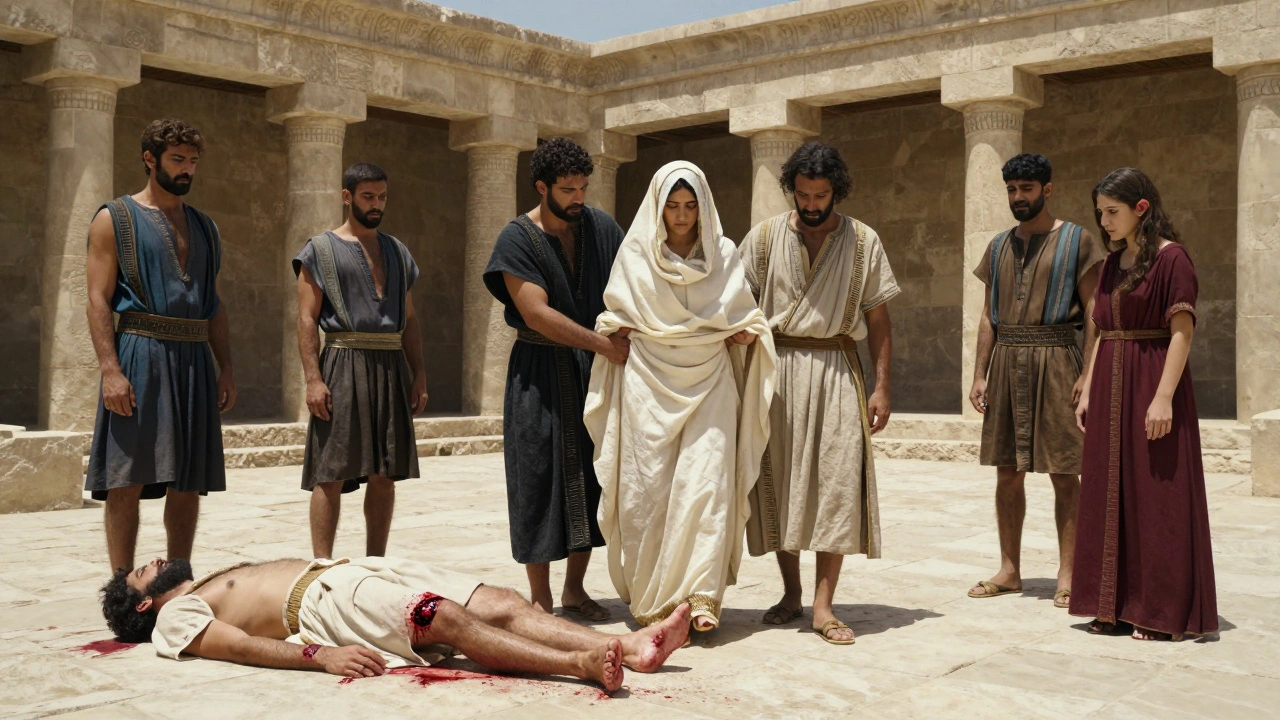
Paragraph 20 is chilling. If a man is convicted of having sex with his male neighbor, he’s not just punished. He’s transformed. He’s made into a eunuch. His genitals are removed. He’s no longer considered a man. He’s defiled. This wasn’t just about sex. It was about purity, hierarchy, and the fear of blurred boundaries. Male-male sex wasn’t just forbidden-it was seen as a corruption of the natural order. And the punishment wasn’t death. It was worse. It was erasure.Compare this to Biblical law, where Leviticus calls male-male sex an “abomination,” but doesn’t prescribe castration. The Assyrians didn’t just condemn. They physically rewrote the body of the offender. This was punishment as ritual. A permanent mark. A warning to everyone who saw him.
Women Who Fought Back
The law didn’t just punish women for sex. It punished them for defending themselves. Paragraph 8 says if a woman crushes a man’s testicle in a fight, they cut off one of her fingers. If the second testicle swells afterward, they tear out both her nipples. Paragraph 37 says if a woman raises her hand against a man, she pays 30 manas of lead (about 15 kilograms) and gets 20 lashes.There’s no equivalent punishment for men who hit women. No law says what happens if a man breaks a woman’s arm. No law says what happens if a man rapes his own wife. The code assumes male dominance. Female resistance is a threat to the structure. So the punishment isn’t about balance. It’s about control. A woman’s body must stay still. Her hands must stay down. Her voice must stay quiet.
The Veil as a Legal Tool
One of the strangest laws in the tablets is about veiling. Paragraph 38 says slave-girls are not allowed to wear veils. If a man sees a slave-girl wearing one, he must grab her and bring her to the palace. Then, her ears are cut off. If he doesn’t do it? He gets 50 lashes, his ears are pierced and threaded with cord, and he spends a month doing hard labor for the king.This wasn’t about modesty. It was about class. Veiling marked a woman as free, as someone’s wife. A slave-girl wearing a veil was pretending to be someone she wasn’t. She was crossing a line. And the law didn’t just punish her. It punished anyone who saw it and didn’t act. The entire community was forced to be enforcers. Everyone had to police the boundaries of gender and status. Failure meant punishment too.

Violence Against Pregnant Women
Paragraph 21 deals with a man who strikes a pregnant woman and causes a miscarriage. The punishment? He pays two talents and thirty minas of lead (over 70 kilograms), gets 50 lashes, and serves one month in hard labor. That’s an enormous fine. Why? Because the unborn child was seen as property-belonging to the father. The loss wasn’t emotional. It was economic. A future son, a future worker, a future heir. That’s what was lost. And the law made sure the man who caused that loss paid dearly.Who Enforced These Laws?
There were no police. No courts in the modern sense. Enforcement relied on witnesses. If someone saw a married couple having sex outside their home, they could kill them on the spot. The law didn’t say “call the authorities.” It said “kill them.” That’s how deeply embedded these rules were. Justice wasn’t administered. It was performed by the community.And then there’s the phrase: “he may do as he pleases.” It shows up again and again. A husband could choose to kill his adulterous wife-or let her live. A father could decide whether to accept a rapist as a son-in-law-or demand payment. The law gave men the power to decide. It didn’t guarantee fairness. It guaranteed control.
Why These Laws Matter Today
These tablets aren’t just relics. They show us how societies build power through the control of bodies. The Assyrians didn’t invent sexual crime. But they wrote it down in ways that were brutally systematic. They linked sex to property, honor, and status. They used mutilation not just as punishment, but as public theater. They made sure everyone knew what happened to those who stepped out of line.And yet, they also show us something else: the limits of control. These laws were written because people were breaking them. The fact that there are 14 paragraphs on sexual misconduct means adultery, rape, and same-sex relations were common enough to require detailed rules. This wasn’t a society of perfect virtue. It was a society afraid of chaos-and willing to use terror to stop it.
When we compare these laws to ancient Hebrew texts, the differences are stark. Biblical law, while still patriarchal, doesn’t punish women the same way. It doesn’t castrate men for homosexuality. It doesn’t force rape victims to marry their attackers. It doesn’t cut off ears for wearing the wrong veil. The Assyrians didn’t just enforce rules-they rewrote the body to fit their vision of order.
What we see in these tablets isn’t just ancient history. It’s a warning. Laws that treat people as property, that use violence to enforce social norms, that silence women and mutilate men-all of this has echoes today. The tools change. The punishments evolve. But the fear behind them? That stays the same.