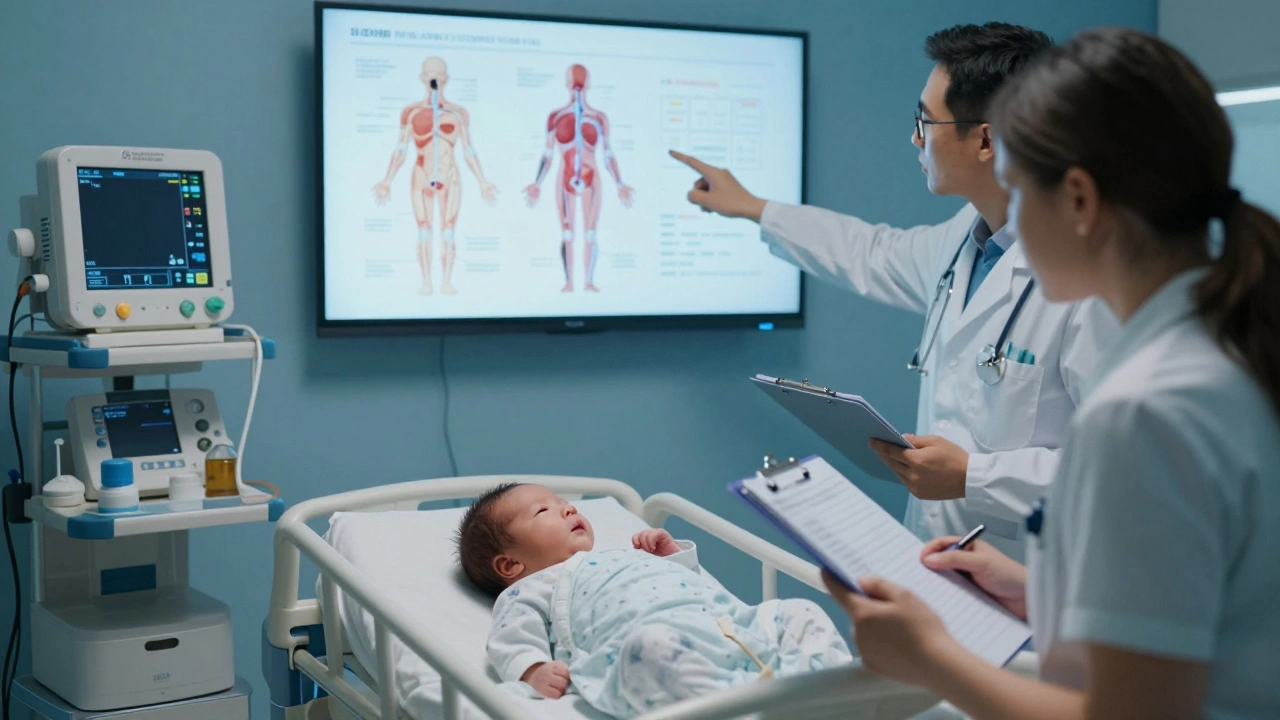
Intersex Rights State Tracker
Find Your State's Protection Status
This tool shows which states have laws or policies protecting intersex children from nonconsensual medical procedures.
State Protection Status
As of March 2026, no U.S. state has passed a law explicitly banning nonconsensual surgeries on intersex children. However, some states have taken steps toward better protections:
California
No specific lawSymbolic resolution recognizing intersex rights but no law to ban surgeries. Some hospitals (e.g., in San Francisco) have implemented their own bans.
Note: Hospitals in major cities have banned procedures
Nebraska
No protectionPassed the "Let Them Grow Act" banning gender-affirming care for transgender minors but explicitly exempts surgeries on intersex children.
Texas
No protectionDefined sex strictly by reproductive organs at birth. No recognition of intersex people as a third category. Intersex Texans face identity document issues.
Illinois
Hospital policiesPublic children's hospitals (e.g., in Chicago) have banned nonconsensual surgeries on intersex infants, requiring delay until the child can participate in decisions.
Massachusetts
Hospital policiesBoston Children's Hospital has implemented policy changes that delay nonconsensual surgeries until the child is old enough to participate in the decision-making process.
New York
Hospital policiesPublic children's hospitals in New York City have banned nonconsensual surgeries on intersex infants, adopting policies that prioritize patient autonomy.
Tamil Nadu
State lawIn India, Tamil Nadu has banned infant surgeries on intersex people and created legal identity codes for intersex individuals.
When a baby is born, hospitals in the U.S. typically assign a sex - male or female - based on visible anatomy. For most, it’s straightforward. But for intersex children, that assignment often masks a complex biological reality. Intersex people are born with physical traits that don’t fit typical definitions of male or female bodies. These variations can involve chromosomes, hormones, or reproductive anatomy. Yet, instead of waiting for the child to grow up and decide for themselves, doctors have long recommended surgeries to "normalize" their bodies - often before they’re even a year old. These procedures are rarely medically necessary. They’re done to make the child look more like what society expects. And they happen without the child’s consent.
Why These Surgeries Are a Human Rights Issue
Imagine being cut open as a baby because your body doesn’t match a binary box. No one asks you. No one explains the risks. You can’t say no. Decades later, you might learn you were sterilized, your genitals were reshaped, or your hormones were altered to fit a gender you never identified with. That’s the reality for many intersex people. A 2016 study in the Journal of Pediatric Urology found that 95% of families agreed to these surgeries when recommended. Why? Because doctors presented them as urgent, necessary fixes - not optional procedures. Parents, scared and overwhelmed, often believed they were protecting their child from bullying or medical complications. But the long-term consequences are real: chronic pain, loss of sexual sensation, psychological trauma, and lifelong medical dependency.
These aren’t just medical decisions. They’re human rights violations. The United Nations, Amnesty International, and the World Health Organization have all condemned nonconsensual surgeries on intersex children. The core problem? Consent. Children can’t consent to irreversible procedures. Parents shouldn’t be forced to make life-altering choices under pressure from medical systems that prioritize conformity over autonomy.
How States Are Responding - And Failing
The U.S. has no federal law protecting intersex children from these surgeries. That means each state sets its own rules - and most aren’t setting any at all.
Take Nebraska. In 2023, it passed the Let Them Grow Act, banning gender-affirming care for transgender minors. But here’s the twist: the law explicitly exempts surgeries on intersex children. That means while a 16-year-old transgender girl can’t get hormone therapy, a newborn intersex child can still be cut open to remove gonads or reshape genitals. Advocates call this hypocrisy. If the state claims it’s protecting children from irreversible medical interventions, why are intersex kids left out? It’s not protection - it’s discrimination dressed up as policy.
Texas took a different path. In February 2026, House Bill 229 went into effect, defining sex strictly by reproductive organs at birth. Intersex people aren’t recognized as a third category. They’re forced into male or female boxes - even if their birth certificate says "both" or "undetermined." Worse, Governor Greg Abbott ordered courts to stop honoring gender marker changes on documents, even for people who had court orders before the law passed. Now, intersex Texans might have a driver’s license that says "male," a birth certificate that says "female," and a hospital record that says "intersex." Confusing? Yes. Dangerous? Absolutely. Imagine being pulled over, asked for ID, and having your documents contradict each other. Or trying to get a passport and being denied because your body doesn’t match the government’s checklist.
California made headlines in 2017 by allowing a third gender option on birth certificates and letting people change their legal gender without surgery. That’s progress. But when it comes to stopping surgeries on infants? Silence. No hospital in California has publicly committed to halting nonconsensual procedures. The state recognized intersex people in a symbolic resolution - but didn’t pass a single law to protect their bodies.
Where Real Change Is Happening
While state legislatures stall, some hospitals are stepping up. In Chicago, Boston, and New York City, public children’s hospitals have banned nonconsensual surgeries on intersex infants. These aren’t just policy changes - they’re cultural shifts. They say: Wait. Listen. Let the child decide.
At Boston Children’s Hospital, surgeons now delay interventions until the child is old enough to participate in the decision. They offer counseling, peer support, and full disclosure about risks, alternatives, and long-term outcomes. The results? Fewer surgeries. More informed families. Fewer regrets.
These models prove it’s possible. You don’t need a law to start doing the right thing. You just need courage - and a commitment to bodily autonomy.
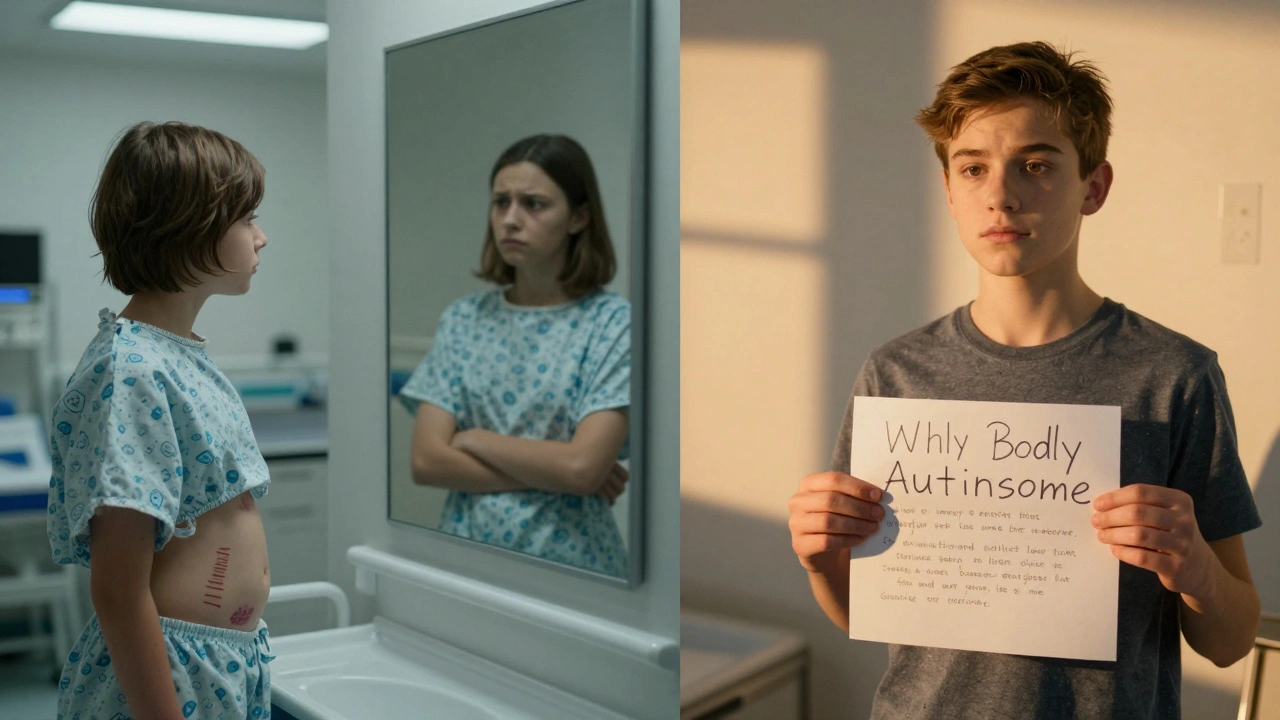
The Legal Blind Spot: When Trans Rights Don’t Include Intersex Rights
There’s a dangerous gap in how lawmakers treat intersex and transgender people. Many states have passed laws protecting transgender youth - but only if they’re fighting to change their gender. Intersex children, who are often pushed into binary identities through surgery, get no such protection. In fact, they’re often used as exceptions to justify those bans.
It’s like saying: "We won’t let kids change their gender - unless their body is already different. Then we’ll fix it for them." That’s not protection. It’s coercion.
Advocates from InterACT and other groups are pushing for clear legal standards: No surgery on intersex children without informed consent. That means no operations before age 18, unless they’re medically urgent - and even then, only with independent legal representation for the child. It means training doctors to stop seeing intersex bodies as problems to fix. And it means giving intersex people a seat at the table when laws are written.
What Needs to Change
Three things are needed now:
- A federal ban on nonconsensual, non-emergency surgeries on intersex minors. No state should be allowed to continue these practices.
- Medical standards of care that treat intersex variations as natural human diversity - not disorders needing correction.
- Legal representation for intersex children during any medical decision-making process. Parents shouldn’t be the only voice.
Some argue that changing this will be hard. That doctors won’t like it. That parents will be scared. But the real cost isn’t in changing policy - it’s in the lives damaged by silence.
Intersex people aren’t asking for special treatment. They’re asking for the same right every child should have: to grow up whole, in control of their own body.
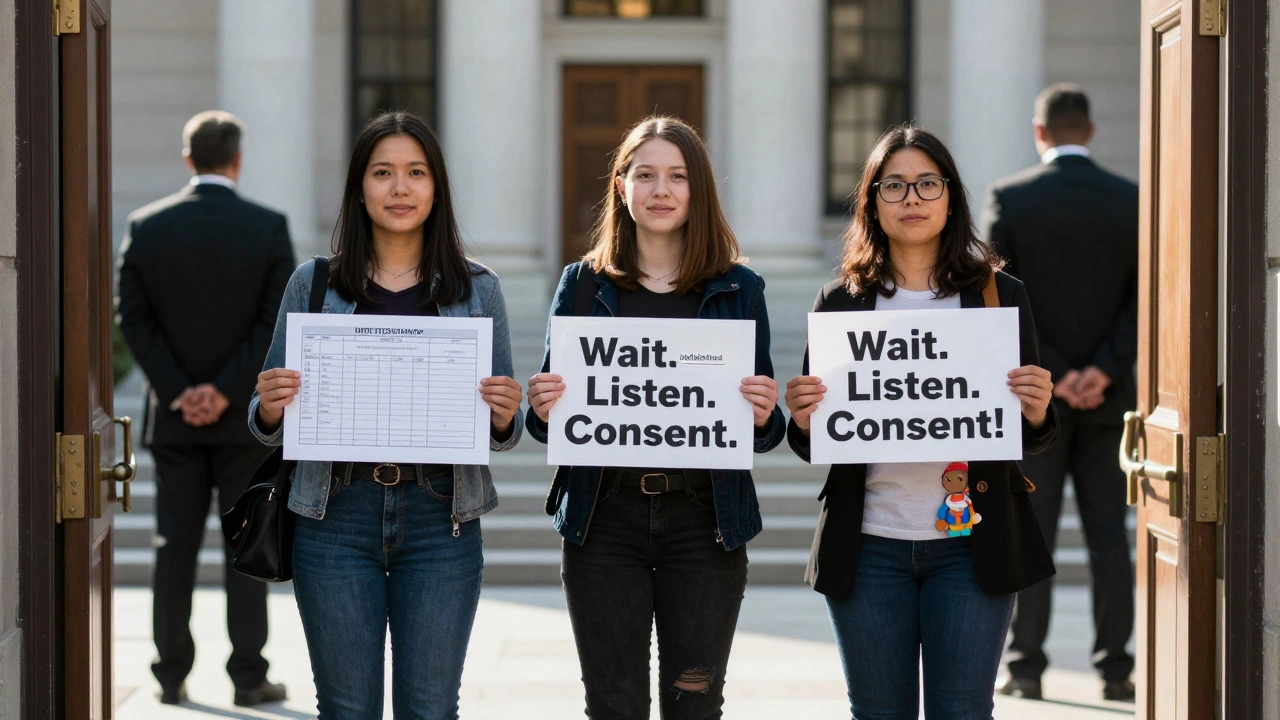
International Context
Outside the U.S., progress is uneven. India’s national government proposed a bill in 2026 that lumps intersex people together with transgender people - erasing their unique needs. But in Tamil Nadu, a state in southern India, they’ve taken bold steps: they’ve banned infant surgeries and created legal identity codes for intersex people. It’s not perfect, but it’s a start.
The U.S. Department of Health and Human Services released a report in late 2024 calling for an end to these surgeries. But with the federal government shifting direction in early 2026, federal action is unlikely. That leaves the work to states - and to hospitals that still choose to do what’s right.
What You Can Do
You don’t need to be a lawmaker to make a difference. Support organizations like InterACT and the Intersex Justice Project. Demand that your local hospital publish a policy on intersex care. Ask your state representative: "Will you protect intersex children from nonconsensual surgeries?" Share stories - not pity, but truth. The more people understand that intersex is not a defect, the harder it becomes to justify fixing what isn’t broken.
What does it mean to be intersex?
Being intersex means being born with physical traits - such as chromosomes, hormones, or anatomy - that don’t fit typical definitions of male or female. These variations are natural and occur in about 1 in 1,500 to 2,000 births. Intersex is about biology, not gender identity. An intersex person may identify as male, female, nonbinary, or neither.
Why are surgeries performed on intersex infants?
Surgeries are often done to make a child’s body look more "normal" according to social expectations - not because they’re medically necessary. Common procedures include removing gonads, reducing clitoral size, or creating vaginal openings. These decisions are made by parents and doctors, usually within the first two years of life, before the child can speak or consent.
Are these surgeries still common in the U.S.?
Yes. Despite growing criticism, these surgeries continue across the country. No national data exists, but studies show that over 90% of families accept surgical recommendations when offered. Hospitals in major cities like Chicago, Boston, and New York have stopped, but most others still perform them.
What’s the difference between being intersex and being transgender?
Intersex is about biological traits present at birth. Transgender is about gender identity - how a person internally understands their gender, which may differ from the sex they were assigned. An intersex person may or may not be transgender. The two are not the same, but they’re often confused - especially in laws that treat them as one.
Which states have laws protecting intersex children?
As of March 2026, no U.S. state has passed a law explicitly banning nonconsensual surgeries on intersex children. California and Oregon have passed symbolic resolutions recognizing intersex rights, but no legal protections exist. Some hospitals, like those in Chicago and Boston, have implemented their own bans - but these are institutional policies, not state laws.