Historical Love Perspective Quiz
How would these figures respond to same-sex attraction?
Test your understanding of historical perspectives on same-sex relationships by predicting how Socrates, Hadrian, and Byron would have responded to different scenarios.
Scenario 1: A young man develops strong feelings for his philosophy teacher.
Scenario 2: A man is found to have a same-sex relationship with another man in public.
Scenario 3: A ruler publicly mourns the death of his same-sex partner.
How did historical perspectives differ?
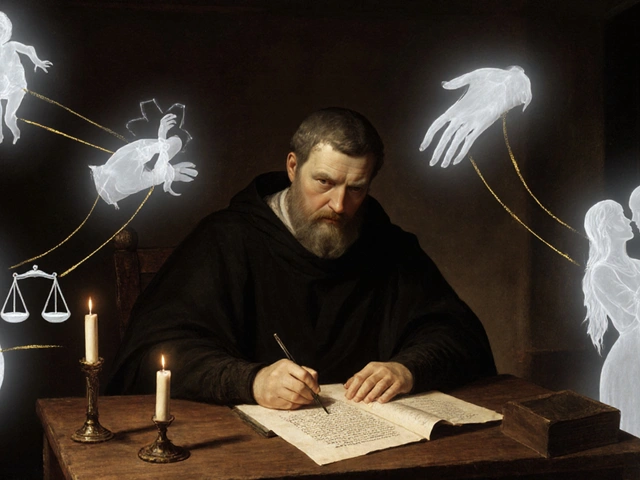
The article explains that these figures experienced love differently because they didn't have modern concepts of sexual orientation. Socrates focused on philosophy, Hadrian created a public legacy, and Byron used poetry to express what couldn't be said openly.
When we think of historical figures and same-sex attraction, we often imagine open love stories, public relationships, or bold declarations of identity. But the truth is far more complicated. In ancient times, love between men wasn’t labeled the way we label it today. It wasn’t about identity-it was about power, mentorship, philosophy, and sometimes, quiet devotion. Three names stand out: Socrates, Lord Byron, and Emperor Hadrian. Each lived in wildly different worlds, yet each carried a hidden or misunderstood love that still echoes today.
Socrates: The Philosopher Who Refused
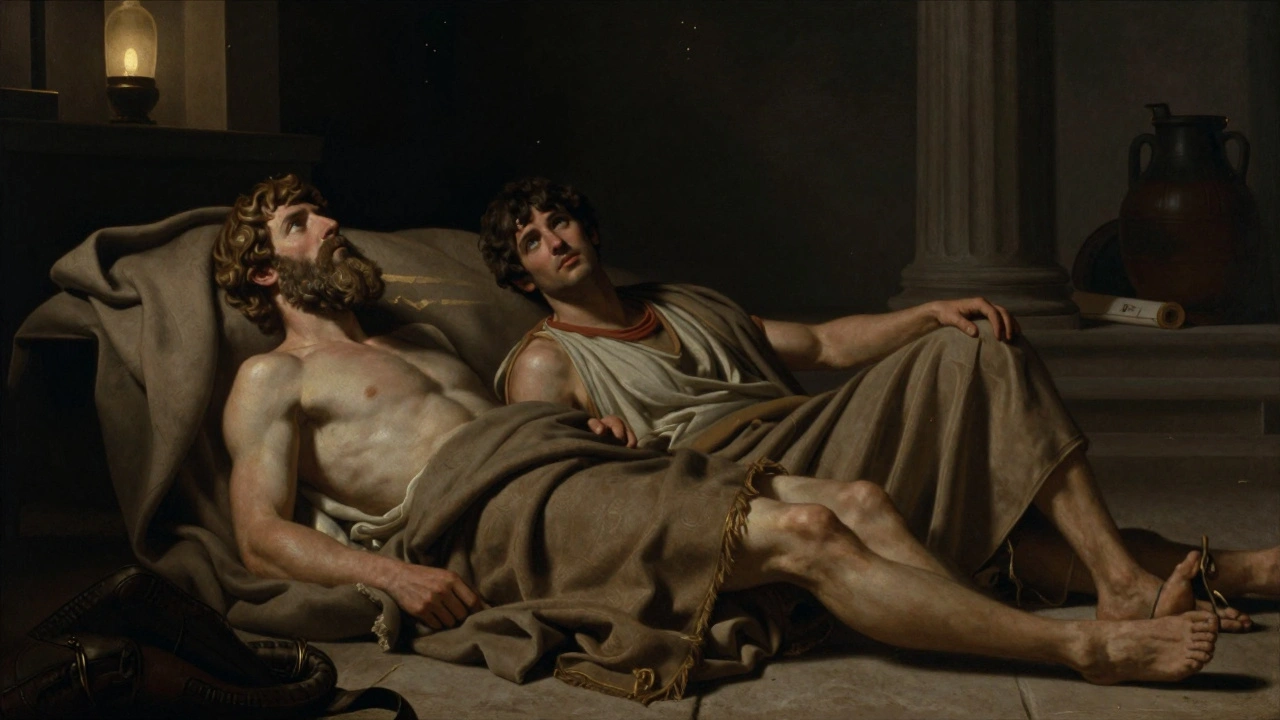
Socrates didn’t write a single word. Everything we know about him comes from others-mostly Plato, his student. And in Plato’s Symposium, we see one of the most famous moments in ancient history: Alcibiades, the stunningly handsome young nobleman, tries to seduce Socrates. They lie together under the same cloak for an entire night. No kiss. No touch beyond that. Just sleep. Why? Because Socrates wasn’t interested in sex. He was interested in the soul. To him, desire wasn’t something to be satisfied-it was something to be transformed. He believed love for a beautiful boy should rise, like a ladder, toward truth, wisdom, and virtue. Physical attraction? It was just the first step. The real goal was to help the young man become better, wiser, more complete. This wasn’t just philosophy. It was practice. In Athens, pederasty-older men forming relationships with teenage boys-was common. But Athens also had laws against it. A man named Gryttus was executed for engaging in same-sex acts. Socrates, surrounded by this tension, chose restraint. He didn’t condemn love. He condemned its misuse. He refused Alcibiades not out of fear or shame, but because he saw something higher. Plato later wrote in Laws that same-sex relations were unnatural. He argued that nature intended sex for reproduction. That view sounds archaic now, but it wasn’t just religious dogma-it came from a culture trying to define what was honorable. Socrates’ refusal wasn’t about homophobia. It was about discipline. He believed true love didn’t end in bed. It ended in the mind.Hadrian: The Emperor Who Mourned
Emperor Hadrian ruled Rome at its height. He built the Pantheon. He traveled the empire on foot, speaking to soldiers, farmers, and slaves. And he loved one man more than anyone else: Antinous. Antinous was a Greek youth from Bithynia, around 15 when they met. By 20, he was Hadrian’s constant companion. They traveled together. They hunted together. They shared quiet moments in tents and palaces. Then, in 130 CE, Antinous drowned in the Nile. No one knows why. Accident? Suicide? Sacrifice? We’ll never know. Hadrian broke. He didn’t just grieve. He deified Antinous. He founded a city named Antinoopolis in Egypt. He ordered statues of him carved across the empire-more than any other non-imperial figure in Roman history. Coins were minted with Antinous’ face. Temples were built. People worshipped him as a god. This wasn’t secret. It was public. Official. Roman law didn’t ban same-sex love, but it did expect men to dominate. Hadrian didn’t hide his love-he made it eternal. He turned a lover into a legend. And in doing so, he gave the world one of the first recorded acts of public mourning for a same-sex partner by a ruler. Centuries later, historians called it a scandal. Modern scholars call it love. Hadrian didn’t need to justify it. He didn’t need to explain. He simply loved-and then refused to let go.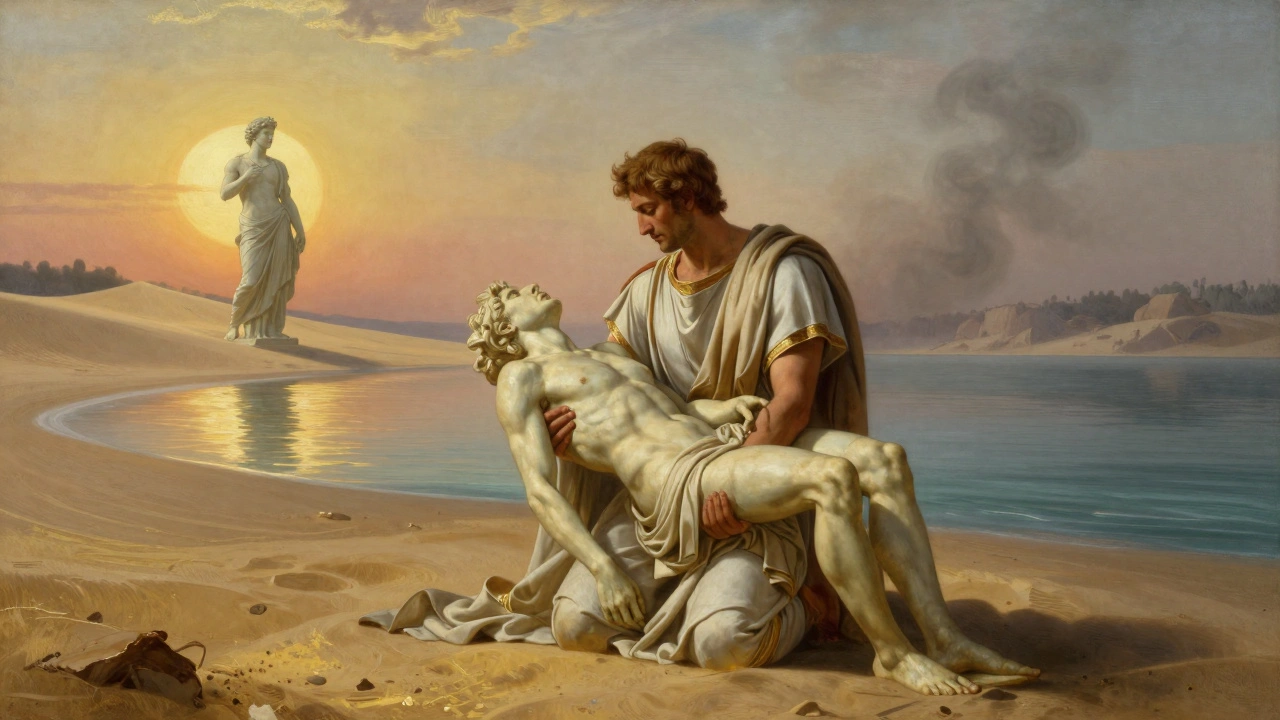
Byron: The Poet Who Wrote Love
Lord Byron didn’t just write poetry. He lived it. He was flamboyant, reckless, and deeply emotional. He had affairs with women-he even married one. But his deepest bonds were with men. In his early twenties, he fell for John Cam Hobhouse, his closest friend. Their letters overflow with affection. "I love you more than I can say," he wrote once. He didn’t mean platonic love. He meant romantic. He meant physical. He was open about it in private circles. In Venice, he lived with a young man named Luigi Zamboni. In Greece, he wrote poems about male beauty with a reverence usually reserved for goddesses. His most famous work, Don Juan, is full of coded references to male love. He didn’t write about it outright-because he couldn’t. Homosexuality was still a crime in England. Men were jailed for it. But Byron didn’t stay silent. He wrote about it in metaphor, in myth, in the sighs between lines. He also wrote openly about his own feelings. In a letter to a friend, he confessed: "I have always loved men more than women." He didn’t say it to shock. He said it because it was true. And in a time when being caught could mean ruin, he chose honesty over safety. His poetry became a lifeline for later generations. When Oscar Wilde read Byron, he saw himself. When Walt Whitman wrote about "the love of comrades," he was channeling Byron. Byron didn’t start a movement. But he gave voice to a feeling so many felt but couldn’t name.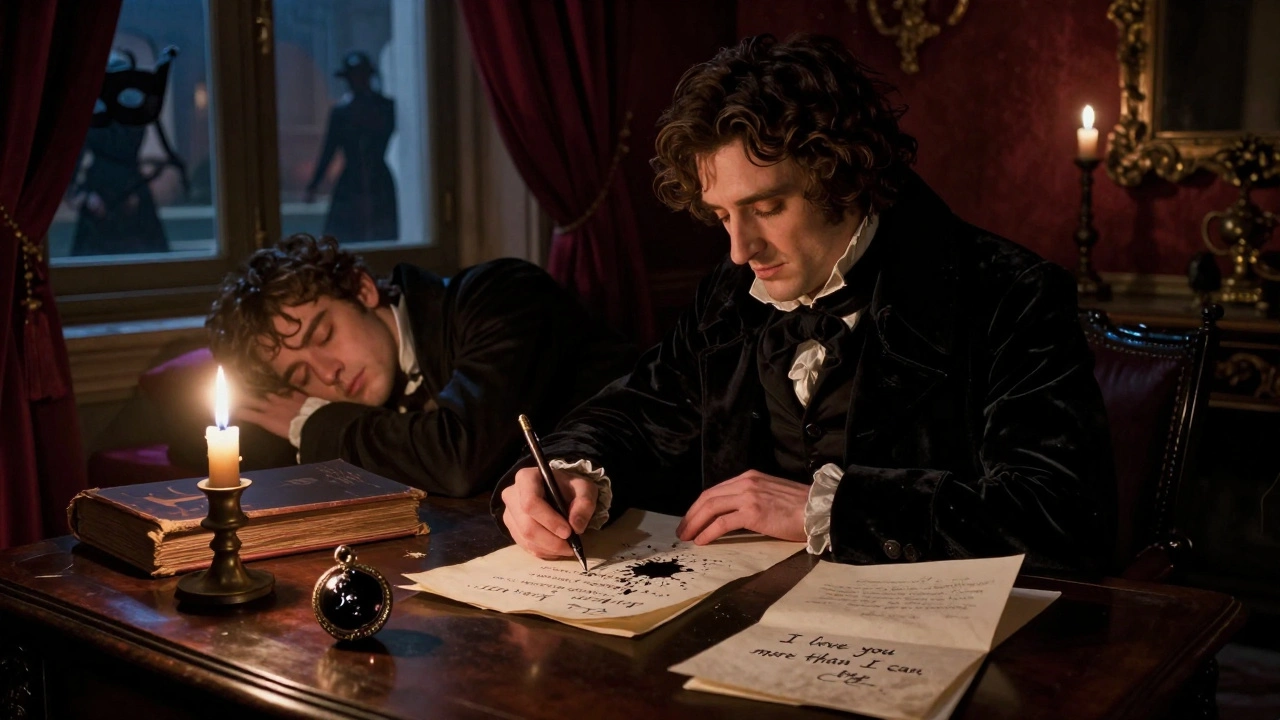
Love Across Time
Socrates refused sex to elevate love. Hadrian turned death into worship. Byron wrote love poems in a world that would hang him for them. They weren’t "gay" in the modern sense. They didn’t have labels. But they loved men deeply, publicly, and sometimes defiantly. Their stories remind us that same-sex love has always existed-not as a trend, not as a rebellion, but as a quiet, powerful force in human life. What connects them? Not just attraction. It’s courage. The courage to love when society looked away. The courage to grieve openly. The courage to turn desire into art, into philosophy, into legacy. We often think history is about battles and laws. But sometimes, it’s about two men lying under a cloak, an emperor carving statues in memory, a poet writing a line that changed someone’s life.Why This Matters Today
We talk about LGBTQ+ rights as if they’re new. But they’re not. The struggle for dignity, for visibility, for the right to love without shame-this isn’t 2026. It’s 399 BCE. It’s 130 CE. It’s 1812. Socrates, Hadrian, and Byron didn’t fight for marriage equality. But they fought for something deeper: the right to be fully human in their love. Today, we have laws that protect us. We have Pride parades. We have representation. But we still need these stories. Not to prove we’ve always existed-but to remind us that love, in every age, has been both dangerous and divine. Their lives weren’t perfect. Socrates was accused of corrupting youth. Hadrian was criticized for his obsession. Byron was exiled for scandal. But they didn’t let fear silence them. And neither should we.Did Socrates have sexual relationships with men?
No, according to Plato and Xenophon, Socrates deliberately avoided physical relationships with men, even when pursued. His famous refusal of Alcibiades was not about rejection, but about elevating love beyond the physical. He believed true desire should lead to wisdom, not pleasure.
Was Hadrian’s relationship with Antinous considered scandalous in Rome?
Yes, but not because of the love itself. Roman society accepted male relationships as long as they followed social hierarchies. What shocked people was Hadrian’s public devotion-he deified Antinous, built cities in his name, and made his image appear on coins. That level of emotional and religious expression was unprecedented for a non-imperial man.
Did Lord Byron openly identify as gay?
Byron never used the word "gay," because it didn’t exist in his time. But in private letters and poems, he expressed romantic and physical love for men. He was openly intimate with male companions, and his writings were later used as evidence in trials against other LGBTQ+ figures. He lived as if love had no boundaries-even when society did.
How did ancient Greeks view same-sex relationships?
In ancient Greece, relationships between older men and adolescent boys (pederasty) were common, especially in Athens and Sparta. But they were tied to mentorship, not identity. Physical relations were sometimes accepted, sometimes banned. Philosophers like Socrates and Plato argued for non-physical love, while others, like the Spartans, institutionalized it. There was no single view-only complex, shifting norms.
Why is Antinous important in LGBTQ+ history?
Antinous is one of the first known figures in history to be publicly honored by a ruler after death for being their same-sex partner. Hadrian didn’t hide his grief-he turned it into worship. Statues of Antinous were placed in temples across the empire. His image was on coins. That level of public recognition for a same-sex love was unprecedented and remains powerful today.
Can we call these historical figures "gay"?
Not exactly. "Gay" is a modern identity tied to sexual orientation as a core part of self. Ancient people didn’t think that way. They saw relationships in terms of roles-lover and beloved, mentor and student. Socrates, Hadrian, and Byron didn’t define themselves by who they loved. They lived their love. And that’s more important than any label.