Interfaith Marriage Compatibility Checker
Use this tool to understand how traditional Sunni jurisprudence and secular civil laws view your potential marriage. Select your details below to see a side-by-side comparison.
Analysis Results
Imagine standing at a wedding altar with your partner, only to realize that the legal framework governing your union depends less on your love and more on which side of the aisle you stand. For millions of Sunni Muslims is the largest branch of Islam, adhering to the traditions and practices of the Prophet Muhammad as interpreted by the early community., the question of marrying outside their faith isn't just a social taboo; it's a complex legal puzzle involving Sharia law is a set of religious laws derived from the Quran and Hadith that governs various aspects of life for Muslims.. While popular culture often portrays this as a strict prohibition, the reality in 2026 is far more nuanced, shaped by migration, secular courts, and evolving family dynamics.
The Core Rule: Who Can Marry Whom?
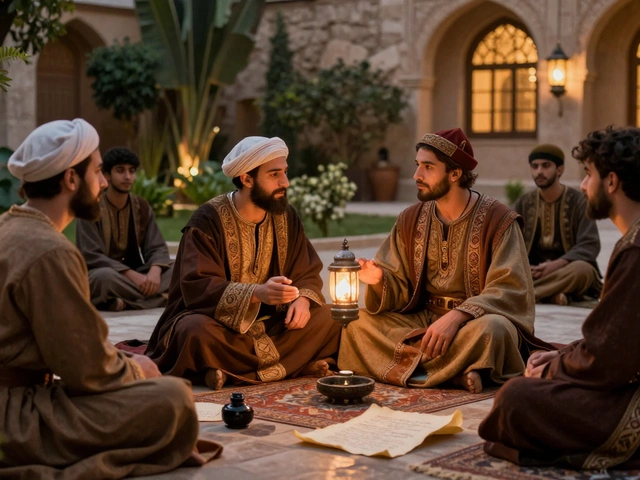
To understand the friction points, we have to look at the traditional jurisprudential stance. In classical Sunni jurisprudence, gender dictates the rules. A Muslim man is generally permitted to marry a woman from the "People of the Book" (Christians or Jews), provided she is chaste. However, he cannot marry a polytheist or an atheist unless she converts. Conversely, a Muslim woman has historically been restricted to marrying only a Muslim man. If her husband were to convert to another faith, the marriage could be annulled under traditional interpretations because the husband is expected to lead the household in religious practice.
This asymmetry creates a significant imbalance in modern dating pools. For a Sunni woman seeking a non-Muslim partner, the path is often blocked by religious expectation rather than civil law. For a Sunni man, the door is slightly ajar but still requires the partner to be monotheistic. This distinction matters because it influences how families negotiate these unions today. It’s not just about belief; it’s about who holds the authority in the domestic sphere according to religious custom.
Secular Laws vs. Religious Norms
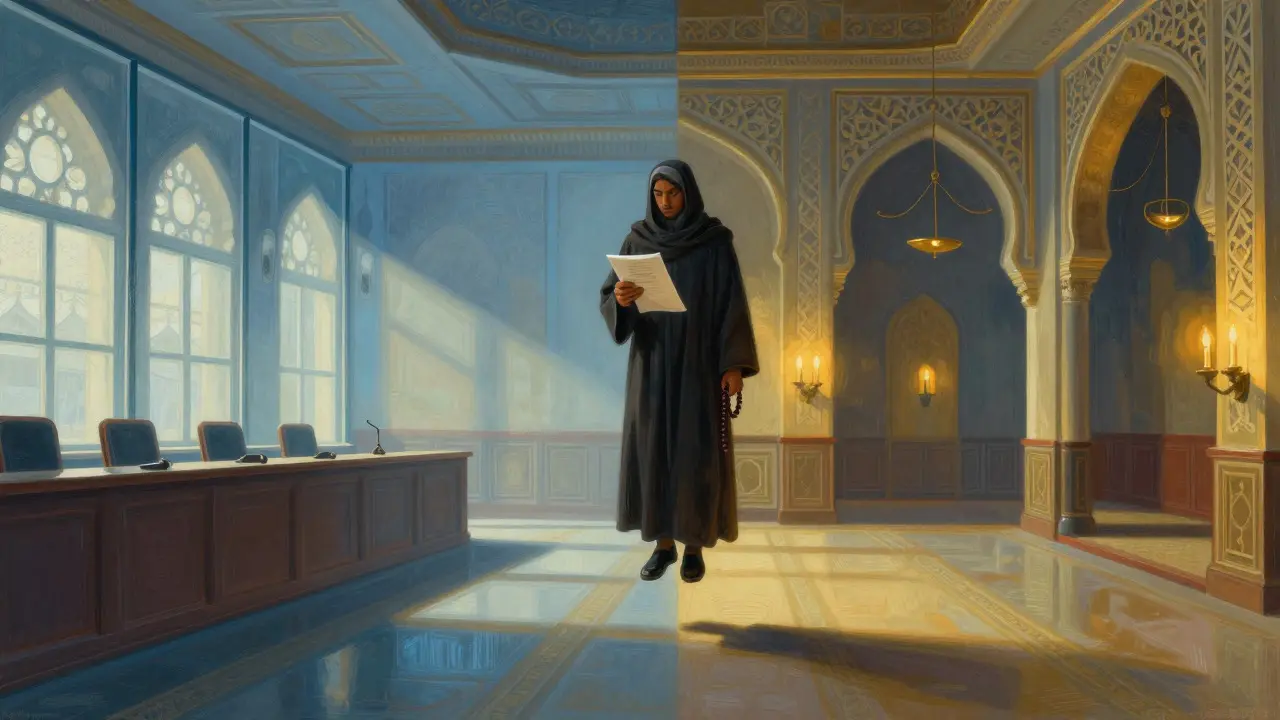
Here is where the landscape shifts dramatically depending on where you live. In many Western nations like the United States, Canada, or parts of Europe, civil law does not recognize religious restrictions on marriage partners. You can legally marry anyone regardless of faith. However, this civil freedom doesn't erase religious consequences. A couple might be legally married in the eyes of the state but considered unmarried (or *muhallil* issues may arise) in the eyes of the mosque if they haven't followed Islamic rites.
In contrast, countries with personal status laws based on Sharia, such as those in the Middle East and North Africa, enforce these religious boundaries through the court system. In places like Egypt or Saudi Arabia, a Muslim woman marrying a Christian man might face legal hurdles in registering the marriage or securing inheritance rights for her children. This dual reality-civil validity versus religious validity-is the primary source of anxiety for mixed-faith couples navigating interfaith marriage is a union between individuals of different religious backgrounds, presenting unique challenges regarding cultural integration and legal recognition..
The Role of Conversion and Compromise
Historically, conversion was the standard solution. One partner would adopt the other's faith to smooth the path. Today, while conversion still happens, it’s increasingly viewed as a last resort rather than a prerequisite. Many couples opt for a hybrid approach: a civil ceremony for legal protection and a private religious blessing if possible. Some choose to delay having children until they’ve established a clear parenting plan that respects both traditions.
Families play a massive role here. In tight-knit communities, parental approval is often tied to religious conformity. A father might insist his son marry a Muslim woman to ensure grandchildren are raised in the faith. This pressure can lead to secret marriages or long-distance relationships. Understanding this dynamic is crucial for anyone entering such a relationship. It’s not just two people making a decision; it’s two families negotiating a new identity.
Rising Trends in 2026
We are seeing a notable shift among younger generations, particularly in diaspora communities. Surveys indicate that a growing percentage of young Sunni Muslims in North America and Europe view interfaith marriage as acceptable, especially when the non-Muslim partner is respectful of Islamic values. The concept of "cultural Islam" is gaining traction, where practice is adapted to fit secular contexts without abandoning core beliefs.
Technology also plays a role. Dating apps now allow users to filter by religion, but they also facilitate cross-cultural connections that were rare a decade ago. Social media groups provide support networks for mixed-faith couples, sharing advice on how to navigate holidays, dietary restrictions, and child-rearing. These digital communities help normalize what was once seen as a fringe choice.
Navigating Child-Rearing and Identity
The most contentious issue for parents is usually the children. How do you raise a child in two faiths? Many couples agree that the children will follow the mother’s or father’s faith, or they choose a secular upbringing with exposure to both traditions. Others compromise by celebrating major holidays from both religions without requiring formal conversion. The key is open communication. Ambiguity leads to conflict later. Clear agreements on education, naming conventions, and religious observance prevent future disputes.
| Aspect | Traditional Sunni View | Secular Civil Law (e.g., US/EU) |
|---|---|---|
| Muslim Man + Non-Muslim Woman | Permitted if she is Christian/Jewish | Permitted without restriction |
| Muslim Woman + Non-Muslim Man | Generally Prohibited | Permitted without restriction |
| Legal Validity | Requires Nikah (Islamic contract) | Requires State License/Ceremony |
| Inheritance Rights | Restricted in some jurisdictions | Equal under state law |

Practical Steps for Couples
If you’re considering this path, start with transparency. Discuss expectations early. Is one partner expecting conversion? Will the non-Muslim partner attend Friday prayers? What happens if one partner becomes more devout over time? Consulting with a knowledgeable Imam or a counselor experienced in multicultural relationships can help mediate these discussions. Don’t ignore the legal side either. Understand your local laws regarding divorce and custody. In some cases, a prenuptial agreement can protect both parties’ interests, ensuring that religious preferences don’t override legal rights.
Frequently Asked Questions
Can a Sunni Muslim woman legally marry a non-Muslim man?
In secular countries like the US or UK, yes, it is legally valid. However, in countries governed by Sharia personal status laws, it may be difficult or impossible to register the marriage. Religiously, it is traditionally discouraged or prohibited unless the man converts.
Does a non-Muslim spouse need to convert for the marriage to be valid?
For a Muslim man marrying a Christian or Jewish woman, conversion is not required by most Sunni scholars. For a Muslim woman marrying a non-Muslim man, conversion is traditionally required for religious validity, though not for civil validity in secular states.
How do mixed-faith couples handle raising children?
There is no single rule. Many couples agree to raise children in one faith, while others expose them to both traditions. Open communication and written agreements on education and religious practice help prevent conflicts.
What is the difference between Sunni and Shia views on interfaith marriage?
While similar, there are subtle differences in interpretation. Generally, both branches share the view that men can marry People of the Book, while women should marry Muslims. Specific rulings may vary based on regional scholarly consensus.
Is interfaith marriage becoming more common among Muslims?
Yes, particularly in Western diaspora communities. Changing social norms and greater exposure to diverse cultures have led to increased acceptance, though family pressure remains a significant factor.