
Swedish Sex Education Curriculum Explorer
Check off topics as you explore them to see how the curriculum builds knowledge progressively.
Select a topic to learn more
Click on any checkbox or list item in the timeline to view specific details about that educational component.
Why This Matters
- Reduces teen pregnancy rates to ~10 per 1,000.
- Promotes critical thinking about gender equality.
- Treats sexual health as a fundamental right, not a privilege.
Imagine a six-year-old explaining the difference between a private part and a public part to their teacher. In many countries, this conversation doesn't happen until high school, if at all. But in Sweden, it is standard practice. The Swedish approach to sex education is not just about biology; it is a structured social policy designed to reduce inequality, prevent early pregnancy, and promote healthy relationships starting from age seven. If you are curious about how a nation achieves some of the lowest rates of teen pregnancy in Europe, the answer lies in their classrooms during primary school.
The Core Philosophy: Health as a Right
Sweden does not view sex education as a moral lesson or a religious duty. Instead, it treats sexual and reproductive health as a fundamental component of general health. This perspective was cemented in 1955 when Sweden became the first country in the world to introduce compulsory sex education in schools. The goal was simple: ensure every child, regardless of background, has access to accurate information. This contrasts sharply with many other nations where sex ed is optional, parent-led, or focused solely on abstinence.
The curriculum is mandatory for all students from grade one (age 7) through grade nine (age 16). It is integrated into the subject of "Health," meaning it is not an isolated unit but a recurring theme throughout childhood. Teachers are required to be trained in these topics, ensuring that the delivery is professional and consistent. This consistency is key; it removes the stigma often associated with discussing bodies and feelings by making them part of everyday learning.
What Actually Happens in Kindergarten and Grade One?
When we say "from kindergarten," we are referring to the transition into formal schooling at age seven, though informal discussions may start earlier in preschool settings. At this stage, the content is developmentally appropriate. It is not about intercourse or contraception yet. Instead, the focus is on:
- Anatomy and Terminology: Children learn the correct names for body parts. This empowers them to communicate clearly with doctors or parents if something feels wrong.
- Privacy and Boundaries: Concepts like "private parts" are introduced alongside the idea that some things are personal. This lays the groundwork for understanding consent later in life.
- Emotions and Relationships: Lessons cover friendship, sharing, and basic emotional regulation. Understanding how others feel is the first step toward empathy and respectful interaction.
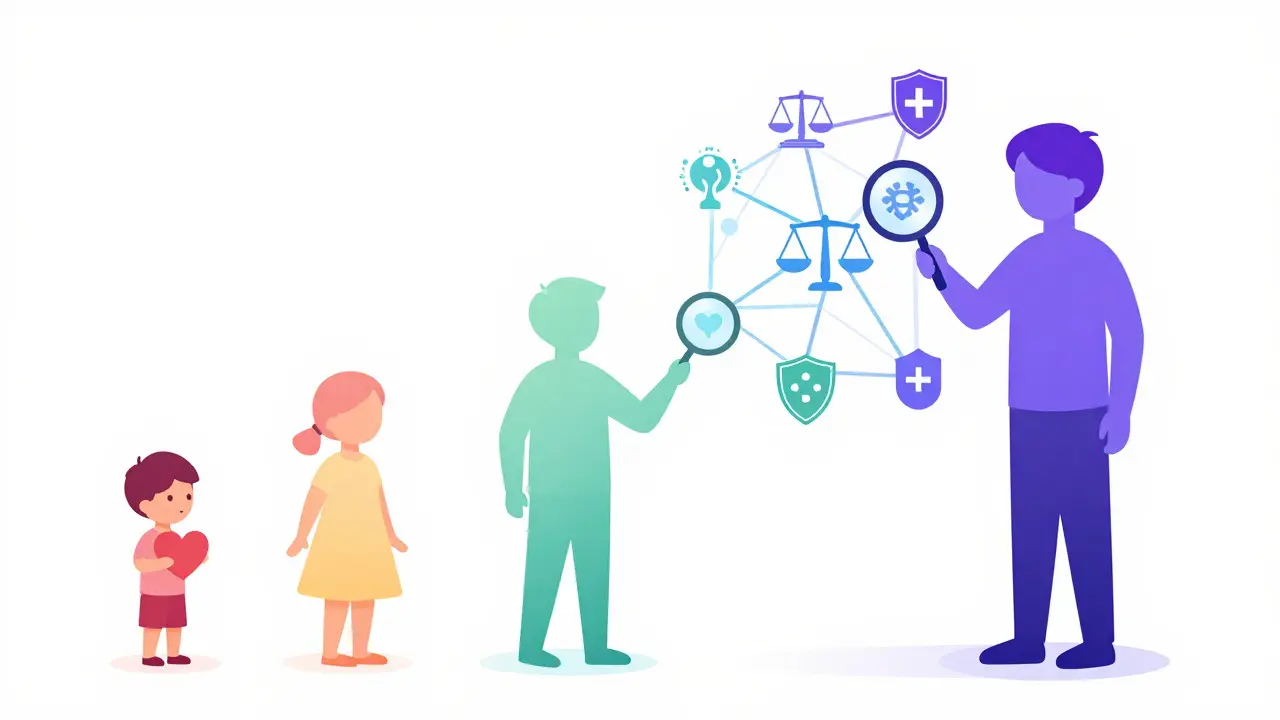
By the time children reach ages 8-10, the curriculum expands to include puberty, menstruation, and the biological basics of reproduction. By middle school (ages 11-13), the topics broaden to include contraception, sexually transmitted infections (STIs), and the psychological aspects of relationships. This gradual progression ensures that no concept is introduced before the child is cognitively ready to process it.
Comparing Approaches: Sweden vs. The Rest of the World
To understand why the Swedish model works, it helps to compare it with other common approaches. Most countries fall into one of three categories: comprehensive, abstinence-only, or no formal instruction. Sweden sits firmly in the comprehensive camp, but with a distinct emphasis on equality and rights.
| Feature | Sweden (Comprehensive) | Typical Abstinence-Only Model | No Formal Instruction |
|---|---|---|---|
| Start Age | Age 7 (Grade 1) | Varies, often High School | N/A |
| Primary Focus | Health, Rights, Equality | Abstinence until Marriage | Parental/Peer Influence |
| Contraception Info | Yes, detailed methods | Limited or Negative | Inconsistent |
| Gender Roles | Critical Analysis | Traditional Stereotypes | Social Norms |
| Teen Pregnancy Rate | ~10 per 1,000 | Often Higher (Varies) | High Variance |
The data tells a clear story. Countries with comprehensive sex education, like Sweden, tend to have lower rates of unintended pregnancy and STIs. This is not because teenagers are having less sex, but because they are making more informed decisions. When a teenager knows how condoms work and understands their own body, they are less likely to rely on guesswork or peer pressure.
The Role of Gender Equality
A unique aspect of the Swedish curriculum is its deep integration with gender equality. Sex education in Sweden is not just about biology; it is a tool for social change. From a young age, children are taught to question traditional gender roles. For example, lessons might discuss who cleans the house, who earns money, or who makes decisions in a relationship. This critical thinking helps dismantle the power imbalances that can lead to unhealthy relationships or coercion later in life.
This approach aligns with Sweden’s broader national policies on gender equity. By normalizing conversations about fairness and respect in childhood, the system creates a cultural baseline where equal partnership is the expected norm, not an exception. This has tangible benefits for mental health and relationship satisfaction among young adults.
Challenges and Criticisms
No system is perfect, and Sweden’s model faces its own set of challenges. One common criticism is that it starts too early for some parents. However, research suggests that early exposure reduces anxiety. Children who know what to expect during puberty are generally less stressed than those who discover changes in isolation. Another challenge is keeping up with cultural shifts. As society evolves, so do questions around identity and relationships. The curriculum must remain flexible enough to address modern realities without losing its core scientific foundation.
There is also the issue of teacher training. While mandatory, the quality of instruction can vary. A teacher who is uncomfortable discussing sexuality may struggle to deliver the material effectively. To combat this, Sweden invests heavily in ongoing professional development for educators, ensuring they stay updated on both scientific findings and pedagogical best practices.

Why This Matters for Global Health
The Swedish model offers a blueprint for other nations struggling with high teen pregnancy rates or poor reproductive health outcomes. The key takeaway is not necessarily to copy the exact curriculum, but to adopt the underlying principles: accuracy, inclusivity, and early intervention. When information is treated as a right rather than a privilege, communities benefit. Lower rates of STIs mean lower healthcare costs. Fewer unintended pregnancies mean better educational outcomes for young mothers. These are not just social goals; they are economic ones.
For policymakers looking to improve their own systems, the Swedish experience suggests that investing in early, comprehensive education yields long-term dividends. It requires political will to overcome cultural resistance, but the results speak for themselves. In a world where misinformation spreads rapidly online, having a trusted, school-based source of truth is more important than ever.
Frequently Asked Questions
At what exact age does sex education start in Sweden?
Formal, compulsory sex education begins in Grade 1, which corresponds to age 7. However, informal discussions about bodies and privacy may occur in preschool settings (ages 4-6) depending on the specific preschool program.
Is sex education in Sweden religious or secular?
It is strictly secular and based on scientific consensus. The curriculum is developed by the National Agency for Education and focuses on health, rights, and equality rather than religious doctrine.
Do parents have the right to opt out?
Generally, no. Because it is part of the mandatory national curriculum, opting out is difficult. However, parents are encouraged to reinforce lessons at home. Schools typically send home materials to keep parents informed of what is being taught.
How does this affect teen pregnancy rates?
Sweden has one of the lowest teen pregnancy rates in Europe, approximately 10 per 1,000 women aged 15-19. This is significantly lower than countries with limited or no comprehensive sex education programs.
What topics are covered in the first year?
In the first year (age 7), topics include correct anatomical terminology, the concept of privacy, basic emotions, and the idea that everyone has different families and living situations. Reproduction is not discussed in detail until later grades.