Syphilis Origin Theory Explorer
Explore the three major hypotheses explaining how syphilis emerged in Europe. Select a theory to view its claims, evidence, and current scientific standing.
Columbian Hypothesis
The dominant narrative supported by modern genetics.
Genetic ConsensusPre-Columbian Hypothesis
Argues the disease existed in the Old World earlier.
Archaeological DebateUnitarian Theory
Suggests all treponematoses are one environmental disease.
Largely SupersededSelect a Theory
Imagine a disease that sparked wars of words before it ever had a name. In the late 15th century, Europe was hit by a horrifying outbreak that disfigured bodies and shattered societies. Nations didn't just fight the bacteria; they fought each other over who caused it. The English called it the "French pox," while the Poles blamed the Germans. This wasn't just medical ignorance-it was political weaponization at its worst. Today, we know this disease as Syphilis, a sexually transmitted infection caused by the bacterium Treponema pallidum. But for centuries, its origin remained one of history's greatest mysteries.
The Great Naming Game: Stigma and Nationalism
The first recorded European outbreak exploded in Naples between 1494 and 1495. It coincided perfectly with the French invasion of Italy during the War of Naples. As French troops retreated, they carried the disease back across the continent. By 1530, Italian physician and poet Girolamo Fracastoro gave the disease its formal Latin name in his poem *Syphilis, Sive Morbus Gallicus*. However, local names revealed deep-seated xenophobia. Turkish doctors labeled it the "Christian disease," effectively blaming rival religions. These labels show how early epidemiological crises were entangled with international relations. People needed a scapegoat, and neighboring enemies provided the perfect target.
The Columbian Hypothesis: Did Columbus Bring It?
For most of modern history, the dominant narrative was simple: Christopher Columbus brought syphilis from the Americas to Europe in 1493. This is known as the Columbian hypothesis. The theory posits that syphilis was carried to Europe from the Americas by the crews of Christopher Columbus as part of the Columbian exchange. Historical records support the timing. About 46 mercenaries or conquistadors returned to Spain in March 1493, roughly six months after reaching the West Indies. They likely brought the infection with them. For decades, this seemed like an open-and-shut case. The timeline matched, and the spread pattern aligned with global exploration routes.
The Pre-Columbian Counter-Argument
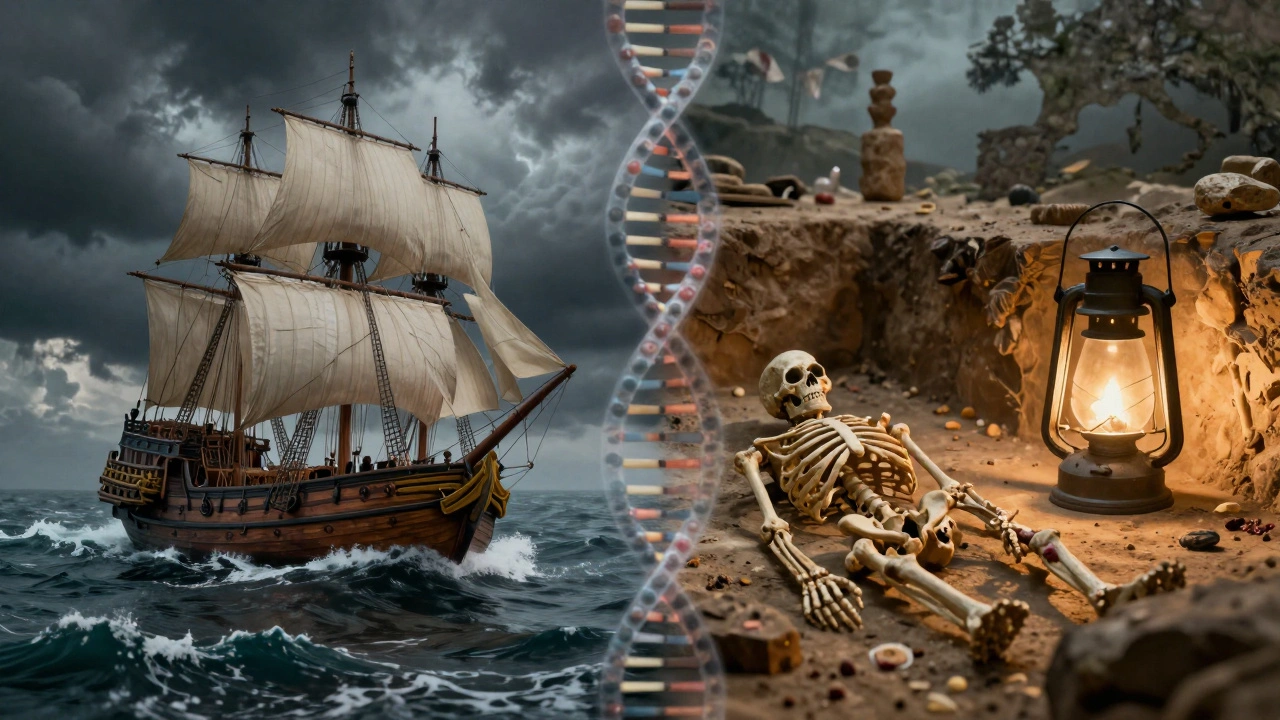
But science rarely stays settled on one answer forever. In 1934, the Pre-Columbian hypothesis argued that syphilis previously existed in the Old World but went unrecognized, evolving into a more virulent form around the time of Columbus's voyages emerged. Proponents argued that syphilis was actually an old treponemal disease that suddenly became more aggressive. A third idea, the Unitarian theory, suggested all treponematoses (including yaws and bejel) were variants of a single disease influenced by environment. Until the 1980s, paleopathologists began finding bone evidence in Europe that challenged the idea that syphilis was entirely new to the Old World. Skeletal remains from the 6th century in West Sussex, UK, showed skull damage typical of syphilis. Similarly, dental evidence from Greek burials in Metaponto, Italy, dated between 580 and 250 BC, pointed to congenital syphilis. These findings suggested the bacteria might have been lurking in Europe long before any ship sailed from the New World.
Genetics Settles the Score
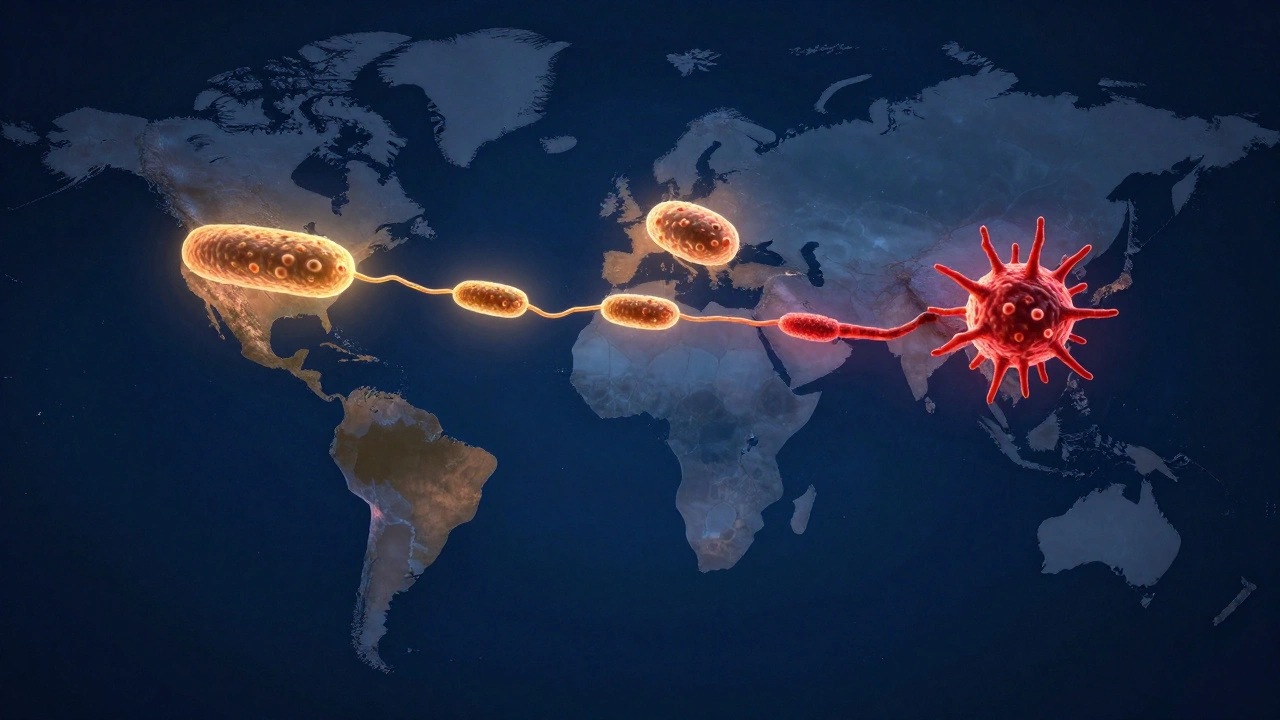
If bones could lie, genes wouldn't. Modern genetic analysis has largely resolved this five-century debate. Phylogenetic studies conducted in 2008 and updated in 2024 used whole genome sequencing of Treponema pallidum the spirochete bacterium responsible for causing syphilis isolates from patients across 13 countries. The results were conclusive. Syphilis originated in the Americas approximately 9,000 years ago. The organism acted as a "heirloom" pathogen, spreading globally with human migration. Asian tribes likely crossed the Beringia Land Bridge into North America about 15,000 years ago, carrying the ancestor of the bacteria. All modern strains share a common ancestor that existed only after the 15th century. This means a specific strain from the Americas underwent genetic mutations before being introduced back into the Old World, creating the progenitor of modern syphilis. The Columbian hypothesis holds up, but with a crucial twist: the bacteria evolved significantly upon returning to Europe.
| Theory | Key Claim | Supporting Evidence | Current Scientific Status |
|---|---|---|---|
| Columbian Hypothesis | Brought from Americas to Europe in 1493 | Timeline matches Columbus's return; genetic divergence post-15th century | Strongly supported by genomic data |
| Pre-Columbian Hypothesis | Existed in Old World, became virulent later | Bone evidence in Europe pre-dating 1493 (e.g., 6th-century UK skeleton) | Partially valid; explains presence of related treponematoses |
| Unitarian Theory | All treponematoses are one environmentally driven disease | Similar symptoms across yaws, bejel, and syphilis | Largely superseded by genetic distinctiveness |
Archaeology Across Continents
The archaeological record paints a complex picture of how Treponema pallidum the causative agent of syphilis spread. In the Americas, osseous signatures appear at different times: 1,500 years ago in New Mexico, 1,000 years ago in Wisconsin, and 800 years ago in Ecuador. The Mogollan Ridge in the southwestern US seems to have been a dividing line for both the disease's appearance and climatic changes. Meanwhile, in Europe, research published in October 2020 by Kerttu Majander and colleagues revealed that Treponema pallidum the bacterium behind syphilis existed as syphilis and yaws in Finland, Estonia, and the Netherlands between the 15th and 18th centuries. This suggests that while the *modern* virulent strain came from the Americas, related forms of the bacteria were already circulating in medieval Europe. The distinction lies in virulence and transmission methods.
Why Was the 1495 Outbreak So Deadly?
If related bacteria existed in Europe, why did the late 15th-century pandemic kill so many? Physician Ernest Grin provided a clue in 1952. He studied syphilis in Bosnia and noted the importance of bacterial load. Children often contracted milder forms by sharing drinking vessels or bedding with small amounts of bacteria. Adults, however, typically contracted it through venereal sores containing massive inoculations of Treponema pallidum the spirochete bacterium. The European elites, protected by hygienic lifestyles, had no immunity. When exposed to the high bacterial loads of the new strain, their immune systems collapsed. Additionally, historical figures like Paracelsus theorized bizarre causes, such as mixing gonorrhea and leprosy, reflecting the era's lack of microbiological understanding. The combination of a novel, highly virulent strain and a naive population created a perfect storm.
Racial Stereotypes and Disease Blame
The story of syphilis isn't just about biology; it's about bias. By 1530, Europeans linked the disease to "lascivious Native American lifestyles." This racist narrative persisted for centuries. Indigenous peoples were blamed for a disease that European soldiers helped spread. The linguistic evidence-calling it the "French disease" or "German disease"-shows how nations demonized rivals. Later, marginalized communities within Europe faced similar stigma. Understanding this history helps us recognize how public health crises can fuel xenophobia. It reminds us that scientific facts must be separated from social prejudice.
Lessons from History
Today, we have antibiotics to cure syphilis easily. Yet, the historical debates teach us valuable lessons. First, interdisciplinary research matters. Combining genetics, archaeology, and history solved a mystery that texts alone couldn't. Second, stigma harms progress. Blaming specific groups delays effective treatment and prevention. Finally, pathogens evolve. What was once a mild endemic disease can become a deadly pandemic under the right conditions. As we face new health challenges, remembering the complexity of syphilis's past helps us navigate the future with clearer eyes.
Did Christopher Columbus definitely bring syphilis to Europe?
While not definitively proven by direct observation, genetic evidence strongly supports that a strain of Treponema pallidum from the Americas was introduced to Europe around 1493, coinciding with Columbus's voyages. This aligns with the Columbian hypothesis.
What is the difference between the Columbian and Pre-Columbian hypotheses?
The Columbian hypothesis states syphilis originated in the Americas and was brought to Europe by explorers. The Pre-Columbian hypothesis argues it existed in Europe earlier but was unrecognized or less virulent until it evolved.
How do we know syphilis existed in the Americas 9,000 years ago?
Phylogenetic analyses of bacterial genomes estimate the age of the organism. Combined with archaeological bone evidence showing characteristic lesions in ancient American skeletons, scientists conclude the bacteria has been present for millennia.
Why was the 1495 European outbreak so severe compared to earlier cases?
The European population had no prior immunity to the specific virulent strain introduced from the Americas. High bacterial loads from sexual transmission overwhelmed immune systems, leading to severe symptoms and higher mortality.
Is syphilis still a major health concern today?
Yes, syphilis rates have risen in recent years globally. While curable with antibiotics, late-stage complications can be severe. Public health efforts focus on testing, treatment, and reducing stigma to control transmission.