AIDS Epidemic Impact Calculator
When the first cases of a mysterious illness began appearing in 1981, no one called it AIDS. It was just a cluster of rare cancers and infections in gay men in New York and California. By the time the CDC named it Acquired Immunodeficiency Syndrome, thousands were already dying. The virus didn’t care who you were - but society did. And that’s where the real battle began.
Death on a Rapid Timeline
In 1985, the U.S. reported more new AIDS cases than in all previous years combined. The numbers didn’t just rise - they exploded. By the end of that year, over 15,500 Americans had been diagnosed. More than 12,500 had died. The average survival time after diagnosis? Fifteen months. Most of those who died were in their 20s and 30s. In San Francisco, 2,332 cases were recorded in 1992 alone. In New York City, over 29,000 people had been diagnosed by 1989. By 1995, more than half a million Americans had been diagnosed with AIDS. The disease became the leading cause of death for men aged 25 to 44. That wasn’t a statistic - it was a generation being erased.
It wasn’t just gay men. By 1986, the CDC found that 90% of children with AIDS were Black or Latino, mostly infected through birth. In 1998, African Americans made up nearly half of all AIDS-related deaths in the U.S., despite being only 12% of the population. The virus spread through needles, sex, and birth - but the response didn’t. Poor communities, Black and Brown communities, and queer communities got the least care, the least attention, and the least compassion.
The Stigma That Killed Faster Than the Virus
While people were dying, the public response was fear - not care. In 1987, a Los Angeles Times poll found most Americans supported quarantining people with AIDS. Schools turned away children like Ryan White, an Indiana teen who contracted HIV from a blood transfusion. He was barred from class, forced to use separate bathrooms, and vilified in the press. His family sued. The case made national headlines. But the fear didn’t vanish.
People lost jobs. Landlords evicted tenants. Hospitals refused treatment. Funeral homes turned away bodies. One nurse in San Francisco told a friend she wouldn’t touch a dying man unless she wore gloves, a mask, and a gown - even though HIV couldn’t spread through casual contact. The Surgeon General’s 1986 report said as much: HIV doesn’t spread through hugging, sharing toilets, or coughing. But the message didn’t stick. Stigma didn’t need science. It thrived on silence, shame, and suspicion.
And then came Arthur Ashe. The tennis legend announced in 1992 he had HIV - caught from a blood transfusion during heart surgery. He wasn’t gay. He wasn’t a drug user. He was a Black man, a national hero. His openness cracked open the door. People started asking: If this could happen to him, who’s really at risk? The answer: everyone. But the stigma didn’t vanish. It just got quieter.
Activism That Refused to Look Away
While the government sat silent, communities rose up. In 1982, just a year after the first cases were reported, a group of gay men in New York City founded the Gay Men’s Health Crisis (GMHC). They weren’t doctors. They weren’t politicians. They were friends, lovers, neighbors - people who watched their community die and decided to do something. GMHC started with a phone line. Then came meals. Then transportation to clinics. Then legal help. Then protests.
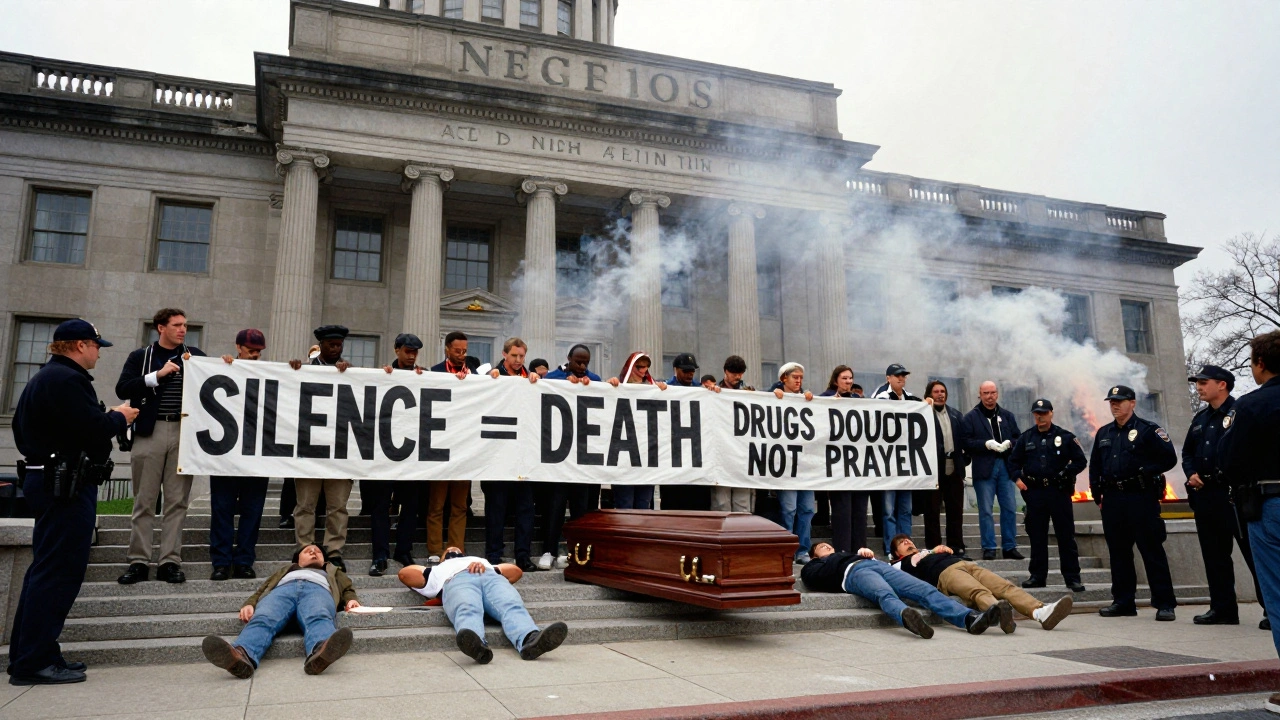
They didn’t wait for permission. They didn’t ask for approval. They organized. They marched. They shut down the FDA. They stormed the NIH. They turned funerals into rallies. They painted the names of the dead on the White House fence. They held vigils with candles and coffins. They forced the world to see what was happening.
By 1987, ACT UP - the AIDS Coalition to Unleash Power - was formed. Their slogan? Silence = Death. It wasn’t poetic. It was true. Silence from government meant more deaths. Silence from media meant more fear. Silence from the public meant more abandonment. ACT UP didn’t just protest. They did research. They wrote their own treatment guidelines. They forced drug companies to lower prices. They got AZT approved faster. They got the CDC to change how it tracked the disease. They got the Surgeon General to publish a report that told the truth.
And they didn’t stop when the drugs came. They kept fighting because they knew: medicine alone wouldn’t fix what society had broken.
The Turning Point: When Science Finally Caught Up
In March 1985, the FDA approved the first HIV blood test. Blood banks started screening. That saved lives - but it also made people afraid. A positive test could mean losing your job, your home, your family. Still, it was a start. By 1987, the first antiretroviral drug, AZT, was approved. It was expensive. It had brutal side effects. But it was something. In 1996, combination therapy changed everything. Suddenly, people weren’t just surviving - they were living. For the first time, AIDS stopped being a death sentence for those who could access care.
The U.S. government finally acted - but too late. The National HIV/AIDS Strategy didn’t come until 2010. By then, over 600,000 Americans had died. The travel ban on HIV-positive foreigners wasn’t lifted until 2010. The stigma didn’t vanish with the science. It just changed shape.
The Legacy: What the Epidemic Left Behind
Today, 1.1 million Americans live with HIV. About 38,000 new infections happen each year. Most are preventable. Most are still happening to Black and Latino communities, to young queer people, to those without insurance or access to care. The tools exist - PrEP, rapid testing, antiretrovirals, education. But access? That’s still uneven.
The AIDS epidemic didn’t just kill. It changed everything. It forced medicine to listen to patients. It made activism a science. It showed that when marginalized people organize, they can win. It turned grief into power.
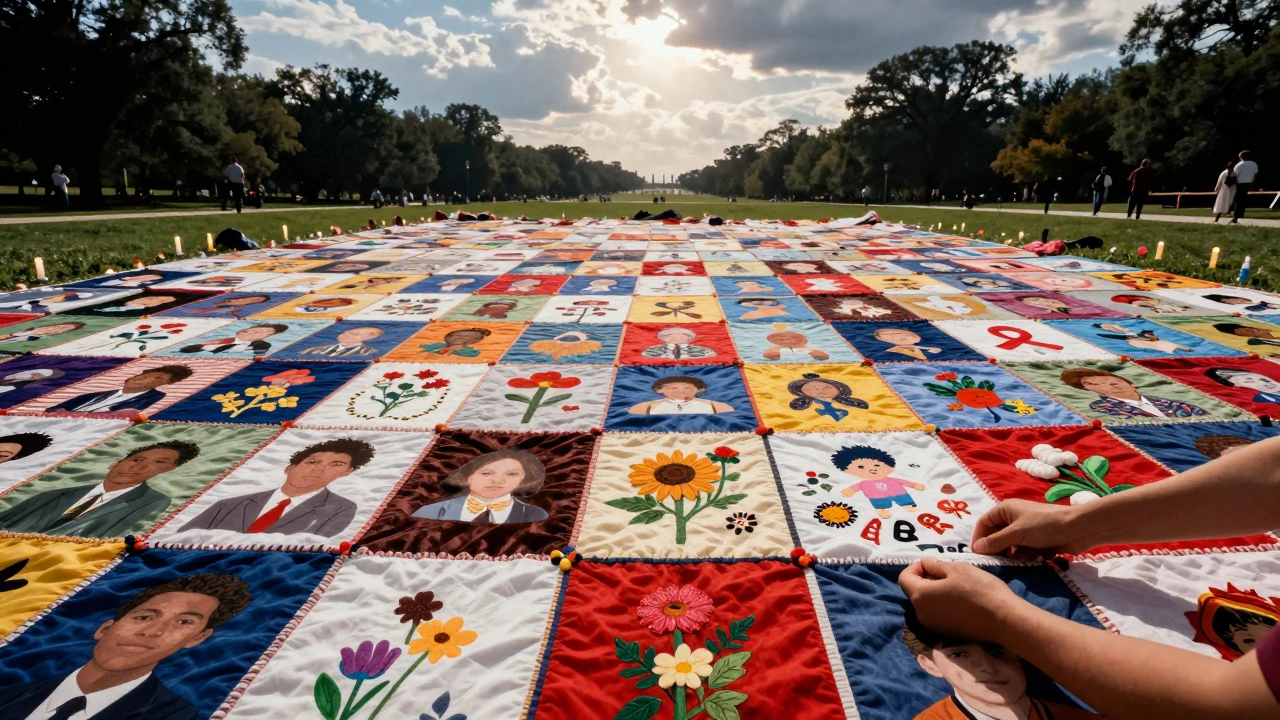
The names on the AIDS Memorial Quilt aren’t just memorials. They’re demands. They say: We were here. We loved. We fought. We didn’t die in silence.
Why This Still Matters
The AIDS crisis didn’t end. It evolved. The same systems that ignored gay men in the 1980s are the same ones that ignore trans people today. The same stigma that called HIV a "gay plague" now calls it a "drug user disease" or a "Black problem." The truth? It’s a human problem - and it’s still being solved by the same kind of people who fought back then: community organizers, nurses, queer activists, people who refuse to let their loved ones be forgotten.
When you see someone wearing a red ribbon, don’t think of it as a symbol of pity. Think of it as a weapon. It was forged in protest. It was sharpened by loss. And it still works.
When did the AIDS epidemic start in the U.S.?
The first official cases were reported by the CDC on June 5, 1981, when five young gay men in Los Angeles were diagnosed with a rare lung infection. But research now suggests the virus was circulating in the U.S. as early as the mid-to-late 1970s. The epidemic became visible in 1981, but it had already been spreading for years before anyone noticed.
Why did the government respond so slowly to AIDS?
The government’s delay was rooted in homophobia and racism. Early cases affected gay men, drug users, and people of color - groups society already marginalized. Officials called it a "gay disease" and refused to fund research or public education. President Reagan didn’t publicly mention AIDS until 1985 - four years after the first cases. The CDC and NIH were underfunded, and public health messaging was minimal until activists forced change.
How did LGBTQ+ activists change public health policy?
LGBTQ+ activists didn’t wait for permission. Groups like GMHC and ACT UP built community networks to deliver care, educate people, and pressure agencies. They disrupted FDA meetings, published their own treatment guidelines, and forced drug companies to lower prices. They got the Surgeon General to issue a national report in 1986 that debunked myths about transmission. They turned grief into policy - and won.
Why did AIDS hit Black and Latino communities harder?
Systemic racism shaped the response. These communities had less access to healthcare, education, and prevention resources. HIV spread through heterosexual transmission and injection drug use - two pathways that were ignored by early public health campaigns focused on gay men. By 1998, African Americans accounted for nearly half of all AIDS-related deaths in the U.S., despite being only 12% of the population. The crisis exposed how inequality kills.
Is HIV still a death sentence today?
No - not if you have access to treatment. Modern antiretroviral therapy can suppress the virus to undetectable levels, meaning people with HIV can live long, healthy lives and cannot transmit the virus sexually. But in the U.S., over 1.1 million people still live with HIV, and many - especially in rural areas or without insurance - struggle to get care. The virus is manageable. The inequality isn’t.
There’s no grand finale to this story. No clean ending. The epidemic didn’t vanish - it changed hands. The same people who buried their lovers in the 1980s are now teaching young queer kids how to use PrEP. The same activists who shouted at Congress are now running clinics. The fight didn’t end. It just got quieter. And more necessary.