
Coming Out Cycle Navigator
Where are you right now? Select the option that best describes your current internal state or situation.
The Trigger
I just realized my identity is relevant to this conversation or situation.
The Weighing
I'm thinking about safety, timing, and how the other person might react.
The Choice
I am ready to make a move, whether that's speaking up or staying private.
Key Actions & Strategies
Common Scenarios
For many people in the LGBTQ+ community, coming out feels like a single, dramatic moment. You tell your parents, you update your social media, and then it’s done. But if you’ve ever lived through it, you know that’s rarely how it works. The reality is much more complex. It is not an event; it is a process. And more specifically, it is a cycle that repeats itself throughout your life.
Clinical psychologists and counselors often break this down into a specific framework known as the Three Phases of Disclosure, which consists of awareness, assessment, and decision. This model helps explain why you might feel confident one day and terrified the next. It also explains why coming out to a coworker feels different than coming out to a new friend or a family member. Understanding these three phases can take the pressure off. It shifts the focus from "I need to come out" to "I am navigating a situation."
The Awareness Phase: Recognizing the Moment
The first phase is Awareness. In the context of coming out, this is the moment you realize that your sexual orientation or gender identity is relevant to the current conversation or situation. It starts with a trigger. Maybe someone asks, "So, do you have a boyfriend?" Or perhaps you’re at a dinner party and the group starts discussing a movie with a queer protagonist. Suddenly, you are hyper-aware of your own identity in relation to the people around you.
This phase can last seconds or months. If a stranger asks about your spouse on the street, your awareness is instant. You think, "I could correct them right now." But if you are considering telling your parents, the awareness phase might stretch over weeks. You sit with the thought: "This is something I want to share, but when?"
Awareness relies heavily on self-acceptance. Before you can recognize a moment for disclosure, you generally need to have accepted your own identity. Research from institutions like Skidmore College highlights that early stages of identity development involve moving from confusion to self-recognition. Without that internal foundation, the awareness phase often triggers anxiety rather than opportunity. You aren't just noticing a social cue; you are noticing a potential risk to your sense of self.
- Direct Triggers: Questions about relationships, marriage, or dating.
- Contextual Cues: Conversations about LGBTQ+ news, movies, or politics.
- Internal Motivations: A desire for intimacy or authenticity with a specific person.
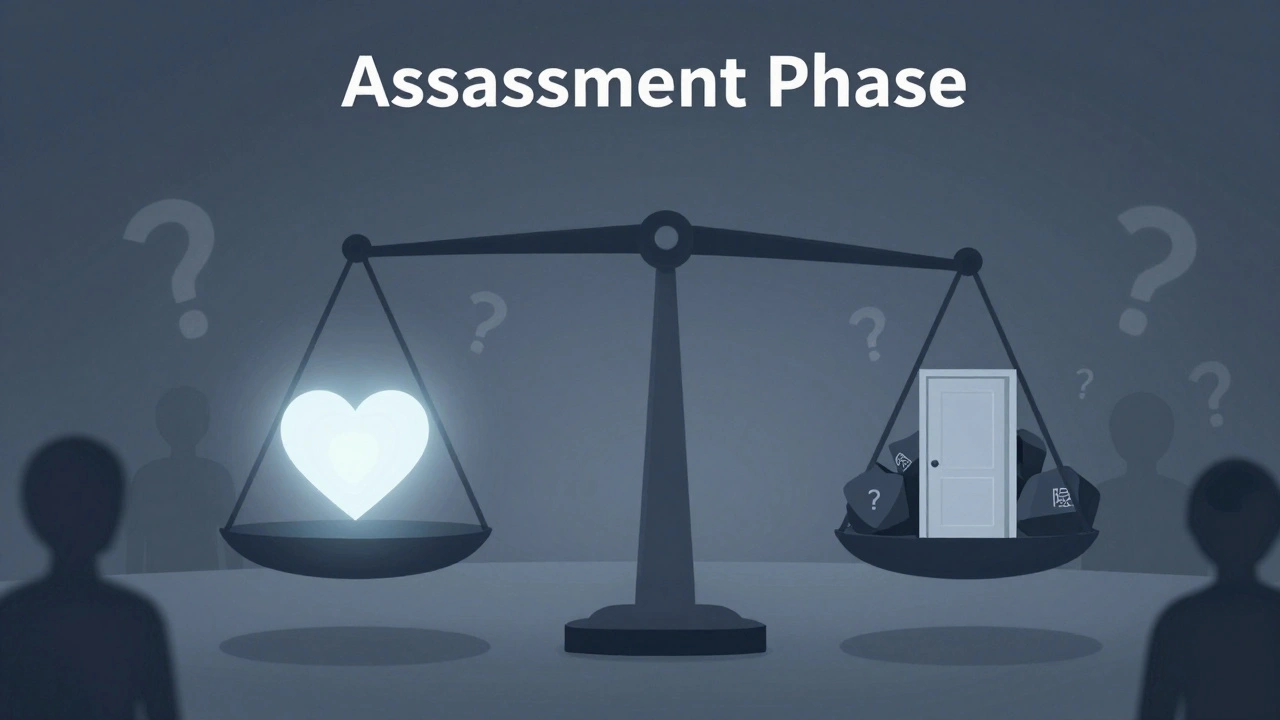
The Assessment Phase: Weighing Safety and Support
Once you are aware that disclosure is possible, you move immediately into the second phase: Assessment. This is where the mental work happens. Your brain starts running a rapid cost-benefit analysis. You are evaluating the environment, the person, and yourself.
In this phase, you ask critical questions. Is this person safe? Have they made anti-LGBTQ+ comments before? Will disclosing this information jeopardize my job, my housing, or my physical safety? You are also assessing your own readiness. Do I have a support network if things go wrong? Am I emotionally prepared for rejection?
Many people use strategies to "test the waters" during this phase. You might mention a gay celebrity casually to see how someone reacts. Or you might talk about LGBTQ+ issues in the abstract to gauge their attitudes. This isn't deception; it's survival. Clinical literature notes that negative reactions in the past can cause individuals to retreat back into earlier stages of secrecy. Therefore, the assessment phase is deeply informed by your history. If you were rejected by a sibling five years ago, your assessment of whether to tell another family member will be much more cautious today.
Assessment is also about timing. Just because it’s safe doesn’t mean it’s helpful. If your friend is going through a divorce, is now the right time to add a major personal revelation to their plate? The assessment phase ensures that your disclosure aligns with both your values and the practical realities of your relationship.
The Decision Phase: Choosing Action or Restraint
The final phase is Decision. This is the point where you choose to either disclose your identity or decide to keep it private in this specific instance. There is a common misconception that the only "correct" outcome of coming out is to speak up. However, clinical experts emphasize that a decision not to disclose can be just as healthy and empowering as a decision to do so.
If your assessment reveals high risk-such as living in a hostile environment or dealing with an unsupportive authority figure-choosing silence is a valid act of self-preservation. It is not cowardice; it is strategy. The goal of the decision phase is empowerment. You are taking control of your narrative by choosing what fits your current capacity and safety needs.
When you do decide to disclose, the method matters. Some people choose direct confrontation: "I want you to know I’m gay." Others prefer gradual integration, letting their partner appear in photos or mentioning their pronouns naturally over time. Both are valid decisions. The key is that the choice originates from you, based on your assessment, rather than from external pressure.
| Phase | Primary Question | Duration | Key Action |
|---|---|---|---|
| Awareness | Is my identity relevant here? | Seconds to Months | Recognizing the trigger |
| Assessment | Is it safe and beneficial? | Minutes to Weeks | Evaluating risks and support |
| Decision | What will I do? | Moments | Choosing to disclose or remain private |

Why It’s Called a Cycle
The most important thing to understand about these three phases is that they do not end. Once you complete the decision phase, you do not graduate from coming out. You simply start again. This is why clinicians refer to it as the Coming Out Cycle.
You might come out to your best friend in college (Awareness → Assessment → Decision). Five years later, you get a new job. On your first day, a colleague mentions their husband. Boom. You are back in the Awareness phase. You assess your new boss and coworkers. Then you make a new decision. This cycle continues throughout your life-in healthcare settings, in religious communities, with new romantic partners, and with extended family.
Understanding this cyclical nature reduces shame. If you choose not to come out in a new situation, you haven't "failed" your previous disclosures. You are simply navigating a new set of variables. Strong Family Alliance and other support organizations describe coming out as a "lifelong journey" precisely because these micro-decisions repeat indefinitely.
Navigating the Phases with Confidence
How can you make these phases easier? First, build your support network. When your assessment phase includes knowing who will have your back, the perceived risk drops significantly. Second, practice self-compassion. If you freeze in the awareness phase, that’s okay. If you assess a situation as unsafe and stay quiet, that’s wise. Third, remember that your identity is yours to share. No one has the right to demand access to your inner life unless you choose to give it.
Whether you are in the early stages of questioning or have been out for decades, these three phases remain the structure of your interactions with the world. By recognizing them, you move from being reactive to being proactive. You stop asking, "Why is this so hard?" and start asking, "What do I need to feel safe right now?" That shift changes everything.
Is it normal to go back into the closet after coming out?
Yes, it is completely normal. The coming out process is not linear. If you face rejection or unsafe environments, you may choose to conceal your identity in those specific contexts while remaining open in others. This is part of the assessment and decision phases working to protect your well-being.
How long does the coming out process take?
There is no fixed timeline. For some, individual disclosure cycles take minutes. For others, the assessment phase for a major relationship might take months. Overall, coming out is considered a lifelong journey because you continually encounter new situations requiring new decisions.
What should I do if I'm stuck in the assessment phase?
If you are stuck, try writing down your fears and your hopes. Identify specific supports you have. Sometimes, talking to a therapist or a trusted ally can help clarify whether your hesitation is based on realistic safety concerns or anxiety. Remember, delaying disclosure is a valid decision if you are not ready.
Does coming out happen differently for transgender people?
The three-phase model applies to all LGBTQ+ identities, including transgender and non-binary individuals. However, the stakes in the assessment phase may differ due to varying societal pressures and legal protections. The core process of awareness, assessment, and decision remains the same framework for navigating disclosure.
Can I come out partially?
Absolutely. Many people choose to disclose certain aspects of their identity while keeping others private. For example, you might identify as queer to friends but not specify your gender history. Partial disclosure is a strategic decision within the decision phase that balances authenticity with safety.