
Comstock Act Risk Calculator
Enter details above and click "Assess Legal Risk" to see potential risks
On March 3, 1873, President Ulysses S. Grant signed a law that didn’t just ban pornography-it banned the mailing of birth control, abortion pills, and even information about reproductive health. That law, the Comstock Act, was named after Anthony Comstock, a self-styled moral crusader who turned his obsession with sexual purity into federal power. He became a special agent of the U.S. Postal Service the very next day, armed with the authority to raid homes, seize books, and arrest doctors. Over 150 years later, this law still sits in the U.S. Code-and it’s being revived by legal strategists who see it as a backdoor way to ban abortion nationwide.
What the Comstock Act Actually Banned
The Comstock Act didn’t just target "obscene" materials. It made it a federal crime to send through the mail anything "designed, adapted, or intended for producing abortion, or for any indecent or immoral use." That included condoms, diaphragms, pamphlets on fertility, and even medical textbooks describing how to perform abortions. Contraception wasn’t just discouraged-it was illegal to distribute, even between consenting adults.
What made the law so dangerous wasn’t just its scope, but how it weaponized the U.S. Postal Service. Mail was the internet of the 1870s. If you wanted to learn about your body, share medical advice, or get birth control, you relied on letters and packages. The Comstock Act turned every letter carrier into a moral inspector. Women who ordered a rubber condom by mail could be prosecuted. Doctors who mailed abortion pills risked prison. Even distributing information about menstrual cycles was considered a crime.
By 1885, Comstock had personally overseen over 3,000 arrests and the destruction of nearly 160 tons of "immoral" literature. In Connecticut, simply using withdrawal as a contraceptive method was criminalized under a state version of the law. The message was clear: your body was not your own.
How the Law Survived When Everything Else Changed
By the 1960s, society had changed. The Supreme Court had ruled in Griswold v. Connecticut (1965) that married couples had a constitutional right to use birth control. In Roe v. Wade (1973), it recognized a right to abortion. The Comstock Act should’ve been buried. But it wasn’t.
Instead, courts quietly adapted it. In Roth v. United States (1957), the Court said obscenity had to lack "serious literary, artistic, political, or scientific value"-a standard that made the Comstock Act’s blanket ban look outdated. In Miller v. California (1973), the Court created a three-part test for obscenity. The Comstock Act didn’t disappear-it just got rewritten by judges to fit modern rules. The law’s language stayed the same, but its meaning changed. Prosecutors now had to prove the sender intended the recipient to use the item illegally.
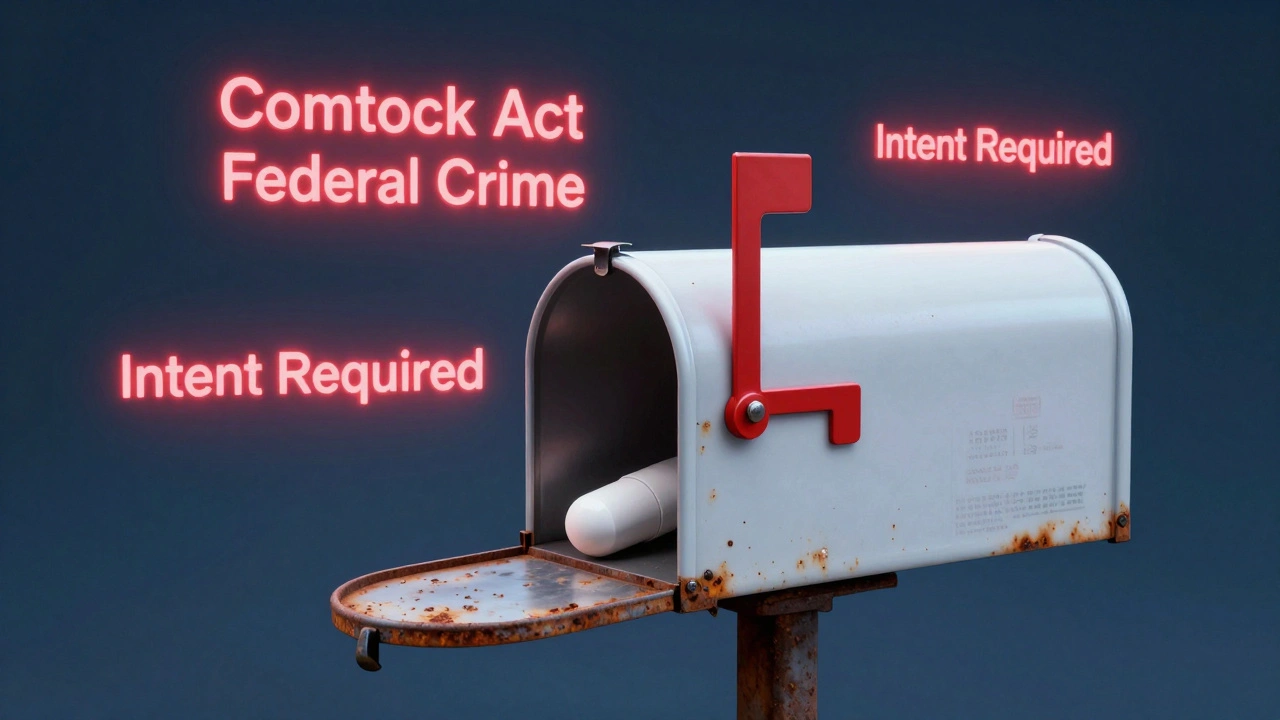
That’s the loophole that kept it alive: intent. If you mailed a pill with the purpose of helping someone have an abortion, you could be prosecuted. But if you mailed it as part of a doctor’s prescription, you were protected. For decades, that distinction kept the law from being used against reproductive health care.
The Dobbs Decision Awakened a Sleeping Giant
When the Supreme Court overturned Roe v. Wade in June 2022, it didn’t just remove federal abortion rights-it removed the legal shield that had kept the Comstock Act from being used as a weapon. Suddenly, states could ban abortion. But what if a woman in Texas got a pill mailed from a clinic in Illinois? Could the federal government step in?
That’s exactly what some conservative lawyers started asking. Jonathan Mitchell, the architect of Texas’ SB 8 abortion ban, told The New York Times in May 2023: "We don’t need a federal ban when we have Comstock on the books." His point was simple: if you can’t ban abortion directly, ban the mail that delivers the medicine.
Within months, clinics across the country began changing their practices. A November 2023 survey by the Guttmacher Institute found that 78% of abortion providers were afraid of federal prosecution under the Comstock Act. Sixty-three percent had already stopped mailing medication abortion pills-even in states where it was still legal.
Legal Battles Are Now Playing Out in Courtrooms
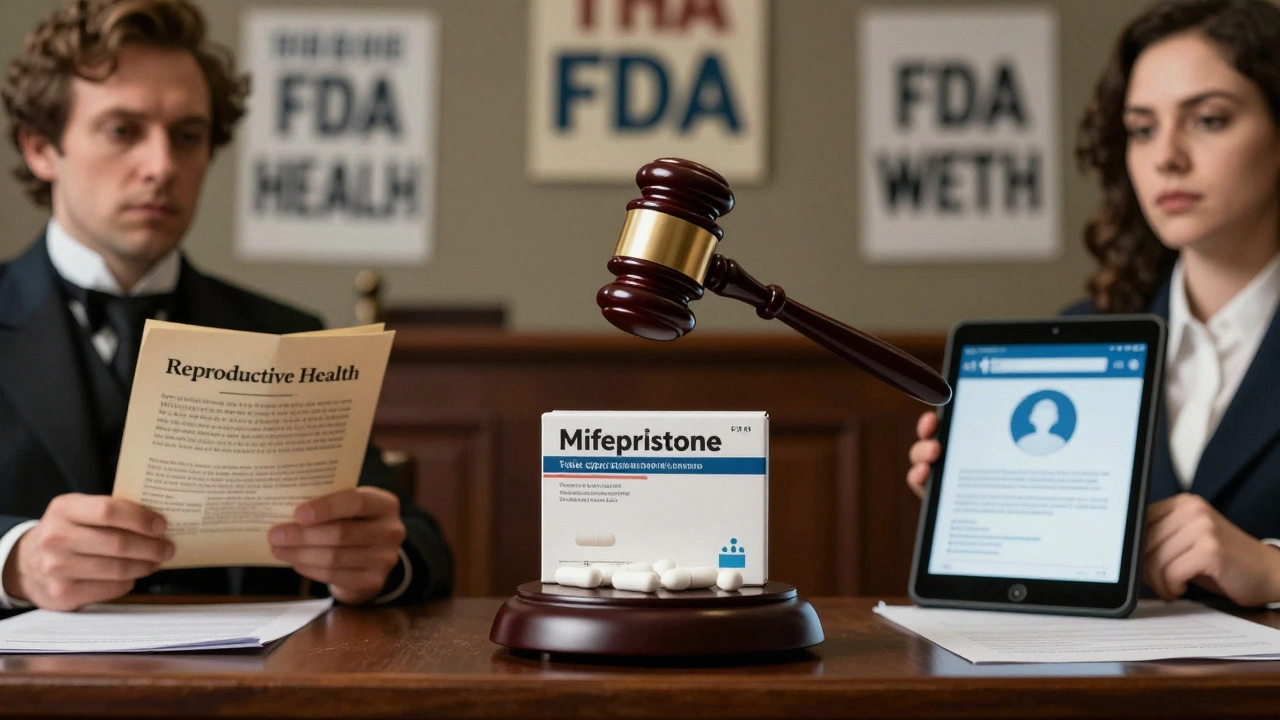
In April 2023, Judge Matthew Kacsmaryk of the Northern District of Texas ruled that the Comstock Act made it illegal to mail mifepristone, the key drug in medication abortion. His ruling was based on a literal reading of the law: if the drug can be used to end a pregnancy, then mailing it is a crime.
The Fifth Circuit Court of Appeals quickly stayed that ruling, but the damage was done. Clinics didn’t wait for courts to sort it out. They stopped mailing. Patients were forced to drive hundreds of miles. Some couldn’t afford the trip. Others didn’t have the time.
The Department of Justice stepped in with a surprise move. In November 2023, it filed a brief arguing that the Comstock Act has never been interpreted to block FDA-approved medications used legally under state law. That’s a critical distinction: if the drug is legal in both the sending and receiving state, and prescribed by a licensed doctor, then mailing it isn’t a crime.
But that’s not the whole story. In December 2023, the Heritage Foundation included the Comstock Act in Project 2025-a blueprint for a future Trump administration. The plan explicitly calls for using the Act to restrict abortion access nationwide. And in Congress, 12 bills since 2022 have tried to expand the law’s reach. Five have tried to repeal it. The fight is no longer theoretical. It’s happening now.
Why This Isn’t Just About Abortion
The Comstock Act didn’t just target abortion. It targeted information. For over 50 years, Planned Parenthood clinics mailed pamphlets on contraception, pregnancy, and STI prevention. Libraries carried books on reproductive health. Pharmacies sold condoms behind the counter. All of it was once illegal under federal law.
Today, the same logic is being applied to telehealth. If a doctor in California prescribes mifepristone to a patient in Ohio, is that a federal crime? What if the patient is a minor? What if the doctor didn’t know the patient’s state had banned abortion? The law doesn’t say. That’s the point.
Legal experts like Professor Mary Ziegler of UC Davis say the idea that the Comstock Act "plainly" bans all abortion medication is a myth. "Generations of American struggle over Comstock’s enforcement reveal a more nuanced interpretation," she wrote in the Yale Law Journal. The law was never meant to be a national abortion ban-it was meant to be a tool for moral policing. And now, it’s being repurposed.
What This Means for Patients and Providers Today
Right now, the legal landscape is a minefield. In states where abortion is legal, clinics are still afraid to mail medication. In states where it’s banned, patients are turning to underground networks. Some are ordering pills from overseas pharmacies. Others are using peer-to-peer delivery apps. None of it is safe.
Providers are being told to document everything: prescriptions, patient consent forms, state laws, FDA guidelines. The American College of Obstetricians and Gynecologists issued a legal advisory in March 2023 urging clinics to prove their actions were "consistent with accepted medical practice." But that’s not a shield-it’s a burden. What if a prosecutor decides your definition of "accepted practice" is wrong?
And the risk isn’t just to clinics. Pharmacies are now refusing to fill prescriptions for mifepristone if they’re shipped across state lines. Insurance companies are excluding abortion coverage entirely. The ripple effect is real.
The Future of the Comstock Act
Legal scholars are divided. Harvard’s Lawrence Tribe says the Supreme Court will either narrow the law or kill it outright within three years. Conservative scholar John Eastman argues the Act gives conservatives a constitutional path to a national abortion ban without passing new laws.
What’s clear is this: the Comstock Act was never just about obscenity. It was about control. It was about who gets to decide what happens to a woman’s body. And now, after 150 years, it’s back in the courtroom, in the political debates, and in the fear that every woman who needs an abortion feels when she opens her mailbox.
The Supreme Court has already signaled it may take up the issue by 2026. Until then, the law remains a ghost-waiting to be used, waiting to be challenged, waiting to decide whether reproductive freedom is a right… or a risk you take by mail.