Ancient Athens Regulatory Comparison
Explore how different ancient city-states managed regulated brothels. Select a city to view its specific regulatory profile, estimated tax impact, and social function.
Oikiskoi
High State Control
Lupanar
Property Focus
Hierodoulai
Religious Hybrid
Athens: The Regulated Model
Regulatory Profile
Key Metrics
Historical Context & Purpose
In Athens, the Oikiskoi were integral to maintaining social order. By centralizing sex work under state supervision, the government ensured that sexual activity did not disrupt the lineage of citizen families. The system generated significant tax revenue for public works while keeping the "private sphere" of the household pure. It was viewed as a pragmatic civic duty rather than a moral failing.
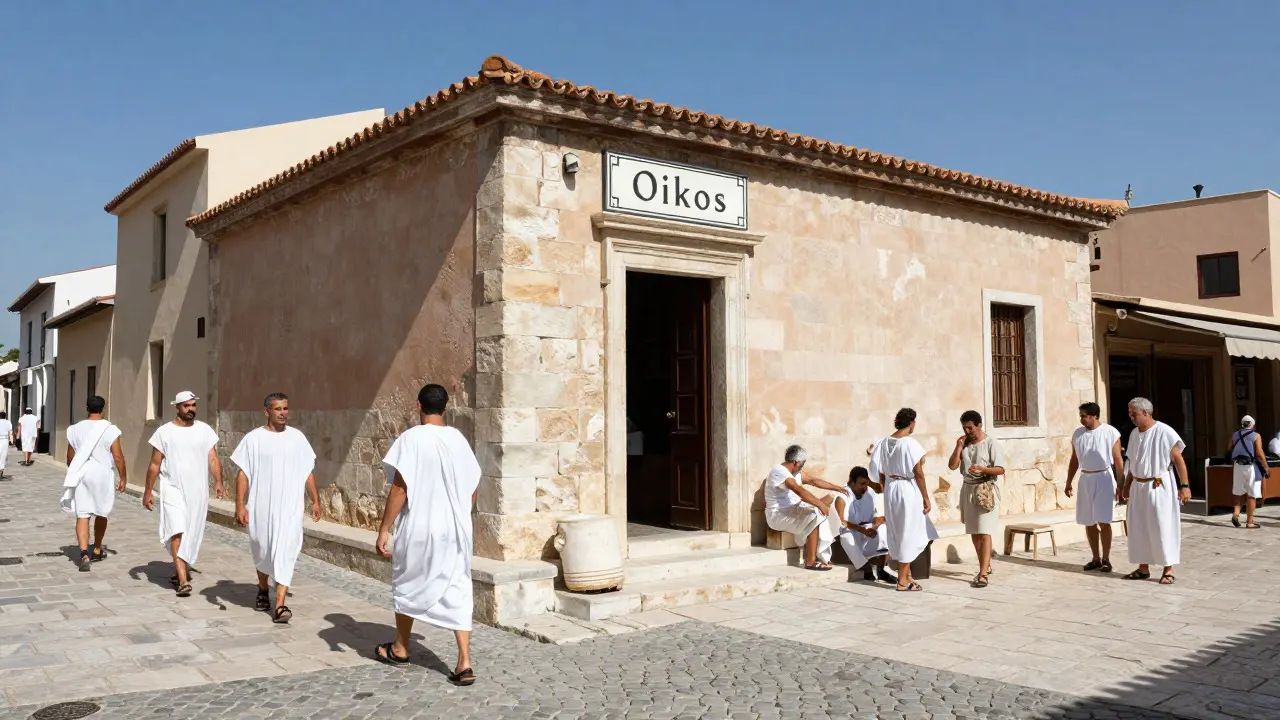
Imagine walking through the streets of Athens is the heart of ancient Greek civilization, known for its democratic innovations and cultural achievements. around 400 BCE. You might pass a building marked with a specific sign, housing women who worked under strict state supervision. These were not random street corners or hidden back alleys; they were the Oikiskoi is early regulated brothels in ancient Athens that operated under direct government oversight to manage social order and taxation.. While modern readers often associate ancient Greece with pure philosophical ideals, the reality was far more pragmatic. The city-state didn't just tolerate sex work; it organized it. Why? Because in a society obsessed with citizenship, lineage, and public health, unregulated sexual activity was seen as a threat to the social fabric.
What Were the Oikiskoi?
The term Oikiskoi refers to the licensed establishments where hetairai (courtesans) and other working women resided and conducted business. Unlike the private homes of wealthy citizens, these places were public spaces with defined rules. The primary entity here is the institution itself, which functioned as a hybrid between a commercial venue and a municipal office. Each oikos had a master or manager, often a male citizen, who held legal responsibility for the women housed there. This arrangement allowed the state to track movements, collect taxes, and enforce behavioral standards without micromanaging every individual interaction.
These establishments were distinct from the private concubinage practiced by elite men. A citizen could keep a slave woman at home, but that was a private matter. The oikiskoi, however, were part of the public infrastructure. They served a specific economic and social function: providing a controlled outlet for sexual needs that might otherwise disrupt family stability or spread disease. By centralizing this activity, Athenian authorities created a buffer zone between the private sphere of the household and the chaotic potential of unregulated street life.
The Legal Framework and State Control
You might wonder how a democracy like Athens managed something so personal. The answer lies in their approach to public order. The state did not view sex work as immoral in itself, but rather as an activity that needed regulation to prevent disorder. Laws dictated who could operate an oikos, how many women could be housed, and what fees were payable. The Demagogic Assembly is the main governing body of ancient Athens where citizens voted on laws and policies passed decrees that touched on these matters, ensuring that the system aligned with broader civic goals.
Key attributes of this regulatory framework included:
- Licensing Requirements: Operators needed official permission to run an establishment.
- Taxation: A portion of earnings went directly to the state treasury, funding public works.
- Health Checks: Periodic inspections ensured basic hygiene standards, though medical knowledge was limited compared to today.
- Legal Liability: The master of the house was responsible for any crimes committed by the women within his walls.
This structure meant that if a woman fled her oikos or caused a disturbance, the blame fell on the operator, not the individual worker. It was a system of delegated responsibility that kept the state out of daily interactions while maintaining ultimate control.
Economic Impact and Tax Revenue
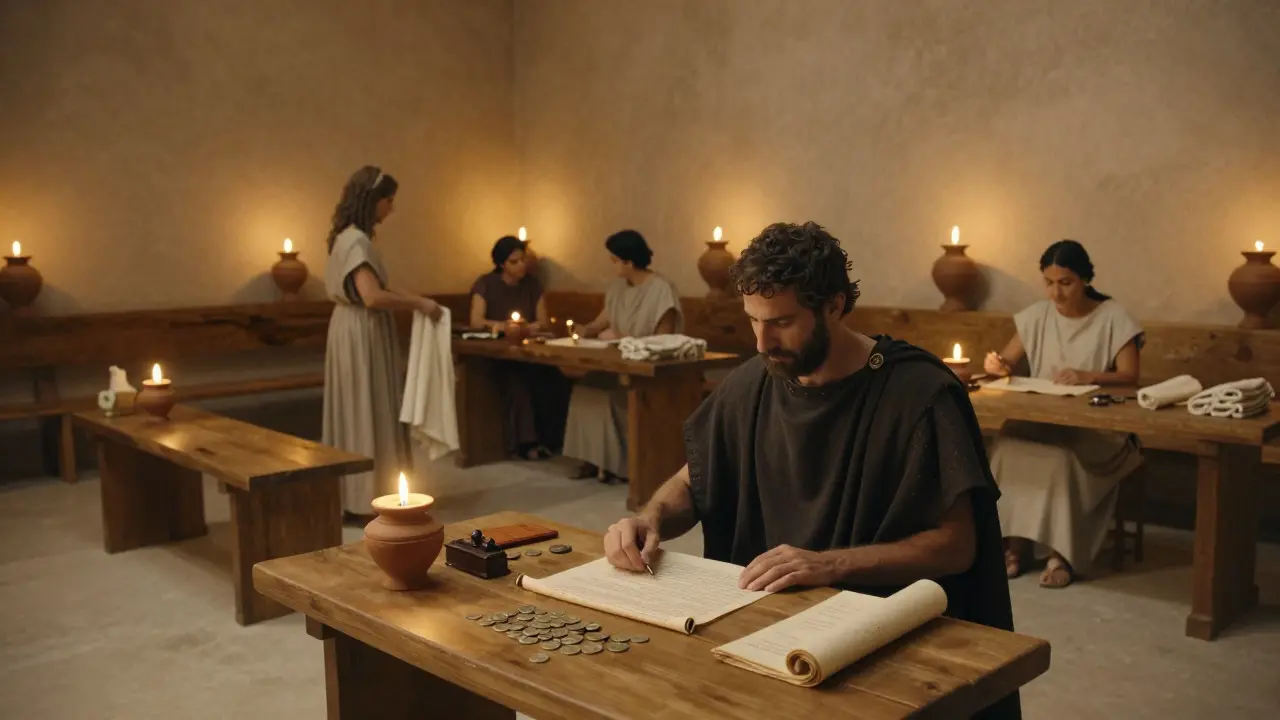
Let's talk money. The oikiskoi were not just social experiments; they were revenue generators. In an era where coinage was relatively new and trade was booming, every drachm counted. The tax income from these establishments helped fund the navy, build temples, and support festivals. For the workers, the conditions varied wildly. Some women were enslaved and owned outright, meaning all their earnings belonged to their owner. Others were free women who rented space and paid a share of their profits. This distinction is crucial because it highlights the class dynamics at play. Free women had slightly more autonomy, but even they operated within a rigid hierarchy where male ownership or management was the norm.
The economic model also influenced pricing. Since the state took a cut, prices were standardized to some extent. This prevented extreme price gouging and made the services accessible to a wider range of men, not just the ultra-wealthy. It was a form of market stabilization that benefited both the state and the consumers, albeit at the expense of the workers' bargaining power.
Social Perception and Cultural Norms
How did Athenians feel about this? Surprisingly, it wasn't seen as shameful in the way we might view it today. Instead, it was considered a necessary evil, much like sanitation or waste management. The key was visibility. As long as the activity happened in designated places, it was acceptable. However, mixing the worlds of the oikos and the private home was frowned upon. A citizen bringing a woman from an oikos into his family home risked social ridicule, not necessarily legal punishment, unless he claimed she was his wife.
This separation protected the integrity of the Oikos is the fundamental unit of ancient Greek society, consisting of the household and its extended family members, which was the core of political identity. Your status as a citizen was tied to your birth from a legitimate marriage. Therefore, keeping the lines clear between "citizen wives" and "public women" was essential for maintaining the purity of the citizenry. The oikiskoi acted as a pressure valve, allowing men to satisfy desires without complicating their legal and social standing.
Comparison with Other Ancient Cities
Was Athens unique? Not entirely. Other Greek city-states, like Corinth, had similar systems, but the scale and regulation in Athens were notable due to its population size and democratic nature. Rome, later on, developed its own version with the Lupanar is a Roman term for a brothel, often located near major roads or entertainment districts, but Roman law placed less emphasis on the moral justification and more on property rights. In contrast, the Athenian system was deeply embedded in their philosophical views on community and duty.
| City | Primary Term | State Involvement | Main Purpose |
|---|---|---|---|
| Athens | Oikiskoi | High (Licensing, Tax, Health) | Social Order, Tax Revenue |
| Rome | Lupanar | Moderate (Property Focus) | Commercial Profit |
| Corinth | Hierodoulai Temples | Religious/Tax Hybrid | Temple Funding |

Why Did They Eventually Decline?
The system didn't last forever. As Athens lost its military dominance after the Peloponnesian War, its ability to enforce strict regulations waned. Social norms also shifted. With the rise of Macedonian influence and later Roman rule, the rigid boundaries between public and private sexual life began to blur. The concept of the oikos as a strictly regulated state tool faded, replaced by more informal arrangements. Yet, the legacy remained: the idea that the state has a role in managing behaviors that affect public health and social cohesion. That notion echoes in modern debates about licensing, zoning, and public health interventions today.
Frequently Asked Questions
Were all women in Oikiskoi slaves?
No. While many were enslaved, a significant number were free women who rented space or worked under contract. Their legal status depended on their background and the specific terms of their arrangement with the house manager.
Did Athenian citizens visit Oikiskoi openly?
Yes, provided they did not bring the women into their private homes as permanent partners. Visiting an oikos was a normal part of adult male life, similar to visiting a tavern or gymnasium.
How were Oikiskoi different from private concubinage?
Private concubinage involved a long-term relationship within a citizen's home, often with a slave woman. Oikiskoi were temporary, transactional encounters in public buildings subject to state inspection and taxation.
Did the state provide medical care for workers?
Basic hygiene checks were required, but comprehensive medical care was rare. Treatment was usually ad-hoc, relying on the resources of the house manager or the worker herself if she was free.
What happened if a worker ran away?
If enslaved, she could be pursued and punished. If free, she faced fines or debt collection. The house manager was legally liable for her absence, incentivizing him to keep close watch.