Victorian Medical Myth Decoder
Quick Test Examples
Awaiting input...
Keywords found in your statement will be categorized here.
In the late 19th century, a woman’s period wasn't just a biological event; it was a medical crisis. Doctors of that era believed menstruation drained a woman's vital energy, leaving her physically fragile and mentally unstable. This concept, often labeled as menstrual weakness is a Victorian-era medical belief that regular bleeding caused systemic physical decline and cognitive impairment in women. It wasn't just a casual opinion; it shaped laws, workplace rules, and even how women were treated in hospitals. While we know today that periods are a normal part of human biology, the echoes of these Victorian ideas still whisper through modern healthcare practices and cultural attitudes.
Why does this matter now? Because when you understand where these myths came from, you can spot them when they resurface in subtle ways. Whether it's a doctor dismissing pain or a workplace policy that assumes women need 'extra' breaks during their cycle, the roots often trace back to the same 19th-century logic. Let's unpack how Victorian medicine is the dominant medical paradigm in Britain and the US from 1837 to 1901, characterized by humoral theory remnants and strict gender roles in diagnosis constructed this narrative and why it stuck around longer than expected.
The Humoral Roots of 'Weakness'
To understand humoral theory is an ancient Greek medical model proposing that health depends on the balance of four bodily fluids: blood, phlegm, yellow bile, and black bile, you have to look back before the Victorians. By the 1800s, while anatomy had advanced, many physicians still clung to the idea that the body operated on fluid balances. For men, blood was seen as a sign of vigor. For women, however, blood loss was interpreted as a depletion of essential life force.
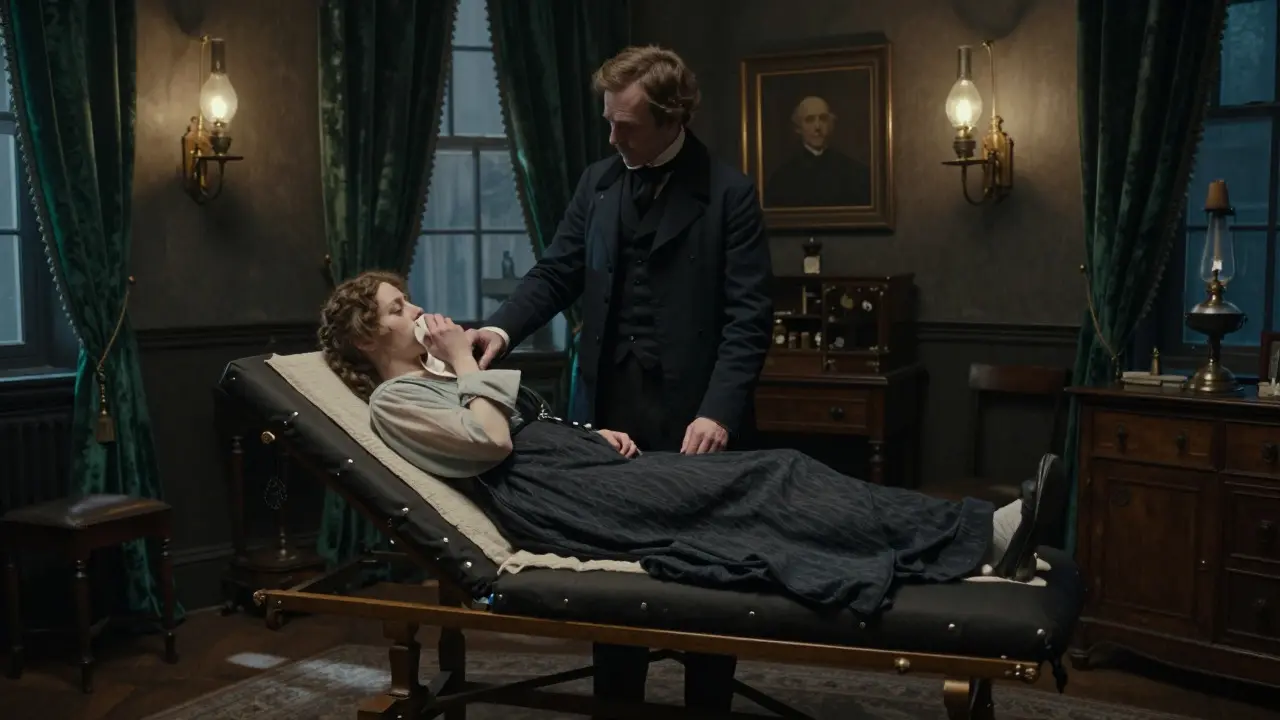
This led to the specific diagnosis of chlorosis is a condition historically diagnosed in young women, characterized by pallor and fatigue, which doctors incorrectly attributed solely to menstrual blood loss rather than iron deficiency. If a young woman looked pale and tired, she didn't get a blood test for anemia (which wasn't standard practice yet). She got a lecture about managing her periods. The logic was circular: she was weak because she bled, and she bled because she was weak. This created a self-fulfilling prophecy where women were kept indoors, resting, and eating light meals to 'preserve their strength,' further weakening them.
- Blood as Vitality: In male patients, hemorrhage was an emergency to stop. In female patients, monthly bleeding was a 'natural release' that required management, not necessarily stopping.
- The Womb as a Blood Reservoir: The uterus was viewed less as an organ and more as a storage tank for excess blood that needed to be expelled regularly.
- Mental Instability Link: Fluctuations in this 'blood' were blamed for mood swings, hysteria, and poor decision-making.
Workplace Bans and Social Control
The impact of menstrual weakness extended far beyond the bedroom. It became a tool for social control. In the mid-19th century, as more women entered factories and offices, employers and legislators worried that their 'fragile' state would affect productivity or contaminate products.
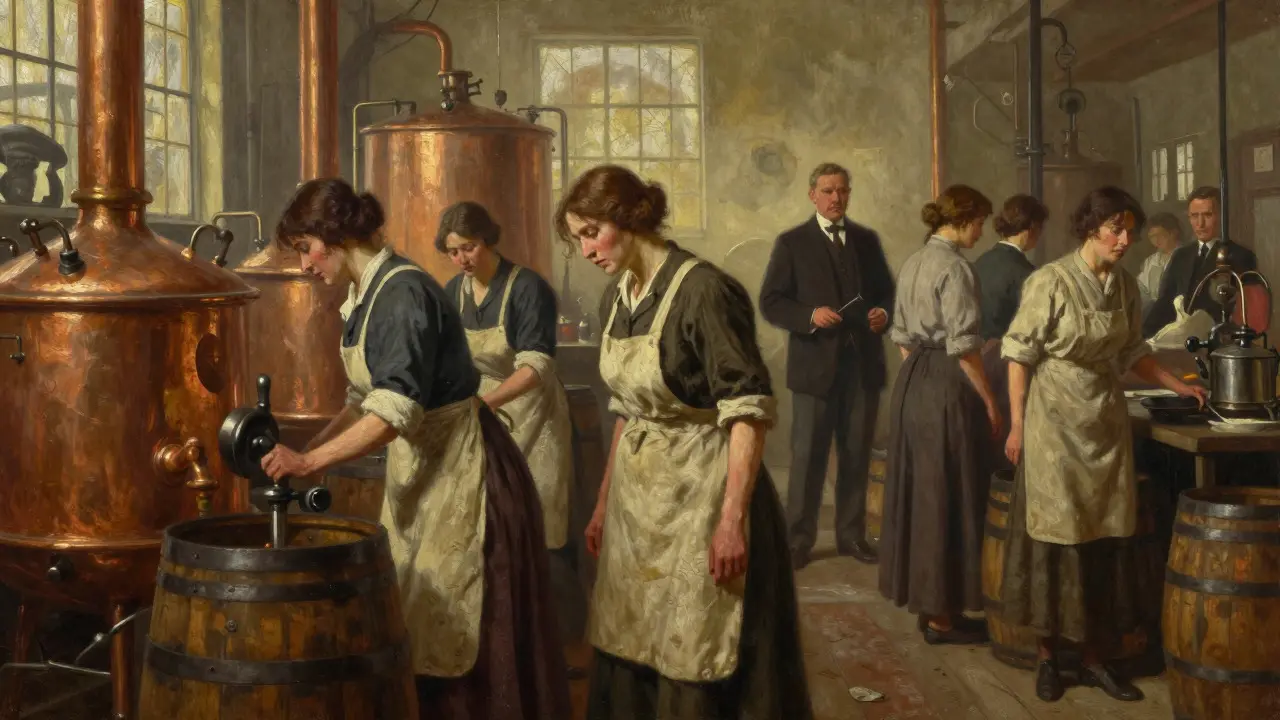
A prime example is the debate over women working in breweries. Some argued that women should not handle beer during their periods because their 'impure' blood might spoil the brew. While rarely enforced strictly in all regions, similar bans existed for women handling food, teaching children, or operating machinery. These weren't based on science; they were based on the fear that a woman's biological rhythm made her unreliable.
| Aspect | Victorian Era (1850s) | Mid-20th Century (1950s) |
|---|---|---|
| Cause of Symptoms | Blood loss depletes vital energy | Hormonal imbalance / Hysteria |
| Recommended Treatment | Rest, tonics, iron supplements, confinement | Sedatives, rest, reassurance |
| Workplace Status | Frequently banned from certain jobs | Allowed but often stigmatized as 'distracted' |
| Medical Authority | Male doctors diagnosing 'weakness' | Female nurses often dismissed patient reports |
This table highlights how the core issue-dismissing women's symptoms-shifted from 'weakness' to 'hysteria' but remained largely unchanged in practice. The shift wasn't about progress; it was about changing the vocabulary while keeping the power dynamic intact.
The Role of Iron and Anemia
One of the most ironic aspects of Victorian medicine is that it accidentally stumbled upon the correct treatment for one symptom while getting the cause completely wrong. Iron supplements became popular in the 1840s and 1850s. Doctors prescribed iron pills to treat chlorosis. And guess what? It worked. Women felt better, their skin color improved, and their energy levels rose.
But why? It wasn't because they needed 'vitality.' They needed iron because heavy periods cause iron-deficiency anemia is a common condition resulting from insufficient red blood cells due to low iron levels, often exacerbated by menstrual blood loss. The Victorian doctors saw the improvement and doubled down on their theory: "See? Iron restores the lost vitality!" They never questioned whether the 'loss' was actually just a mineral deficit. This confusion persisted well into the 20th century, leading to unnecessary restrictions on women who simply needed proper nutrition and perhaps a gynecological check-up for heavy bleeding.
How Myths Linger in Modern Healthcare
You might think all this ended with the birth control pill in the 1960s. You'd be wrong. While explicit bans on women working are gone, the underlying bias remains. Studies show that women's pain is still rated lower than men's pain in clinical settings. Why? Because the old script says women are 'exaggerators' or 'hysterical.' This is the direct descendant of the hysteria is a historical psychiatric diagnosis used to label various physical and mental symptoms in women as irrational or emotionally driven diagnosis.
Consider endometriosis. On average, it takes women seven years to get a correct diagnosis. During those seven years, many are told their pain is 'just cramps' or stress-related. This mirrors the Victorian dismissal of dysmenorrhea is painful menstruation, which was historically minimized as a natural consequence of womanhood rather than a medical condition requiring treatment. The myth that 'period pain is normal and must be endured' is a lingering artifact of the idea that women are biologically weaker and therefore should tolerate more discomfort without complaint.
Breaking the Cycle: What We Know Now
Modern gynecology has moved past humoral theory. We know that menstruation is a shedding of the uterine lining, regulated by hormones like estrogen and progesterone. Pain is not a sign of moral failing or physical frailty; it's often a sign of inflammation or underlying conditions like fibroids or endometriosis.
So, how do we spot the lingering myths? Look for language that separates women's biology from men's in a negative way. If a doctor suggests you 'rest' instead of investigating the cause of severe pain, ask yourself: Am I being treated as a person, or as a stereotype? Education is key. Understanding that menstrual cycle is the recurring physiological changes that occur in the reproductive system of non-pregnant primates, including humans, involving the menstrual flow is a neutral, biological process helps strip away the emotional baggage attached to it.
The next time you hear someone say 'she's on her period, don't expect much,' remember the Victorian doctor who thought your brain shrank every month. That's not biology. That's history. And history doesn't have to repeat itself if we recognize the patterns.
Did Victorian doctors really ban women from certain jobs?
Yes, though enforcement varied. In some industries, particularly those involving food production or delicate machinery, there were informal or formal restrictions based on the belief that menstruating women were physically unreliable or could contaminate products. These bans were rooted in the concept of menstrual weakness rather than scientific evidence.
What is chlorosis and why was it misdiagnosed?
Chlorosis was a term used for young women presenting with pallor and fatigue. Doctors attributed it to blood loss from menstruation, believing it depleted vital energy. In reality, it was almost always iron-deficiency anemia. The misdiagnosis persisted because iron supplements, which treated the anemia, seemed to validate the 'blood loss' theory.
How does Victorian medicine influence modern views on pain?
The legacy of dismissing women's symptoms as 'hysteria' or 'weakness' contributes to the ongoing under-treatment of women's pain. Conditions like endometriosis take years to diagnose partly because pain is often assumed to be a normal part of menstruation rather than a symptom of disease, echoing the Victorian minimization of dysmenorrhea.
Is 'menstrual weakness' a recognized medical condition today?
No. It is no longer a medical diagnosis. Modern medicine recognizes specific conditions like anemia, endometriosis, or fibroids that may cause symptoms during menstruation, but the general concept of inherent weakness due to bleeding has been discarded in favor of evidence-based diagnostics.
Why did iron supplements work if the theory was wrong?
Iron supplements worked because they treated the actual cause of the symptoms: iron-deficiency anemia. The Victorian theory was incorrect about the mechanism (vitality loss) but accidentally correct about the intervention (replacing lost minerals). This coincidence reinforced the false belief that blood loss itself was the primary problem.