Evolution of Military Sexual Justice Timeline
Click on any event to learn more about how legal definitions and punishments changed over time.
Select an Era Above
Legal Basis: -
Common Punishments: -
Key Characteristic: -
When we think of war crimes, our minds often jump to modern tribunals or recent conflicts. But the legal machinery for handling wartime sexual violence in England has roots stretching back centuries. It wasn't always a clear-cut category called "rape." For much of history, it was treated as a property crime against a father or husband, or simply an act of disorderly conduct by a soldier. Understanding how English military codes evolved from these early definitions to modern standards reveals a lot about how society views power, gender, and justice.
The Early Framework: Property vs. Personhood
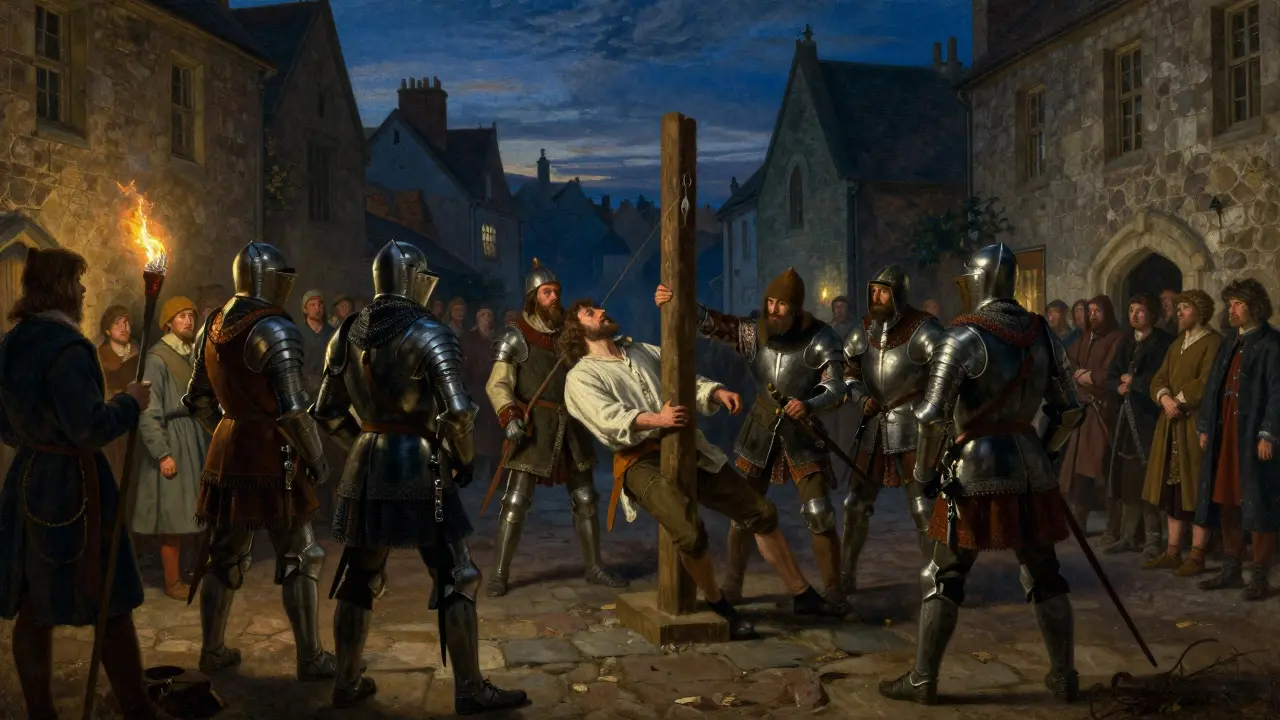
In the medieval and early modern periods, the legal system didn't really distinguish between a soldier's actions on the battlefield and his behavior in occupied towns. The primary concern for commanders like those under Henry VIII or during the English Civil War was discipline. If a soldier committed an assault, it was often viewed through the lens of damage to property or breach of the peace rather than a violation of bodily autonomy.
Martial Law is a temporary government authority exercised by the military in place of civil authority. In this context, punishments were swift and public. A common penalty for severe misconduct was flogging, which served both as punishment and as a deterrent to other troops. However, because the victim's testimony was rarely considered independently, many cases went unpunished unless the victim had high social standing.
The 18th Century Shift: Codifying Offenses
By the mid-1700s, the British Army began to formalize its rules. The Articles of War became the backbone of military justice. These documents listed specific offenses and their corresponding penalties. While "rape" wasn't always explicitly defined with modern precision, terms like "ravishment" appeared in the code. The key change here was the separation of military discipline from civilian criminal law. Soldiers could be tried by court-martial, bypassing local courts entirely.
This shift meant that if a British soldier assaulted someone in Flanders or India, he wouldn't face a local magistrate but a military tribunal. This created a parallel justice system where the outcome depended heavily on the commanding officer's desire to maintain order. Often, if the victim was a local civilian, the case was dropped quickly to avoid diplomatic friction. If the victim was another soldier or a member of the garrison family, the punishment was more likely to be carried out.
Punishments Beyond Death: The Reality of Courts-Martial
We often assume that serious crimes meant execution. While hanging was a standard sentence for rape in the 18th and early 19th centuries, it wasn't the only option. Fines, imprisonment, and dismissal from service were also common. Dismissal was particularly harsh; it meant losing your pension, your rank, and your social status. For a professional soldier, this was effectively a death sentence in a social sense.
| Period | Primary Legal Basis | Common Punishments | Key Characteristic |
|---|---|---|---|
| Early 1700s | Articles of War (1661/1703) | Hanging, Flogging | Treated as disorderly conduct or property damage |
| Mid-1800s | Army Act 1881 | Imprisonment, Fine, Dismissal | Civilian courts gained jurisdiction over some offenses |
| Late 1800s | Army Act 1881 (Revised) | Prison Labor, Penal Servitude | Clearer definition of "Rape" and "Buggery" |
The Colonial Context: Justice Across Empires
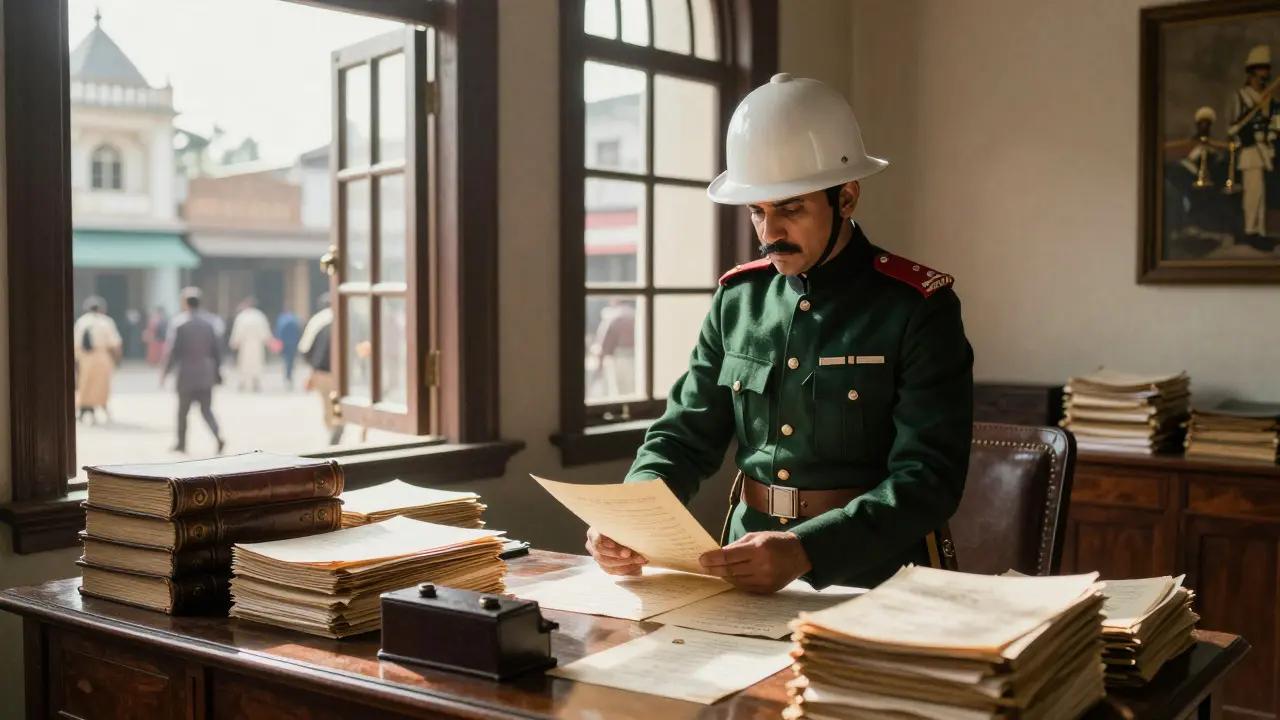
You can't talk about English military law without looking at the Empire. In places like India and West Africa, the gap between the legal rights of the colonizer and the colonized was massive. A white soldier assaulting an indigenous woman often faced lighter sentences than if he had assaulted a white woman. This double standard was documented in numerous court-martial records from the late 19th century.
The Indian Penal Code is the primary criminal code applied in the former territories of the British Raj. While it provided a framework for local justice, British soldiers were frequently exempt from it. Instead, they were subject to the Army Act, which allowed for expedited trials. This exemption created a culture of impunity that persisted well into the 20th century. Victims often had no recourse if the soldier was transferred to another unit before the trial concluded.
The 20th Century: From Gallipoli to Iraq
World War I marked a turning point. With millions of men mobilized, the sheer volume of potential incidents overwhelmed the old system. The military began to rely more on informal settlements, such as paying compensation to victims' families, rather than holding full courts-martial. This practice, known as "quieting the matter," prioritized troop morale over individual justice.
After World War II, the Nuremberg Trials established that sexual violence was a war crime, not just a disciplinary issue. This international standard eventually trickled down into domestic military law. The Armed Forces Act 2006 in the UK consolidated military law and aligned it more closely with civilian criminal law. Today, the definition of sexual offense is broader, covering consent-based crimes rather than just force-based ones. However, challenges remain. Service members still report feeling stigmatized if they report an assault, fearing it will end their careers.

Why the History Matters Now
Looking back at these codes helps us understand why current systems struggle. The legacy of viewing sexual violence as a threat to discipline rather than a human rights violation lingers. When we examine the attributes of past legal entities, we see a pattern: the law protected the institution first, and the victim second. Modern reforms aim to reverse this hierarchy, but the institutional memory of the past makes change slow.
For historians and legal scholars, the value lies in tracking the semantic shifts in language. Moving from "ravishment" to "sexual assault" isn't just a terminology update; it reflects a fundamental change in how society perceives bodily autonomy. By studying these transitions, we can better advocate for policies that ensure accountability in all conflict zones, whether they are historical or contemporary.
Frequently Asked Questions
Did English military law ever define rape differently than civilian law?
Yes, for much of the 18th and 19th centuries, military law treated rape as a lesser offense compared to murder, often focusing on the loss of chastity as a property loss rather than a physical violation. Civilian law also struggled with this, but military courts had even less procedural protection for victims due to the speed required in field operations.
What was the most common punishment for a soldier convicted of sexual assault in the 1800s?
While hanging was possible for aggravated cases, the most common outcomes were dismissal from the army and a fine. Imprisonment was also frequent, especially after the Army Act of 1881 standardized sentencing. Execution was reserved for cases involving extreme brutality or repeat offenses.
How did colonial status affect the punishment of British soldiers?
Colonial status significantly lightened the blow. White soldiers committing assaults against non-white victims in colonies like India or Africa often received suspended sentences or quiet dismissals. This disparity was a direct result of racial hierarchies embedded in imperial administration and military command structures.
When did sexual violence officially become classified as a war crime in English law?
The classification solidified after World War II, influenced by the Nuremberg Trials. The Armed Forces Act 2006 further integrated these international standards into domestic military law, ensuring that sexual violence in conflict is prosecuted as a serious criminal offense rather than a mere disciplinary breach.
Were victims allowed to testify in military courts in the 19th century?
Victims could testify, but their credibility was often scrutinized more heavily than in civilian courts. Since the trial happened within the military chain of command, there was pressure to resolve cases quickly. Many victims withdrew testimony if they felt the process would drag on or if they feared retaliation from the accused's unit.