⚖️ Ancient Greek Legal Status Comparison Tool
Athens (Classical)
Strict Kyrios System
Dowry Controlled by Husband
Sparta
Property Ownership Allowed
Economic Autonomy
Slave Women
No Legal Personhood
Total Chattel Status
Athenian Reality
Women were perpetual minors under the Kyrios. They could not own land, sign contracts, or vote. Their primary legal function was producing heirs. The dowry remained the property of her father but was controlled by the husband.
Imagine waking up in 5th-century Athens. You are a woman of good family. You have never voted, owned land independently, or signed a contract. Your legal identity is essentially borrowed from the man who controls you: your father before marriage, your husband after. This isn't just social custom; it is codified law. To understand women's legal status in this era, we must look past the romanticized myths of Socrates and Plato and examine the cold, hard reality of the *kyrios* system.
The Kyrios: The Man Who Owns the Woman
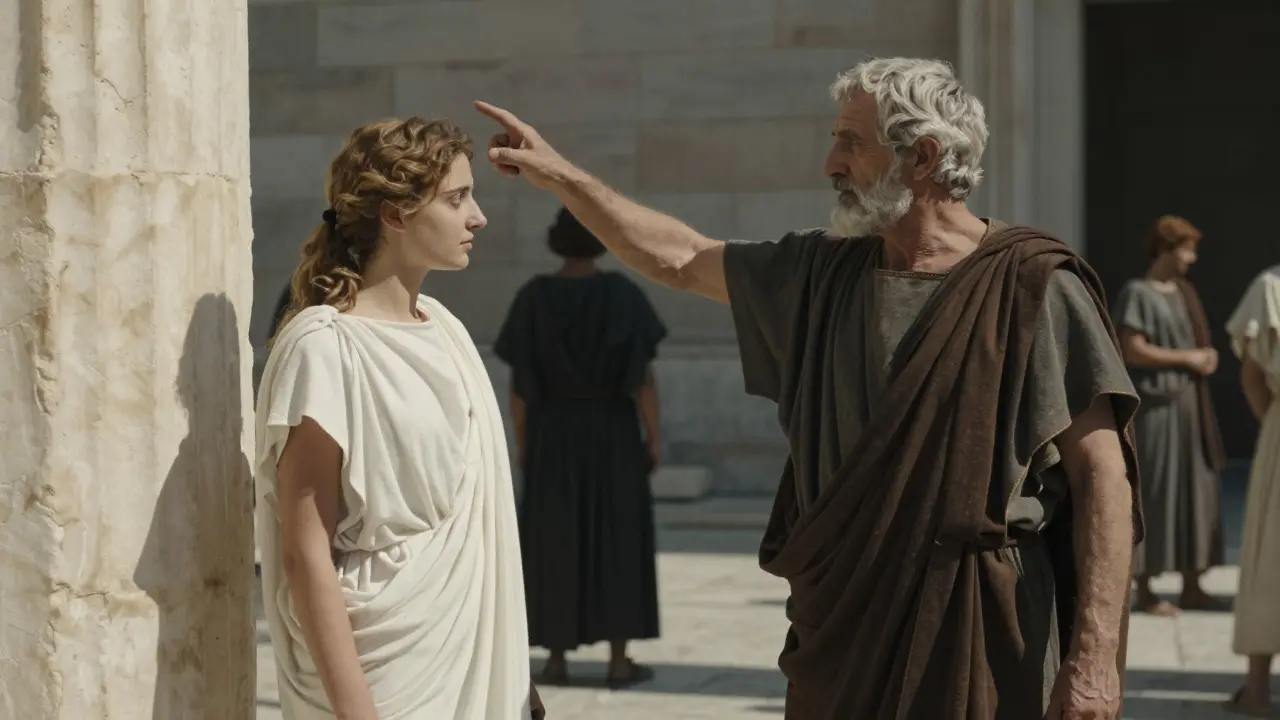
In ancient Greece, particularly in Classical Athens, a woman was legally considered a perpetual minor. She required a male guardian, known as the Kyrios, which translates to "lord" or "master." Before marriage, this role fell to her father. If her father died, it passed to her brother or another close male relative. Upon marriage, the kyrios became her husband. But here is the twist that surprises many modern readers: the husband did not become her owner in the same way he owned his slaves or livestock. Instead, he gained control over her person and her dowry.
This distinction is crucial. A wife was not chattel (movable property) like a donkey or a pot. She was closer to real estate-fixed, valuable, and subject to the will of the male head of household. Her primary legal function was to produce legitimate heirs for the state and the family line. As long as she fulfilled this duty, her existence was tolerated. If she failed, or if she caused trouble, the consequences were severe.
Marriage as a Business Transaction
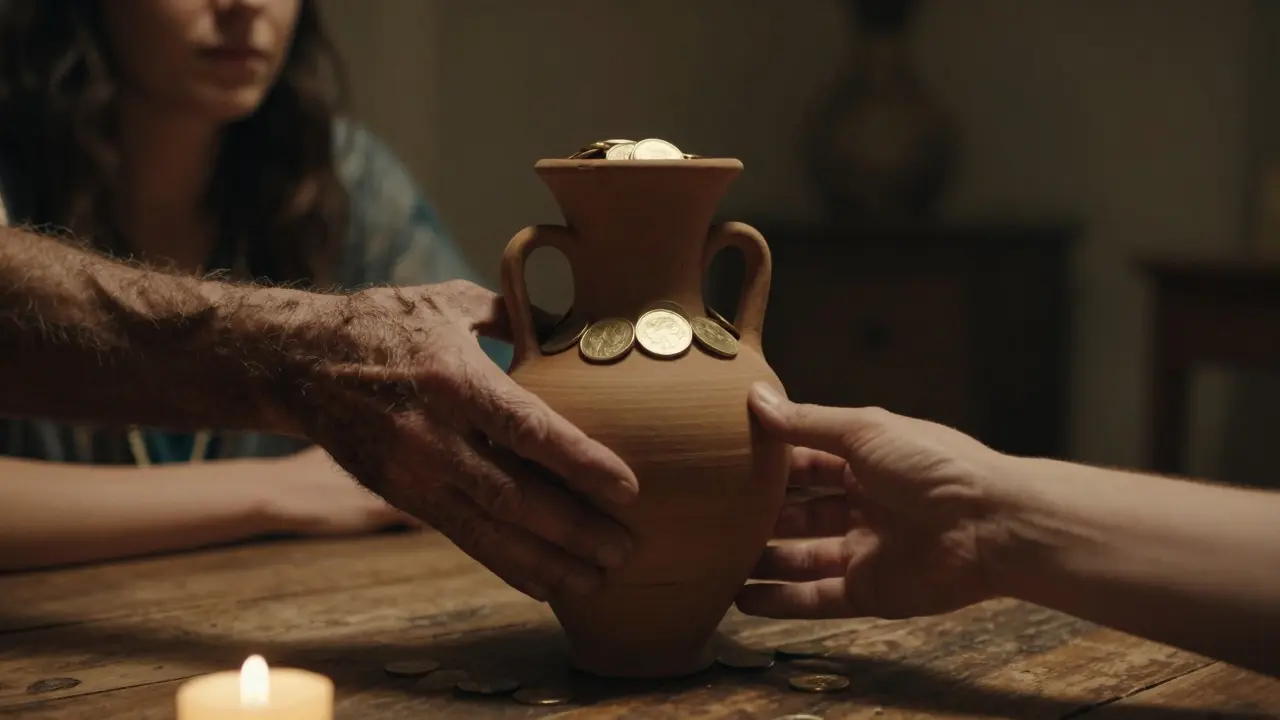
Ancient Greek marriage was not a union of equals based on love or mutual consent. It was a contract between two men: the bride’s father and the groom. The bride herself had no say in the matter. Her value was determined by her Dowry, a sum of money or property brought into the marriage to secure her future and support the household.
If the marriage ended due to the husband’s fault, the dowry had to be returned. If it ended due to the wife’s fault, the dowry could be forfeited. This financial leverage gave men immense power. For example, if a wife was found to be unfaithful, the husband could divorce her and keep her dowry. Conversely, if a husband mistreated his wife, her new kyrios (often a brother) could sue for damages, but rarely did he do so because social pressure kept women compliant.
| Legal Aspect | Citizen Male | Citizen Female |
|---|---|---|
| Property Ownership | Full independent ownership | No independent ownership; controlled by kyrios |
| Voting Rights | Full voting rights in Assembly | No political rights |
| Contract Signing | Can sign contracts independently | Cannot sign contracts without proxy |
| Divorce Initiation | Unilateral right to divorce | Limited right; usually requires kyrios approval |
| Testimony in Court | Admissible as full witness | Rarely admissible; often excluded |
Sexual Rights and Autonomy
So, what about sexual rights? In the modern sense, the concept didn’t exist. Sexuality was viewed through the lens of reproduction and honor. A wife’s body belonged to her husband for the purpose of procreation. However, this does not mean she was treated with total brutality. Social norms dictated that husbands should treat their wives with respect, primarily because a well-treated wife produced healthy children and maintained the household’s reputation.
Yet, legal protections were thin. Adultery (*moicheia*) was a serious crime, but it applied asymmetrically. If a wife committed adultery, the husband could kill the lover and the wife on the spot, or divorce her and confiscate her dowry. If a husband committed adultery, the punishment was lighter unless he took another citizen woman as a concubine, which threatened the lineage. This double standard reinforced the idea that female sexuality needed to be policed to ensure legitimate heirs.
Slave women faced an even harsher reality. They had no legal protection against sexual assault by their masters. Their bodies were entirely at the disposal of the owner. For freeborn women, while rape was technically a crime, it was rarely prosecuted unless it involved a violation of the *kyrios*'s property rights rather than the victim's bodily autonomy.
Regional Variations: Sparta and Beyond
It is easy to generalize all of ancient Greece, but regional differences mattered. In Sparta, women enjoyed significantly more freedom than in Athens. Spartan women could own land, inherit property, and engage in physical training. Why? Because Spartan men were professional soldiers who spent much of their time away. Women managed estates and households with considerable autonomy. While they still lacked voting rights, their economic independence gave them social leverage that Athenian women simply did not possess.
In other city-states like Corinth or Thebes, laws varied slightly, but the core principle of male guardianship remained dominant across most of the Greek world. The variation in economic roles often correlated with legal flexibility. Where women controlled wealth, they held more de facto power, even if de jure power remained with men.

The Role of Religion and Myth
Religion played a subtle but powerful role in enforcing these norms. Goddesses like Hera were associated with marriage, but their stories often depicted jealousy and control. Mortal women were expected to emulate virtues of modesty and obedience. Festivals like the Thesmophoria were exclusively for women, offering a rare space where they could gather, pray, and reinforce communal bonds outside the domestic sphere. These rituals provided a psychological release valve but did not change their legal standing.
Myths served as cautionary tales. Stories of Medea or Helen of Troy warned men of the dangers of unchecked female agency. Meanwhile, the ideal of Penelope from the *Odyssey* celebrated patience and fidelity. These cultural narratives reinforced the legal structures, making them seem natural and divinely ordained rather than constructed by human legislators.
Why Does This Matter Today?
You might wonder why we care about laws written 2,500 years ago. Understanding the legal status of women in ancient Greece helps us trace the roots of Western patriarchal systems. Many concepts in modern family law-such as the presumption of paternal authority or the historical lack of marital rape exceptions-have deep historical precedents in Greek thought. Recognizing that women’s subordination was not inevitable but legally engineered allows us to appreciate how far society has come and how fragile those gains can be.
Moreover, studying this period highlights the importance of economic independence. Spartan women’s greater freedoms were tied to their ability to manage property. This lesson remains relevant: legal equality is often followed by economic empowerment. Without both, true autonomy remains out of reach.
Could an ancient Greek woman own property?
In Athens, no. Freeborn women could not own property independently. Any assets they received, such as a dowry, were legally controlled by their kyrios (father or husband). In Sparta, however, women could own and manage land and property, giving them significant economic power.
What happened if a Greek wife committed adultery?
The husband had several options. He could divorce her and retain her dowry. In extreme cases, he could kill both the wife and her lover on the spot without facing legal repercussions, as it was seen as defending his household honor. The penalty was severe because it threatened the legitimacy of future heirs.
Did ancient Greek women have any legal rights at all?
They had very limited rights. They could initiate divorce under specific circumstances, though this was difficult. They could also make religious offerings and participate in certain festivals. However, they generally could not testify in court, sign contracts, or vote. Their rights were almost always mediated through a male guardian.
How did the dowry system work in ancient Greece?
The dowry was a sum of money or goods provided by the bride's family to the groom. It was meant to support the new household. Legally, it remained the property of the bride's family until the marriage ended. If the husband divorced the wife without cause, he had to return the dowry. If the wife was at fault, he could keep it.
Were slave women treated differently than free women?
Yes, drastically. Slave women had no legal personhood. They were considered property, meaning their masters had unlimited rights over their bodies and labor. There was no legal protection against sexual assault or forced labor. Freeborn women, while restricted, had some social protections and could potentially appeal to their kyrios for justice.